
Clean the Washer Drawer Before Detergent Builds Up
A detergent drawer is easy to overlook because it closes before the laundry starts. Open it between loads and you may notice a sticky corner, dried detergent along an edge, or residue around an insert. Cleaning that removable part is a manageable maintenance task that starts with identifying the right instructions.
This method is for an ordinary removable dispenser drawer, with warm water and a soft brush as the starting point. Check your washer manual first, because release mechanisms and bulk-dosing systems differ. The goal is to remove accessible product residue and put the parts back correctly, without inventing a stronger chemical mixture.
What you need
- Washer manual
- Soft nonmetal brush
- Clean cloth and dry towel
- Warm running water
Gather the washer manual, a soft nonmetal brush, a clean cloth, a dry towel, and access to warm running water. Leave cleaning products aside until you have checked the model instructions. Some manufacturers permit mild soap for particular parts, while others specify water alone, so there is no universal cleaning solution.
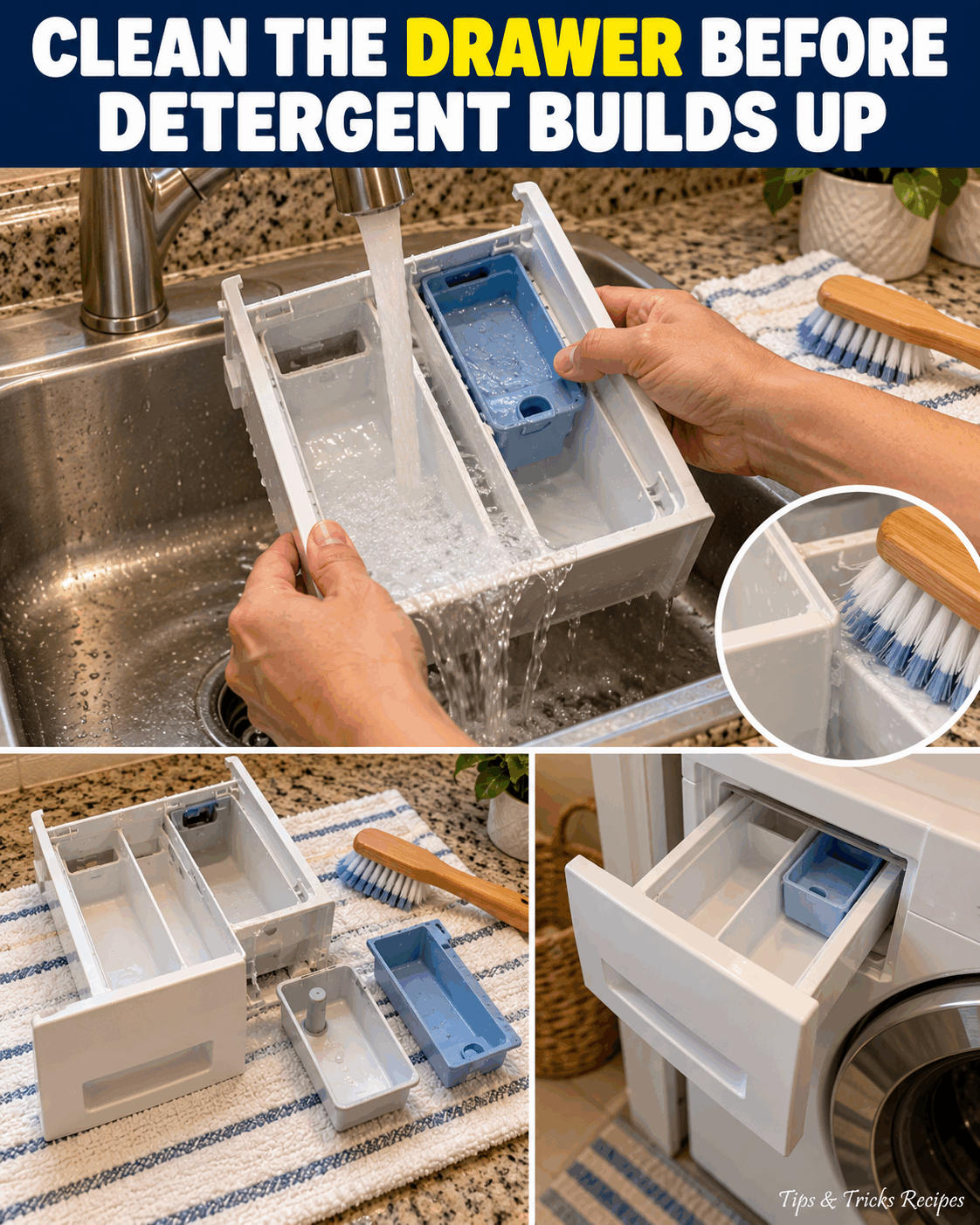
Clear a small space beside the sink where the drawer can rest flat on a towel. Keep the inserts together in a shallow tray so a small cap cannot disappear behind another object. A simple photograph before disassembly gives you a useful record of which compartment each removable piece belongs in.
The method
-
Finish the wash, remove the laundry, and turn the machine off. Follow the manual if it calls for unplugging before this maintenance. Make sure your hands and the plug area are dry. This task does not require removing the washer cabinet, disconnecting hoses, or reaching into electrical or internal components.
-
Open the drawer and locate the release described for your model. Operate that release while supporting the drawer with your other hand. If it resists, stop and check the instructions again. A drawer that slides out on one machine may use a different latch or removal angle on another.
-
Remove only the inserts that the manual identifies as removable. Set them in their original order on the towel and keep the reference photograph available. Do not pry at a fixed divider or pull apart an automatic dosing assembly. If your dispenser stores detergent for multiple loads, follow that separate cleaning procedure.
-
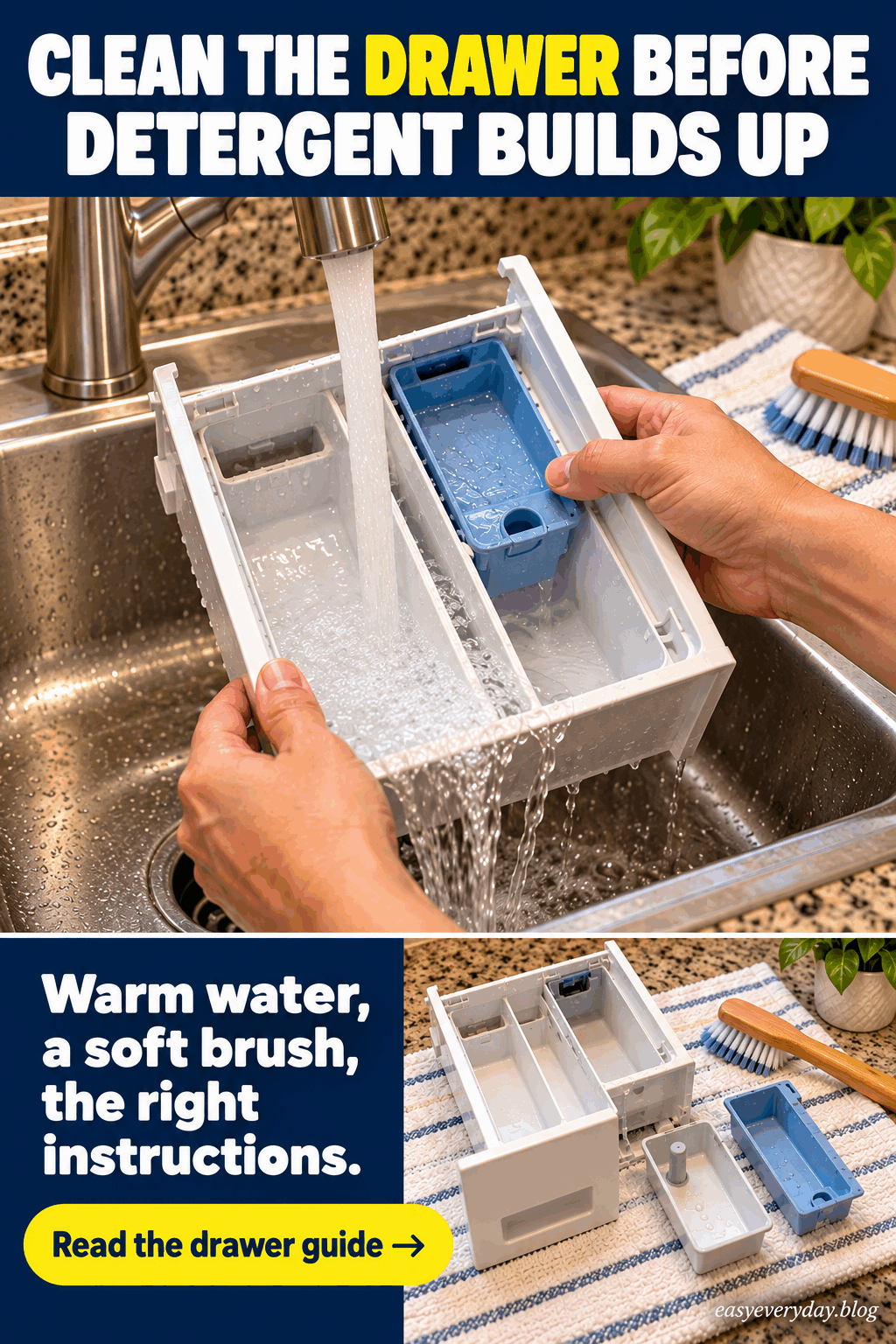
Rinse the permitted removable parts under warm running water. Work gently around accessible corners with the soft brush to loosen residue. Start with water alone unless the manufacturer instructs otherwise for that part. Keep the pieces over the sink so loosened detergent stays away from the clean work surface.
-
Wipe the accessible dispenser opening according to the manual, using a cloth that is damp rather than dripping. Avoid pouring water into the machine opening or probing hidden channels with metal tools. If the instructions describe parts you cannot identify, pause and use the manufacturer diagram before continuing the task.
-
Rinse away loosened residue, wipe or air-dry as instructed, and return each insert to its proper compartment. Compare the assembly with your earlier photograph. Refit the drawer along its guides without force. It should close in its normal position; an awkward fit is a reason to check the assembly again.
Why this part matters
The drawer is where concentrated laundry products wait before being carried into the wash. Keeping its accessible surfaces clear makes this part of the routine easier to inspect. A clean drawer also makes the compartment markings easier to see, helping the next person avoid confusing the detergent and fabric-softener sections.
Cleaning is also an opportunity to check how the drawer is being used. Look at the maximum-fill markings and the directions on the products you actually own. If a cap has become difficult to read, replace or clean that measuring tool separately rather than guessing a dose while pouring over the drawer.
Mistakes to avoid
Do not put the drawer in the dishwasher unless your own manufacturer explicitly allows it. Hand cleaning gives you control over the permitted water and contact with each piece. Very hot water, abrasive pads, and improvised scraping are unnecessary starting points for a small plastic component with fitted inserts and markings.
Do not combine bleach, vinegar, descalers, or other cleaners in the drawer. There is no need to experiment with mixtures for this maintenance routine. If warm water and the approved method leave a deposit that will not lift, ask the manufacturer which treatment is compatible with the specific part and material.
Avoid treating every remaining drop of water as evidence of a fault. Some residual water can be normal, depending on the dispenser design. Read the support guidance for your model when deciding what is expected. Overflow, persistent failure to dispense, and an improperly seated insert are separate observations worth describing accurately.
Keep drawer cleaning separate from the washer tub-cleaning cycle. A removable component and the inside of the machine have different maintenance instructions. Completing one job does not automatically complete the other, and adding a cleaner to an arbitrary compartment is not a substitute for following the specified tub-cleaning procedure.
Make the routine easier
Choose an inspection habit that fits the way your household already does laundry. You might look at the drawer while wiping the machine exterior or putting detergent away. Follow the manufacturer interval and clean sooner if visible residue calls for it, rather than assigning an unsupported schedule to every washer and household.
Store the manual link or model number where another household member can find it. A photo of the correctly assembled drawer can sit beside that reference. This small bit of organization reduces confusion when someone else cleans the machine, especially when two inserts look similar but belong in different compartments.
When you finish, put the brush and cloth away clean and dry. Keep them separate from tools used on greasy outdoor equipment or painted surfaces. Starting with suitable tools next time is simpler than wondering whether an old brush is carrying something you do not want inside a laundry dispenser.
If a problem remains, note what you can actually observe: which compartment holds residue, whether the drawer closes normally, and when the issue occurs. Those details are useful when reading the troubleshooting guide or contacting support. Avoid diagnosing an internal blockage merely because a removable drawer needed an ordinary cleaning.
Frequently asked questions
Do I need soap for this job?
Use the cleaning instructions for your model and the particular part. Warm water and a soft brush are the starting point here, while soap is used only where the manufacturer permits it. Different brands give different directions, so a product allowed for one dispenser is not automatically appropriate for another.
Can I pull the drawer straight out?
Only if that is the removal method described for your machine. Many drawers have a release tab, lever, or specific lifting movement. Support the part and stop when there is unexpected resistance. The aim is routine removal of a designed component, not forcing a drawer past its normal stop position.
What about an automatic detergent reservoir?
A reservoir that stores several loads of detergent can have different parts and cleaning steps from an ordinary single-load drawer. Identify the system in your manual and follow its dedicated instructions. Do not empty, soak, or dismantle it based solely on a photograph of a different washer or dispenser design.
Should the drawer be completely dry after every wash?
Not necessarily. Some residual water can be normal, and the amount depends on the design and correct assembly. Check the support information for your appliance before deciding that water alone means a malfunction. If dispensing remains abnormal after approved cleaning and reassembly, follow the troubleshooting guidance or contact the manufacturer.
Will this fix every washer odor?
Drawer maintenance addresses the accessible drawer and its permitted removable parts. Odors can involve other maintenance areas, laundry left inside, or problems that require separate troubleshooting. Follow the washer care instructions for those areas, and describe persistent symptoms to support instead of treating a drawer cleaning as a guaranteed whole-machine repair.
Clean the removable drawer with the method approved for your washer and return every insert to its proper place. A clear reference photo and a brief inspection habit make the next maintenance session easier to organize.