
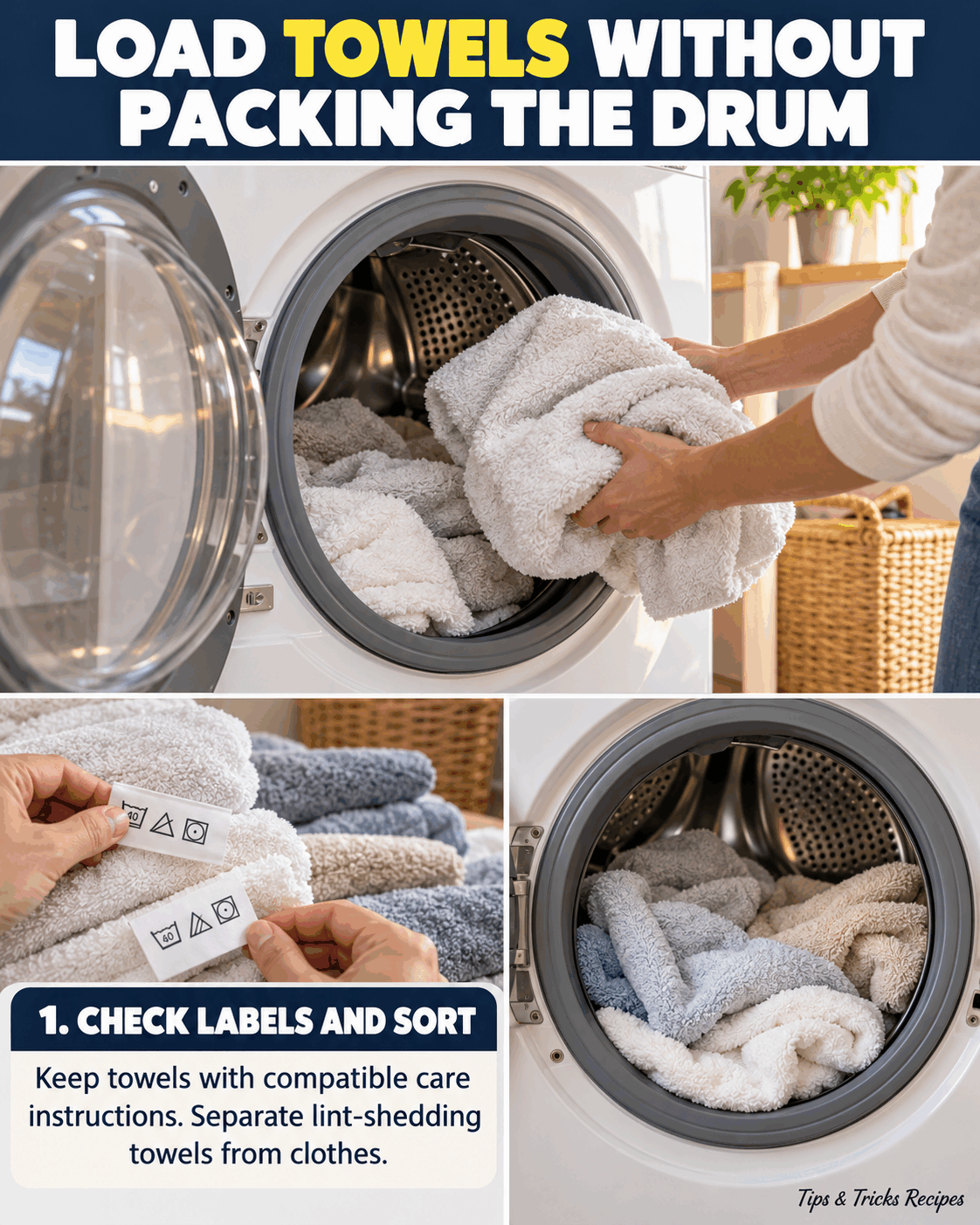
Load Towels Without Packing the Drum
A towel load can look reasonable in the basket and still be too tightly packed once it reaches the washer. Thick loops, oversized bath sheets, and several small hand towels make it surprisingly easy to lose track of the load. Start with the space available, rather than everything waiting beside the machine.
This routine turns loading into three straightforward checks: sort compatible towels, place them loosely, and choose settings from the care labels and washer manual. It uses the machine and detergent you already have. The aim is a sensible load with room for movement, without a promised transformation or an extra laundry additive.
What you need
- Compatible towels
- Washer manual and care labels
- Suitable laundry detergent
- Basket for overflow
Set out the towels you plan to wash, their care labels, your washer instructions, and the detergent recommended for that machine. Keep an empty basket nearby for anything that needs a separate load. Having somewhere to put the overflow makes it easier to stop before the drum becomes a storage bin.
You do not need a measuring gadget for the drum or a homemade laundry mixture. The capacity guidance for your particular model matters more than a universal number of towels. A stack of thin hand towels and a stack of plush bath sheets can represent very different loads despite looking equally tall.
The method
-
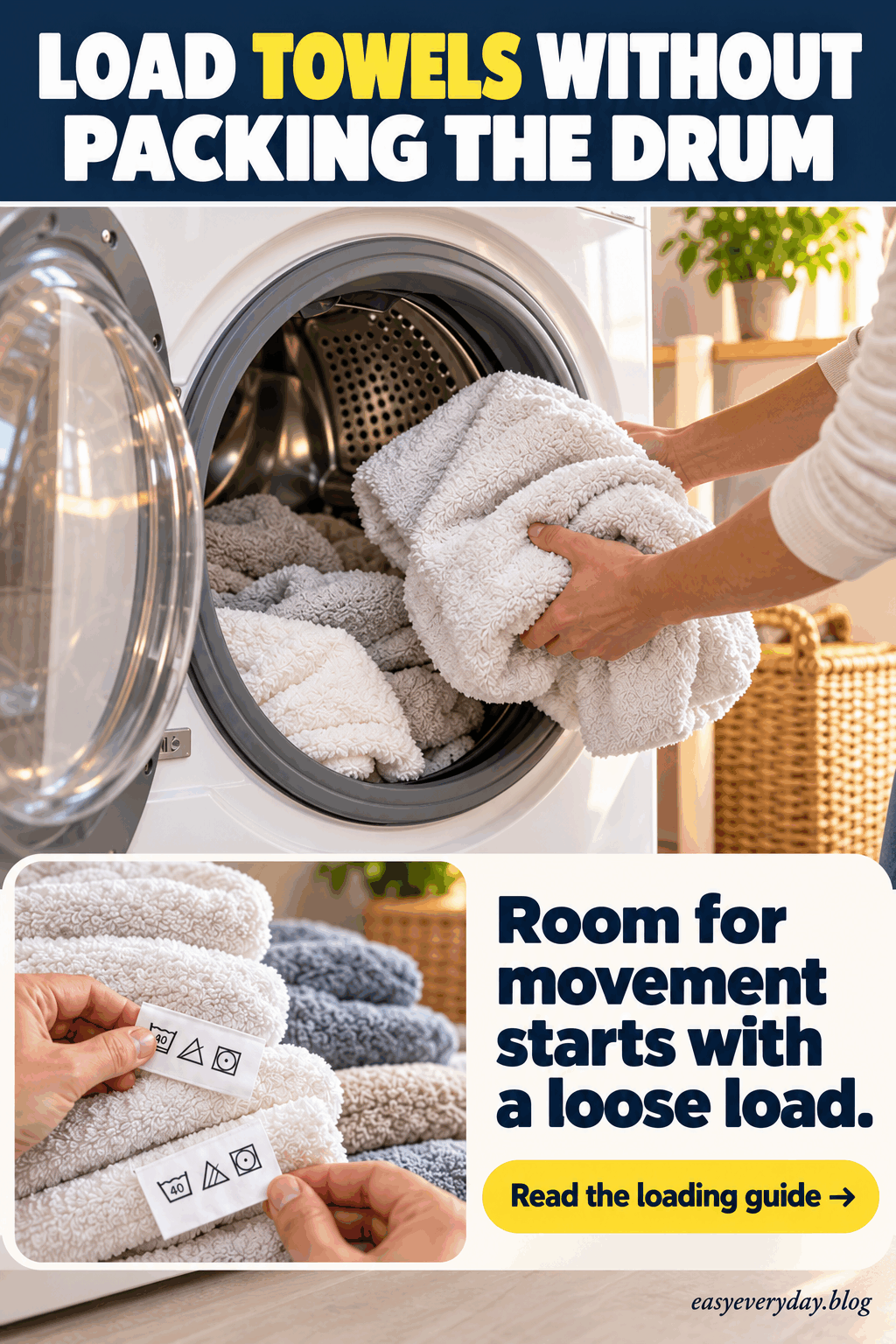
Read the towel labels before grouping the load. Keep together items with compatible washing instructions and colors. Pull out anything with a special finish, decorative trim, or instructions that differ from the others. Make those decisions while the towels are dry and easy to spread across a clean surface.
-
Separate lint-shedding towels from clothing that tends to collect lint. Check the basket for a stray black shirt, leggings, or a tissue caught in another item. A dedicated towel load is also easier to review at a glance than a mixture of towels, jeans, lightweight tops, and household cloths.
-
Open out each towel before placing it inside. Add the towels loosely rather than pushing in a tightly folded stack. Follow the loading arrangement described for your washer, especially if it has a central agitator. Stop and reassess whenever you find yourself using pressure to fit another towel inside.
-
Compare the load with the capacity instructions for your model and selected cycle. Leave the remaining towels in the waiting basket when the limit is reached. Do not rely on a fixed hand-width rule for every washer: drum shape, towel thickness, and cycle limits differ between appliances and loads.
-
Check the detergent instructions alongside the machine guidance. Measure for the actual load and soil level, using HE detergent where required. Keep the measuring cap visible until the dose is decided. Adding more detergent to compensate for an overloaded drum changes the dose without correcting the crowded load.
-
Select the temperature, cycle, and spin settings allowed by the towel labels and your washer instructions. Close the door without catching fabric in the seal. If the machine reports an imbalance, follow its pause and redistribution procedure; do not keep restarting a washer that repeatedly shakes or displays an error.
Why the routine helps
The important change happens before the Start button. A loose, appropriately sized load gives the washer the conditions its loading instructions assume. Sorting also keeps the decision about fabric care separate from the temptation to empty the hamper. This is an organizational routine built around ordinary manufacturer guidance, rather than a special treatment.
Think of the waiting basket as a clear boundary, not a failed attempt to finish the laundry. When the next towels already have a place to go, leaving them out takes less thought. You can plan the second load around the next suitable wash instead of forcing everything into the current one.
Mistakes to avoid
Avoid using the closed door as proof that the load fits. A door may latch even when the contents have been compressed inside. Likewise, the advertised drum capacity is not a promise that every bulky combination works on every cycle. Check the model instructions when changing from ordinary towels to unusually thick items.
Keep bath mats and oversized household textiles out of the routine unless their labels and the washer manual allow that combination. Rubber backing, unusual size, and different washing requirements deserve a separate decision. The towel basket should not become the destination for every washable object collected from the bathroom that morning.
Do not respond to a disappointing result by changing every variable at once. Review loading, label compatibility, detergent dose, and cycle choice in a simple order. If the washer is not draining, makes unfamiliar noises, or keeps stopping, use its troubleshooting instructions instead of assuming another laundry ingredient will solve the problem.
Make it easier next time
Place a small note near the basket with your own model number and the location of its manual. This is especially useful in a shared laundry room where different people choose the load. A clear reference is more practical than repeating an uncertain rule remembered from a different washer in another home.
Keep a separate place for towels that need attention before washing, such as an item with a visible spot or an unfamiliar label. That prevents a last-minute decision while the door is already open. Treat each unusual item according to its care instructions rather than applying one blanket treatment to the entire basket.
If several people share the household laundry, agree on one stopping point: nobody pushes down a load to make room for more. The machine manual still sets the actual limit, but this visible habit is easy to communicate. It also avoids a second person adding towels after the first person has measured detergent.
After unloading, look back at the process rather than judging only the size of the finished stack. Was anything trapped in the door? Did a shirt get mixed in? Did the machine show an error? Those observations can help you organize the next load without claiming that every laundry problem has the same cause.
Frequently asked questions
How many bath towels fit in one load?
There is no useful single number for all washers and towel styles. Check the capacity and cycle guidance for your model, then load loosely within those limits. A household using thick bath sheets may need a different arrangement from one using thin towels, even if both households own the same size laundry basket.
Can I wash hand towels with bath towels?
They can share a load when their care instructions, colors, and intended washing settings are compatible. Review the actual items rather than grouping them only by their names. Keep unusual decorative towels separate when their labels require different care, and do not add small pieces simply to fill every visible gap.
Should every towel use the hottest setting?
Use the temperature permitted by the towel label and the guidance for your washer. The hottest available setting is not automatically appropriate for every towel, trim, or color. When a household item has a specific cleaning requirement, follow that requirement instead of substituting a general towel routine from another source.
What if the washer becomes unbalanced?
Use the pause, unlock, and redistribution steps in the appliance instructions. Do not reach inside a moving machine or bypass its lock. If the problem continues with an appropriately arranged load, consult the troubleshooting section or arrange service; repeated errors deserve attention beyond changing the arrangement of one towel basket.
Does this routine require fabric softener?
No. This loading routine depends on sorting, capacity, appropriate detergent, and compatible settings. Whether you use a fabric-care additive is a separate choice governed by the textile and appliance instructions. You can follow every step here without adding another product or changing the detergent that already suits your washer and household.
Give each towel load a deliberate stopping point before starting the cycle. Keep incompatible items and overflow in their own basket, and let the care labels and your washer manual guide the rest.