
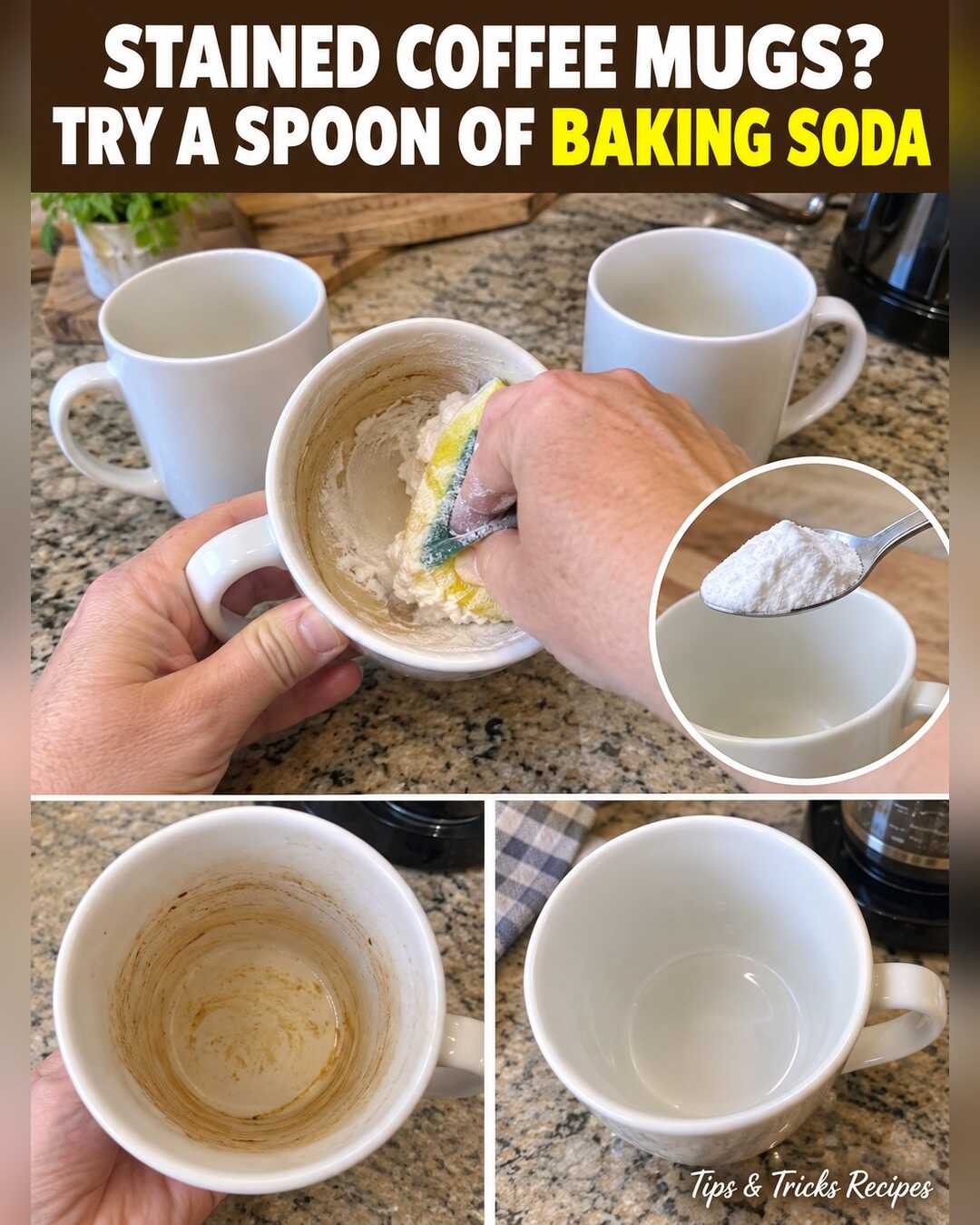
Coffee Stains Inside Your Mugs? A Spoonful of Baking Soda Lifts Them Without Scrubbing Hard
Your favorite mugs come out of the dishwasher looking clean on the outside, but inside there’s a brown ring that won’t go away. Coffee and tea leave tannin stains that build up layer after layer, especially on white ceramic. Over time, even a nice mug starts to look old and a little unappealing.
You don’t need bleach or harsh scrubbing to fix it. A spoonful of baking soda, turned into a soft paste, lifts those brown marks in a minute or two. Here’s the simple method, plus a few ways to keep your mugs bright.
What You’ll Need
- One tablespoon of baking soda per mug.
- A few drops of warm water.
- A soft sponge or a soft cloth.
- Dish soap.
- Optional: a soft bottle brush for tall travel mugs.
The Method, Step by Step
-
Rinse the mug. Rinse the mug with warm water and leave it slightly wet inside. A damp surface helps the baking soda stick and turn into a paste.
-
Add the baking soda. Put about one tablespoon of baking soda into the bottom of the mug. Tilt and turn the mug so some of the powder sticks to the stained walls.
-
Make a paste. Add just a few drops of warm water, a little at a time, until the baking soda becomes a thick paste, like toothpaste. Too much water makes it runny and less effective.
-
Rub in small circles. Using a soft sponge or cloth, rub the paste over the brown ring with small circular motions. Apply gentle pressure. You’ll see the stain fade and the paste turn light brown.
-
Let it sit for stubborn rings. If the stain is old and dark, spread the paste over it and leave it for ten to fifteen minutes. Then rub again. The extra time helps loosen deep layers.
-
Clean the rim and handle area. Don’t forget the rim where your lips touch and the inside edge near the handle. These spots often hold a thin film you don’t notice until the rest is clean.
-
Wash and rinse. Wash the mug with warm water and a drop of dish soap to remove all the baking soda. Rinse well.
-
Dry and check. Dry the mug with a clean towel and look inside under good light. If a faint shadow remains, repeat the paste once more.
Why It Works
Coffee and tea stains come from natural compounds called tannins, which cling to the tiny pores of ceramic glaze. Regular washing removes fresh coffee but leaves a thin layer each time, and those layers add up to a brown ring.
Baking soda is a very fine, mildly abrasive powder. It gently polishes away the stain layer without scratching most glazes, and its mild alkalinity helps break down the tannins. That’s why it works better than soap alone, without the risks of bleach.
Mistakes to Avoid
- Using steel wool or scouring powder. They can scratch the glaze, and scratches stain even faster.
- Using bleach in mugs. It leaves a smell and residue you don’t want near your drinks.
- Scrubbing hand-painted or metallic designs. Rub only on plain glazed areas to avoid fading decorations.
- Leaving baking soda residue. Rinse well so your next coffee tastes like coffee.
- Mixing cleaning products. Use only baking soda, water and dish soap for this method.
Bonus Tips and Variations
Rinse your mug right after finishing your coffee or tea. Even a quick rinse stops tannins from drying on the walls and makes deep cleaning much less frequent.
For tall travel mugs and thermoses, add two tablespoons of baking soda and fill with warm water. Let it soak for an hour, then scrub with a soft bottle brush and rinse.
The same paste works on stained teapots, the inside of a glass coffee carafe and white ceramic spoons.
Once a month, give all your everyday mugs a quick baking soda rub. It takes five minutes and keeps them looking new.
A Quick Monthly Mug Routine
Once your mugs are bright again, keeping them that way only takes a few minutes a month. Gather all your everyday mugs on the counter, the ones you use for coffee, tea and hot chocolate.
Give each one a quick rinse, a spoonful of baking soda and a light rub with a soft sponge. Mugs that are only slightly stained need just a few seconds each.
Wash them all with warm soapy water, rinse and dry. While you’re at it, check the bottom rim of each mug: it can collect a gray line from the counter that’s easy to clean at the same time.
Between monthly cleanings, rinse your mug as soon as you finish your drink. That single habit does more to prevent stains than any cleaning product.
Frequently Asked Questions
Will baking soda scratch my mugs?
On regular glazed ceramic, porcelain and stoneware, baking soda is gentle enough not to scratch when you use a soft sponge. Avoid rubbing hard on matte finishes, hand-painted designs or gold rims. When in doubt, test on a small area at the bottom first.
Can I use vinegar with baking soda?
Vinegar and baking soda cancel each other out, so mixing them doesn’t make the cleaning stronger. Use baking soda paste for the stains. Vinegar can be useful on its own for hard-water spots on glass, but you don’t need it for coffee rings.
Does this work on stainless steel travel mugs?
Yes. Baking soda is safe for most stainless steel interiors. Use a soak with warm water or a paste with a soft brush. Avoid abrasive pads that can scratch the steel. Check the manufacturer’s care instructions for coated or insulated mugs.
Why do my mugs stain even after the dishwasher?
Dishwashers remove fresh coffee but often leave a thin tannin layer, especially if the mug sat with coffee for hours. Hard water can make it worse. A quick rinse after use and a monthly baking soda rub keep the stains from building up.
Can I use this on plastic mugs?
You can try, but plastic absorbs stains more deeply than ceramic, so results may be partial. Use a soft sponge and don’t scrub hard, as plastic scratches easily. If a plastic mug stays stained and smells, it may be time to replace it.
Does this work on tea stains too?
Yes. Tea stains come from the same kind of tannins as coffee, so the baking soda paste works the same way. Strong black tea can leave darker rings faster, so a quick rinse after drinking and a monthly baking soda rub are especially helpful for tea lovers.
A spoonful of baking soda, a few drops of water and a soft sponge: your coffee mugs look bright and clean again inside. Try it on your favorite mug tonight.