
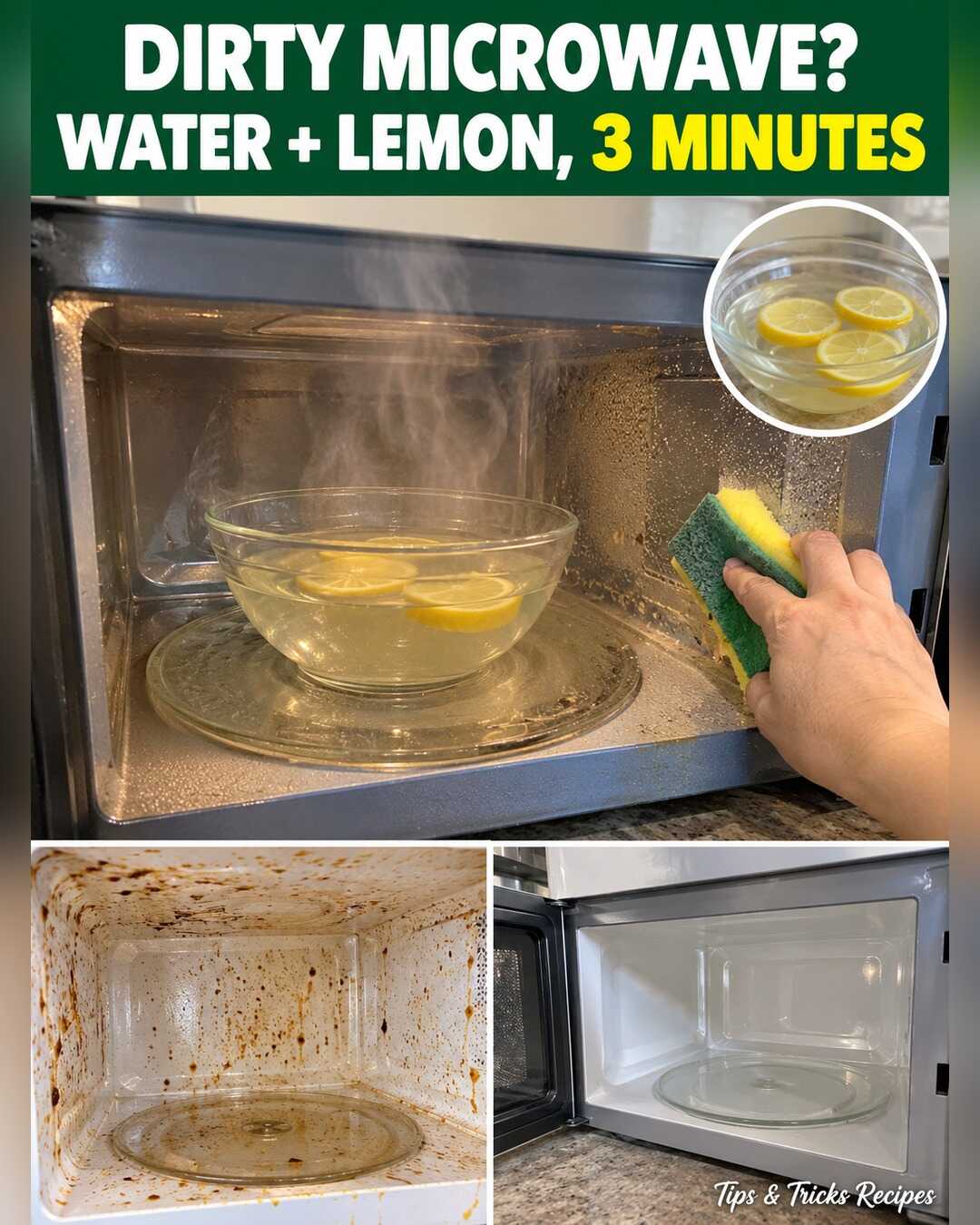
Dirty Microwave? A Bowl of Water and Lemon Does the Hard Work in 3 Minutes
Open the microwave in most homes and you’ll find the same scene: splatters of tomato sauce on the ceiling, dried soup on the walls and a sticky turntable. Scrubbing those hardened spots with a sponge takes time and elbow grease, and it’s one of those chores we keep putting off.
Here is a much easier way. A bowl of water with a few lemon slices, heated for about three minutes, fills the microwave with steam that softens the mess. After that, most of it wipes away in a single pass. Here’s how to do it safely and get the best result.
What You’ll Need
- A microwave-safe glass or ceramic bowl.
- About one cup of water.
- One lemon, sliced (or two tablespoons of lemon juice).
- A wooden toothpick or spoon (optional, see the safety step).
- A soft sponge or microfiber cloth.
- Oven mitts or a dry kitchen towel.
The Method, Step by Step
-
Prepare the bowl. Pour about one cup of water into a microwave-safe bowl. Squeeze a little juice from the lemon slices into the water and drop the slices in. Choose a bowl wide enough that the water doesn’t come close to the rim.
-
Add a safety helper. Place a wooden toothpick or a wooden spoon in the bowl. It helps the water boil evenly and reduces the risk of water suddenly bubbling over when you move the bowl.
-
Heat for about three minutes. Put the bowl in the center of the turntable and heat on high for three minutes, until the water boils and the window fogs up. Microwaves vary, so start with three minutes and adjust next time.
-
Keep the door closed. When the timer ends, leave the door closed for another three to five minutes. The trapped steam keeps working on the dried splatters while the water cools down a little.
-
Remove the bowl carefully. Use oven mitts or a towel: the bowl and the water are very hot. Lift it slowly and set it on the counter. Keep your face away from the steam.
-
Wipe the walls and ceiling. Take the soft sponge and wipe the inside, starting with the ceiling, then the walls and the door. Softened splatters should come off with little effort. Rinse the sponge as needed.
-
Clean the turntable. Take out the glass turntable and wash it in the sink with warm water and a drop of dish soap. Wipe the floor of the microwave underneath, where crumbs and drips hide.
-
Dry and leave the door open. Dry the inside with a clean cloth, put the turntable back and leave the door open for a few minutes. The light lemon scent replaces the old food smell.
Why It Works
Dried food sticks to the microwave walls because it has hardened as it cooled. Steam brings back moisture and warmth, which softens those spots and loosens their grip on the surface. That’s why you can simply wipe them instead of scrubbing.
The lemon adds a fresh smell that helps cover lingering food odors. Its mild acidity also helps a little with greasy films. The real work, though, is done by the steam and the waiting time with the door closed.
Mistakes to Avoid
- Using a metal bowl or one with metallic trim. Metal can spark in a microwave. Use only glass or ceramic labeled microwave-safe.
- Heating too long. If the water boils away, the bowl can overheat. Stick to a few minutes.
- Grabbing the bowl bare-handed. It’s extremely hot. Always use mitts or a towel.
- Using abrasive pads. They scratch the interior coating and the door window.
- Spraying cleaner into the vents. Liquids in the openings can damage the appliance.
Bonus Tips and Variations
No lemon? A few tablespoons of white vinegar in the water also work for steam cleaning, with a stronger smell that fades quickly once you leave the door open.
For stubborn spots that remain, dip the damp sponge in a little baking soda and rub gently, then wipe with a clean damp cloth.
Cover your food with a microwave-safe lid or a paper towel when reheating. It prevents most splatters and makes this deep clean needed far less often.
Do a quick wipe once a week after the last use of the day, while the inside is still slightly warm. Fresh spills come off in seconds.
Keep Your Microwave Clean All Week
A little prevention means you’ll only need the lemon steam trick once in a while. The most useful habit is covering your food. A microwave-safe cover, a plate turned upside down or a paper towel stops most splatters before they reach the walls.
Stir sauces and soups halfway through reheating. Foods that heat unevenly tend to bubble and pop, which is exactly what creates those dried spots on the ceiling.
Wipe spills right away, once the microwave has cooled for a moment. A fresh splash disappears with one pass of a damp cloth; the same splash reheated a dozen times turns hard and brown.
Finally, leave the door open for a few minutes after cooking strong-smelling foods like fish or popcorn. Letting the moisture out helps keep odors from lingering inside.
Frequently Asked Questions
How long should I microwave the lemon water?
About three minutes on high is enough for most microwaves, until the water boils and the window fogs. Lower-power models may need four or five minutes. Then keep the door closed for a few more minutes so the steam can do its job.
Is it safe to boil water in the microwave?
Yes, with a few precautions. Use a microwave-safe bowl, don’t overfill it, add a wooden toothpick or spoon to help even boiling, and don’t heat it longer than needed. Always lift the bowl with mitts, as the water can be very hot.
Can I use bottled lemon juice?
Absolutely. Two tablespoons of bottled lemon juice in a cup of water work just like fresh slices. Fresh lemon gives a slightly stronger scent, but the cleaning effect comes mostly from the steam, so either option is fine.
What if some stains don’t come off?
Repeat the steam step once more, or rub the spot gently with a damp sponge and a little baking soda. Yellow marks on old microwaves are sometimes stains in the coating and may not disappear completely, even when the surface is clean.
How often should I clean my microwave this way?
Every two to four weeks is a good rhythm for most families, plus a quick wipe after big spills. If you reheat sauces and soups often, a weekly steam clean keeps everything easy and stops odors from building up.
Can I clean the outside of the microwave the same way?
For the outside, skip the steam. Wipe the door and handle with a cloth dampened in warm, soapy water, then dry. For the control panel, spray the cloth, never the panel, so moisture can’t seep inside. Stainless steel fronts look best when wiped in the direction of the grain.
One bowl, a cup of water, a few lemon slices and three minutes: your microwave does most of the cleaning by itself. Try it tonight after dinner and enjoy a fresh, clean microwave tomorrow.