Do this after the Orchid flowers fall, the orchid roots grow immediately |Orchid Care for Beginners
Do this after the Orchid flowers fall, the orchid roots grow immediately |Orchid Care for Beginners
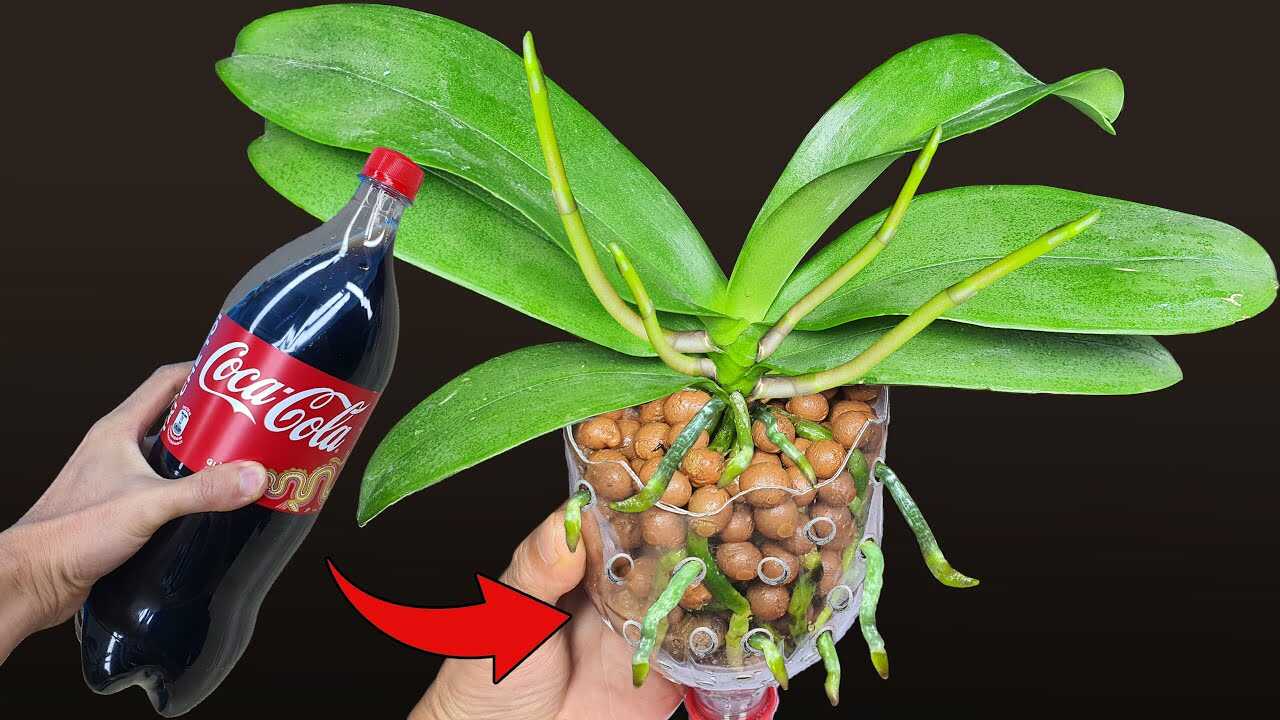
In the photo you can see a clear 2‑liter Coca‑Cola plastic bottle being held beside a Phalaenopsis grown in **LECA (expanded clay pebbles)**. The simple hack here is to repurpose that clean plastic bottle as a small **humidity dome / microgreenhouse** to encourage **new root growth** after flowering. This article explains exactly how to prepare and use the bottle safely, why it works for orchids, and the exact timing, doses and precautions you need.
Why a plastic bottle dome helps orchid roots (real horticultural reason)
Orchids such as **Phalaenopsis** are stimulated to produce new roots when they experience a stable, slightly higher **relative humidity** and slightly warmer, steady air around their base. A clear plastic dome raises ambient humidity around the pot and reduces rapid moisture loss from roots and aerial roots, creating a microclimate similar to their native understory. Used correctly this supports root cell expansion and **root tip emergence over several weeks**. This is a complement to—never a replacement for—proper light, drainage, and nutrition.
Materials and safety first (cleaning the bottle)
- Use an empty 2‑liter clear plastic soda bottle. Remove the label so sunlight can pass evenly.
- Empty and clean thoroughly. Wash with hot water and mild dish soap until no sticky residue remains. Rinse well.
- Sanitize: rinse once with a 1:4 white vinegar:water solution or with hot water. If you use a bleach solution (1 part household bleach to 9 parts water), rinse at least three times and air dry — residual bleach can damage plants.
- Do NOT use cola or sugary liquids on plants. Never pour soda into the pot — it feeds microbes and causes rot.
Step‑by‑step: Turn the bottle into an orchid humidity dome
- Cut the bottle about 12–15 cm (5–6 inches) from the base. The top portion (with the cap) becomes your dome.
- Ventilation holes: Using a heated nail or small drill, make 4–6 holes 6–8 mm (1/4 inch) in diameter around the upper sides of the dome to allow gentle air exchange.
- Positioning: Place the dome over the orchid so it sits on the pot rim or LECA surface, leaving a 1–2 cm gap between the dome rim and the lowest leaf tips — the dome should not press on leaves or the crown.
- Humidity boost: Place a small shallow saucer inside the dome (not touching roots or crown) and pour 50–100 ml (about 2–4 fl oz) of distilled or dechlorinated water into the saucer to increase humidity without wetting the crown.
- Cap on or off: Keep the cap lightly threaded to reduce abrupt air exchange but not fully sealed. The drilled holes create passive ventilation.
Watering and LECA specifics (precise doses and frequency)
Your plant in the photo uses **LECA**, which behaves differently from bark or moss. Use these exact guidelines:
- Growing season (spring–summer): Remove dome for watering once per week. Soak the LECA pot base in room‑temperature distilled water for 10–15 minutes so the pellets absorb moisture, then drain thoroughly. Replace the dome after the pot drains and air is exchanged.
- Cooler months (autumn–winter): Soak every 10–14 days instead of weekly (roots grow slower in cool conditions).
- Misting: While the dome is on, mist aerial roots and leaves (avoid the crown) with distilled water 2 times per week—two short fine sprays each time. Open the dome and ventilate before and after misting to prevent stagnant wetness.
How long to use the dome (coherent timeframes)
Keep the bottle dome in place for a consistent period: expect to see new root tips forming in 4–8 weeks, depending on season. Use the following schedule:
- Spring–Summer: 4–6 weeks under dome, check weekly for root tips.
- Autumn–Winter: 6–8 weeks (growth is slower in cool, low light).
When you see 1–3 new healthy green root tips ~1–2 cm long, begin a gradual acclimation: remove the dome for longer intervals each day over 7–10 days until you no longer need it.
Practical tips from experience (to boost success)
- Light: Keep the orchid in bright, indirect light while under the dome—no direct hot sun that will overheat the enclosed space.
- Temperature: Maintain 20–26°C (68–79°F) for best root activity.
- Airflow breaks: Open the dome daily for 10 minutes to prevent stale air and fungal buildup.
- Watch condensation: Some condensation is good; heavy dripping on the crown is not. If you see persistent dripping, reduce water in the saucer or increase ventilation holes.
- Record keeping: Photograph roots weekly to track progress and avoid overreacting to normal variability.
Common mistakes to avoid (real botanical errors)
- Using the soda inside the bottle: Never apply cola or sugary drinks to the plant—this causes bacterial/fungal outbreaks and root rot.
- Sealing completely: A fully sealed dome traps pathogens and causes crown rot—always provide vents and daily airing.
- Touching the crown with the dome: The dome should not press on leaves or the crown; constant contact can cause wounds and infection.
- Ignoring drainage: LECA must be allowed to drain and dry slightly between soaks. Leaving the pot submerged or waterlogged in the dome encourages root loss.
- Expecting instant results: Roots take weeks to form—don’t mistake early mold or algal growth for root improvement.
Quick troubleshooting
- If roots turn brown and mushy: remove the dome, trim rotten tissue with sterile shears, let the plant dry and only then resume conservative watering.
- If mold appears inside dome: increase ventilation, remove visible mold, sanitize the bottle and restart with a clean dome.
- If no new roots after 8 weeks in ideal conditions: reassess light, fertilizer (a weak balanced orchid fertilizer at 1/4 strength during growing season once every 2–4 weeks), and root health—severe root loss may require repotting.
Repurposing a clean 2‑liter plastic bottle as a humidity dome is a cheap, effective way to nudge an orchid into producing new roots after blooming—when used carefully and combined with good light, correct LECA watering, and patience over several weeks.
Try this method this season: clean a bottle, set up the dome, follow the exact watering schedule above, and check for new root tips in 4–8 weeks. If you see progress, share a photo and keep experimenting with ventilation and timing to match your home conditions.