
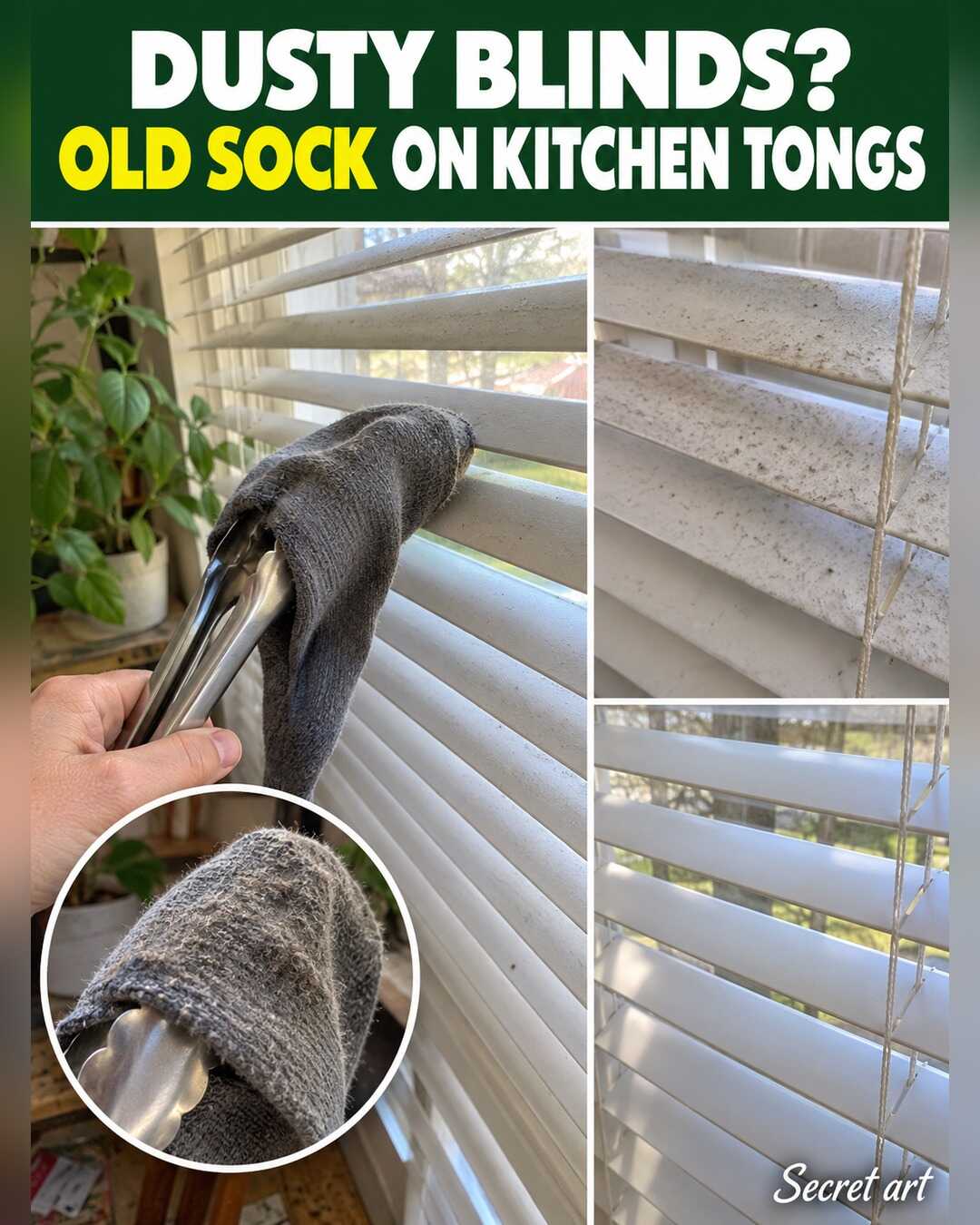
Dusty Blinds? Wrap a Damp Old Sock Around Kitchen Tongs for Clean Slats
Blinds collect dust faster than almost anything else in the home. Each slat has a flat top, and in the kitchen a little grease turns that dust into a grey film. Wiping one slat at a time takes forever, and a normal cloth just pushes the dust around.
Here is a trick that uses two things you probably already have: an old sock and a pair of kitchen tongs. It cleans both sides of a slat at once, and it takes about ten minutes. This guide explains how to set it up and how to get the cleanest result.
What You Need
- A pair of kitchen tongs (the flat-tipped metal kind work best)
- An old, clean cotton sock
- A rubber band or hair tie
- A small bowl of warm water
- A dry cloth or an extra sock for the final pass
- A towel or sheet for the floor or windowsill
Prepare Your Space
Lay a towel under the blinds to catch any dust that falls. Close the blinds so the slats are flat and tilted slightly downward. If the blinds are made of wood, use a barely damp sock. Metal and plastic blinds can handle a slightly wetter one.
Open a window if you can. Dust moves, and fresh air helps carry it away from you.
The Method, Step by Step
-
Dust dry first. Run a dry cloth or a sock across the slats to lift the loose dust. This keeps the damp sock from turning into mud.
-
Dress the tongs. Pull the old sock over the tips of the tongs so that both flat ends are covered. Secure it with a rubber band close to the tips.
-
Dampen the sock. Dip your fingers in the warm water and dab the sock until it is damp, not wet. If it drips, squeeze it out.
-
Clamp one slat. Open the tongs, slide them over a slat so one pad is above and one below, and squeeze gently.
-
Slide from end to end. Pull the tongs along the full length of the slat in one smooth stroke. The sock wipes the top and bottom at the same time.
-
Work down the blind. Move to the next slat. When the sock gets grey, turn it around or switch to a clean part.
-
Finish with a dry pass. Wipe the slats with a dry cloth to remove any moisture and stop streaks.
Why It Works
Dust sticks to a damp surface instead of floating back into the air. A cloth tends to push it around, but a damp sock traps it in the fibres. The tongs add grip and reach, so you can clean the top and bottom in one move.
Cotton is soft enough not to scratch the slats, and a sock fits snugly over the tongs. That is why it works better than a flat cloth for narrow, repeated surfaces like blinds.
Mistakes to Avoid
- Using a dripping sock. Water spots appear on the slats, and wood can warp.
- Pressing too hard. Thin aluminium slats can bend easily.
- Skipping the dry pass. The slats may streak as they dry.
- Using a wool or fuzzy sock. It leaves lint behind.
- Cleaning in one direction only. Switch sides of the sock when it gets dirty so you do not put dust back.
Bonus Tips and Variations
For greasy kitchen blinds, add a single drop of dish soap to the water. Wipe once with the soapy sock, then once with a sock dampened in plain water. For a quick weekly refresh, use a dry sock only.
Fabric blinds and cellular shades need a different approach: use a soft brush or a vacuum with a brush attachment instead. Always check the care instructions first.
A Simple Routine for Dust-Free Blinds
Dust builds slowly, so a little regular care beats a big clean-up. Pick a day each week, such as laundry day, and pass a dry sock over the slats while you are near the window. It takes about two minutes per window.
Tilt the slats in both directions, so you reach the top and the bottom. Do the upper windows first, so dust that falls lands on areas you have not cleaned yet. Wash the sock in the machine after every few uses and keep a dedicated pair in the cleaning drawer.
Once or twice a year, take a close look at the cords and brackets and wipe them as well.
Frequently Asked Questions
Do I need kitchen tongs, or can I use a spatula?
Tongs are best because they grip both sides of the slat. A flat spatula wrapped in a cloth cleans one side at a time, so it takes longer but still helps.
Can I use this on wooden blinds?
Yes, with a barely damp sock and a quick dry pass. Wood absorbs water, so avoid soaking it. If the finish looks worn, use a dry sock only.
How often should I clean my blinds?
A dry sock pass once a week keeps dust low. Do the damp version once a month, or every two weeks in the kitchen where grease collects.
What kind of sock works best?
A clean cotton sock with a smooth weave. Thick wool or very fluffy socks can leave fibres, and nylon does not trap dust as well.
Will this remove sticky grease?
A damp sock lifts light grease. For heavier buildup, add one drop of dish soap to the water, wipe, and then go over the slat with a plain damp sock.
How long does the whole job take?
A standard window takes about ten to fifteen minutes. The tongs make each stroke quick, so it is much faster than wiping slat by slat.
An old sock and a pair of tongs can turn a dull chore into a quick job. Try it on one window and you may never wipe blinds by hand again.
Share this smart trick with a friend who dreads dusting the blinds.