
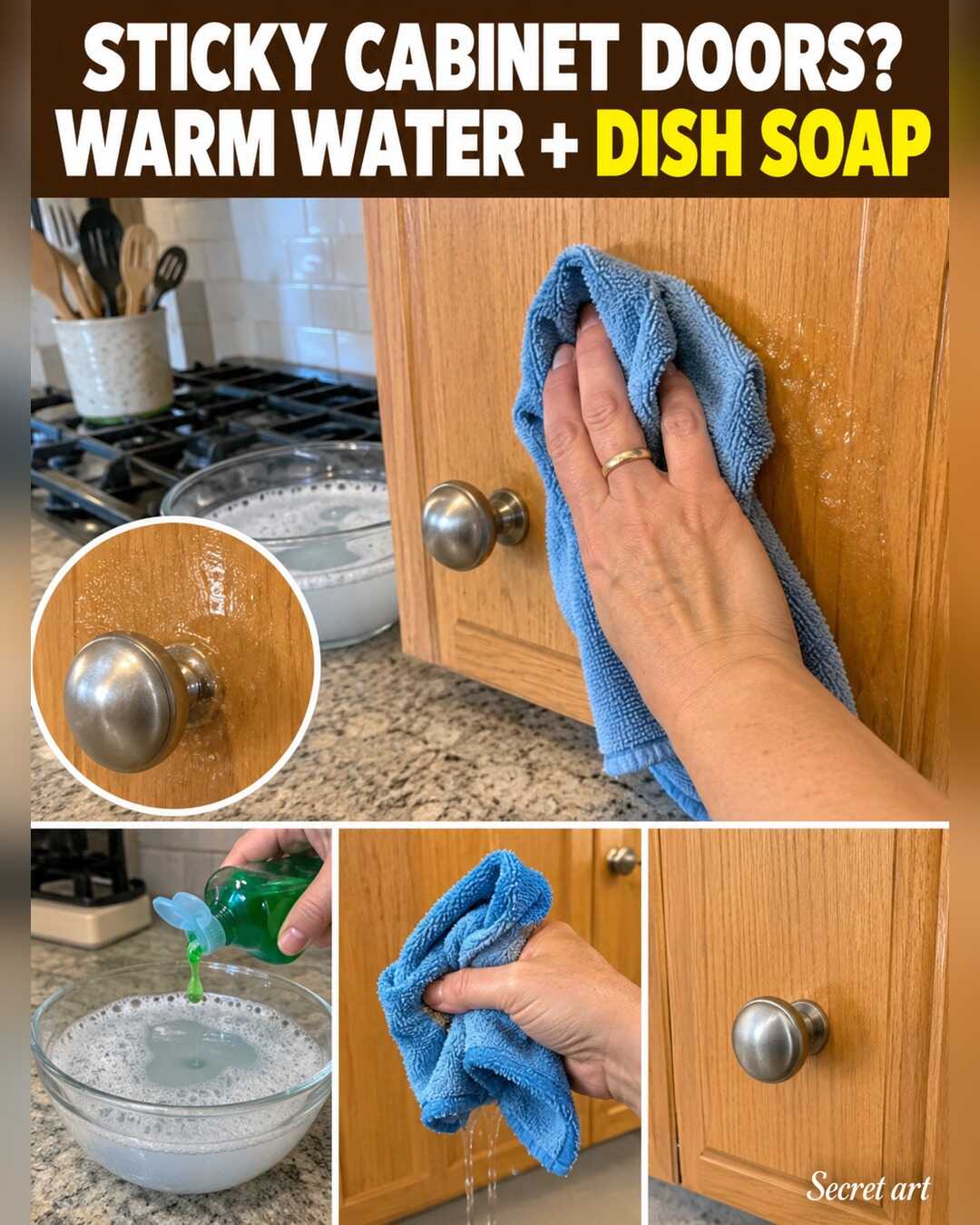
Sticky Kitchen Cabinet Doors? Warm Water and Dish Soap Fix It
You open a kitchen cabinet and your fingers stick to the door. It is a thin, tacky film, usually around the handles and above the stove, and it seems to come back a few days after you wipe it. Cooking oil, steam and everyday touching all add up.
The good news is that you do not need a strong degreaser. Warm water and a few drops of dish soap are enough for most kitchen cabinets. This guide shows the right amounts, the right cloth, and how to avoid damaging the finish.
What You Need
- Warm water, about two cups in a bowl
- Mild dish soap, 3 to 5 drops
- Two soft cloths, preferably microfibre
- A soft sponge (the non-scratch kind)
- A dry towel for buffing
- An old soft toothbrush for corners and handle edges
Know Your Cabinet Finish
Most kitchen cabinets are laminate, painted wood or sealed (varnished) wood. These handle a damp cloth and mild soap well. Raw, unsealed wood is different: it soaks up water and can swell or stain, so use a barely damp cloth and dry at once.
Before you start, test the mix on a hidden spot, such as the inside edge of a door. Wait a few minutes and check for dullness or colour change.
The Method, Step by Step
-
Empty the area. Clear the counter below the cabinets and lay down a towel to catch drips.
-
Mix the cleaner. Pour two cups of warm water into a bowl and add 3 to 5 drops of dish soap. Stir lightly. Too much soap leaves a film that attracts dust.
-
Wring out the cloth. Dip a soft cloth, then wring it until it is only damp. Dripping cloths push water into seams and hinges.
-
Wipe in sections. Start at the top of each door and move down, following the grain on wood. Pay extra attention around handles and near the stove.
-
Treat the stubborn spots. For sticky patches, hold the damp cloth against the spot for 30 seconds to soften it, then rub gently. Use the soft toothbrush around handle edges and grooves.
-
Rinse with a clean cloth. Wipe again with a second cloth dampened with plain water to pick up any soap left behind.
-
Dry right away. Buff the surface with a dry towel. This step removes streaks and protects the finish.
Why It Works
The sticky layer on a cabinet is a mix of cooking grease, tiny droplets from steam and dust. Dish soap is made to break up grease, which is why it works so well on this kind of residue. Warm water helps the soap spread and loosen the film.
Because the mix is mild, it cleans without stripping the finish. That also means you can repeat it often, which matters in a busy kitchen.
Mistakes to Avoid
- Soaking the door. Water can seep into seams and swell the board.
- Using scouring pads or abrasive powder. They scratch laminate and dull paint.
- Using too much soap. It leaves a film that feels sticky again.
- Skipping the dry buff. Water spots and streaks appear quickly.
- Mixing cleaners. Stick to soap and water. Never mix with bleach or other products.
Bonus Tips and Variations
Clean the cabinets nearest the stove every two weeks, and the rest once a month. A quick wipe of the handles each week stops buildup from the start.
Run your extractor fan while cooking, and keep a small cloth near the stove for fast wipe-ups. For older, glossy doors, a final wipe with a dry microfibre cloth brings back some shine.
A Simple Routine for a Kitchen That Stays Clean
Most sticky buildup is easy to stop early. Keep a small damp cloth near the stove and wipe the cabinet fronts after cooking something greasy, like frying or roasting. It takes ten seconds and saves you a long scrub later.
Wash your hands before opening cabinets while you cook, or use the cloth to pull the handle. Check the cabinet above the toaster and the kettle too, because steam leaves a film there as well.
If a door still feels tacky after cleaning, repeat once with fresh water and a dry buff. A second light pass is often better than one hard scrub.
Frequently Asked Questions
Why do my cabinets get sticky so fast?
Cooking vapour carries tiny droplets of oil that settle on nearby surfaces. Add dust and fingerprints, and you get a tacky film. Cabinets near the stove collect the most.
Can I use vinegar instead?
Diluted vinegar can help on some finishes, but it can dull certain varnishes. Dish soap and water is the gentler first choice, and it works on grease better.
Is it safe for painted cabinets?
Usually yes, if the paint is fully cured. Use a barely damp cloth, test a hidden corner and avoid rubbing hard on matte paint, which marks easily.
How much soap is too much?
Three to five drops in two cups of warm water is plenty. If the cloth feels slippery or leaves streaks, you used too much. Rinse again with clean water.
What about the handles?
Handles collect the most grime. Wipe them with the same mix, then use a toothbrush for grooves. Dry them at once, especially if they are metal, to avoid spots.
How often should I clean the cabinet doors?
Once a month for most cabinets, every two weeks near the stove. A short wipe often keeps the job easy and prevents heavy buildup.
Warm water and a few drops of dish soap can bring your cabinet doors back to a smooth, clean feel. Try it on the stickiest door first and enjoy the difference.
Pass this tip on to a friend who is tired of sticky handles.