
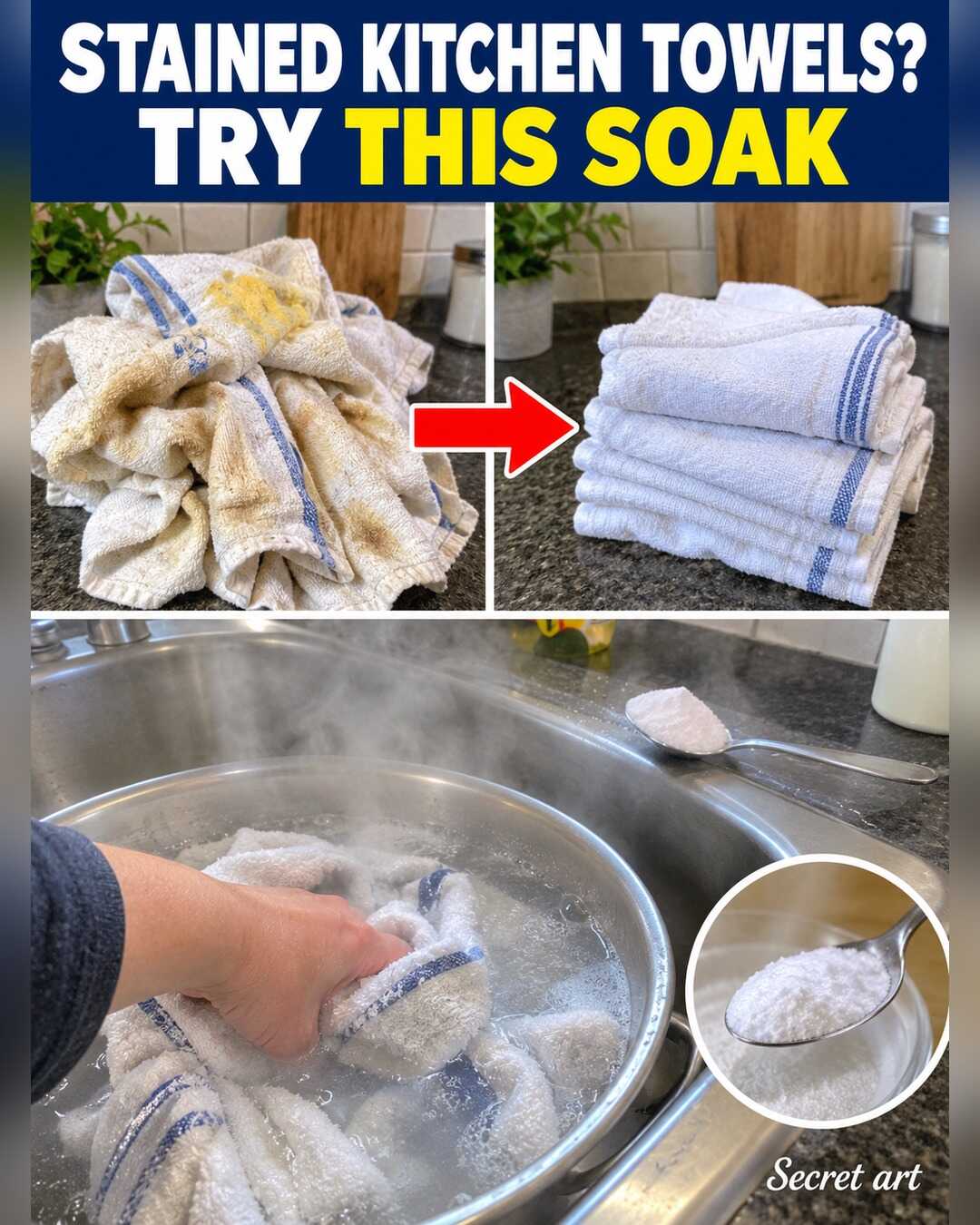
Stained Kitchen Towels? A Baking Soda and Hot Water Soak Makes Them Whiter
You wash your kitchen towels again and again, but the stains stay. There is a yellow patch from a tomato sauce, a brown ring from coffee, and a grey dullness that makes the whole towel look tired. Throwing them away feels wasteful, and bleach is not always a good idea.
A long soak in hot water with baking soda is a simple, low-cost way to get cotton towels looking whiter again. This guide gives you the exact amounts, the timing, and the little details that make the difference between a so-so result and a fresh, bright towel.
What You Need
- Baking soda (about 1/2 cup, or 100 g, per large basin)
- Very hot water from the tap or kettle
- A clean sink, bucket or large basin
- Your stained cotton or linen kitchen towels
- Your usual laundry detergent
- A wooden spoon or tongs for stirring
Check the Label First
Read the care label on each towel. Plain white or light cotton towels handle hot water very well. Brightly coloured towels, printed designs and towels with a polyester blend should be tested on a small corner first, or soaked in warm water instead of hot.
Wool, silk and delicate fabrics do not belong in this soak. When in doubt, keep the water warm and the time shorter.
The Method, Step by Step
-
Shake and pre-rinse. Shake out crumbs and rinse each towel under cold water to remove loose food. Hot water can set some stains, so cold comes first.
-
Fill the basin. Pour about four litres (a gallon) of very hot water into a sink or bucket. Be careful with the kettle and keep children away.
-
Add the baking soda. Stir in half a cup of baking soda until most of it dissolves. Use a spoon, not your hands, while the water is hot.
-
Add the towels. Push the towels under the surface so they are fully covered. Press out air bubbles. Do not overcrowd the basin; a few towels at a time work best.
-
Soak for 4 to 8 hours. Let the water cool on its own. A long, cool-down soak gives the baking soda time to loosen grease and discolouration. Overnight is fine for white cotton.
-
Wring and wash. Wring the towels out, then wash them in the machine with your normal detergent, at the hottest temperature the label allows.
-
Dry in the sun if you can. Sunlight is a free, gentle brightener for white cotton. If you tumble dry, check the stains first: if any remain, repeat the soak before drying.
Why It Works
Baking soda is a mild alkali. In hot water, it helps lift grease and food residue from the fibres, and it softens the water so detergent works better. That is why towels often feel fresher and smell cleaner after a soak.
Much of the grey, dull look in kitchen towels comes from a thin layer of oil and soap residue, not just from visible stains. The soak loosens that layer, and the wash afterwards rinses it away.
Mistakes to Avoid
- Soaking coloured towels in very hot water. Dyes may bleed or fade.
- Mixing with vinegar in the same basin. The two cancel each other out. Use them on different days if you want both.
- Combining with bleach. Never mix cleaning products. Use baking soda on its own.
- Skipping the pre-rinse. Food left in the towel can darken in hot water.
- Drying a stained towel in the dryer. Heat can set stains for good.
Bonus Tips and Variations
For a stubborn spot, make a paste of baking soda and a little water, rub it in gently with a soft brush, and leave it for 20 minutes before soaking. For everyday freshness, add a few tablespoons of baking soda to the drum with your normal wash.
Wash kitchen towels separately from other laundry. They pick up grease and food that can transfer to clothes. Change them every two or three days, and let them dry fully between uses.
A Simple Routine That Keeps Towels Fresh
Stains are easier to treat when they are new. Rinse a messy towel in cold water as soon as you can, even before it goes in the laundry basket. A towel that waits damp for days will smell and discolour much faster.
Hang towels so they dry flat, away from the stove. Rotate your set so no single towel does all the work. Use one for hands and a different one for dishes, and keep a darker one for greasy jobs. This small habit cuts down on the stains you have to soak out later.
If a towel is thin, frayed or smells musty even after washing, it may be time to turn it into a cleaning rag.
Frequently Asked Questions
Can I use this on coloured towels?
Use warm water, not hot, and test a hidden corner first. Colourfast cotton often does fine, but strongly dyed towels may fade. If the corner changes colour, skip the soak and wash normally.
How much baking soda do I need?
Half a cup in a basin of about four litres is a good starting point. For a bucket-sized soak, use a quarter cup. More is not better, because extra powder just stays on the fabric.
Does it remove old, set-in stains?
It can lighten many of them, but very old stains may not disappear. Repeat the soak once or twice, and combine it with sunlight for the best chance of improvement.
Can I add detergent to the soak?
Yes, a spoonful of regular detergent can help with greasy towels. Keep it modest to avoid too much foam, and rinse well in the machine afterwards.
Is it safe for my washing machine?
Baking soda is commonly used in laundry. Soak the towels in a basin, then wring and wash. Do not pour a large amount of dry powder into the drum at once.
How long will the towels stay white?
With regular washing and drying in the sun, the brightness lasts several weeks. Once towels start to look dull again, repeat the soak.
A simple baking soda soak will not turn every towel brand new, but it gives most of them a real second chance. Start with your dullest one and see the difference.
Share this simple trick with someone who has a drawer full of tired kitchen towels.