
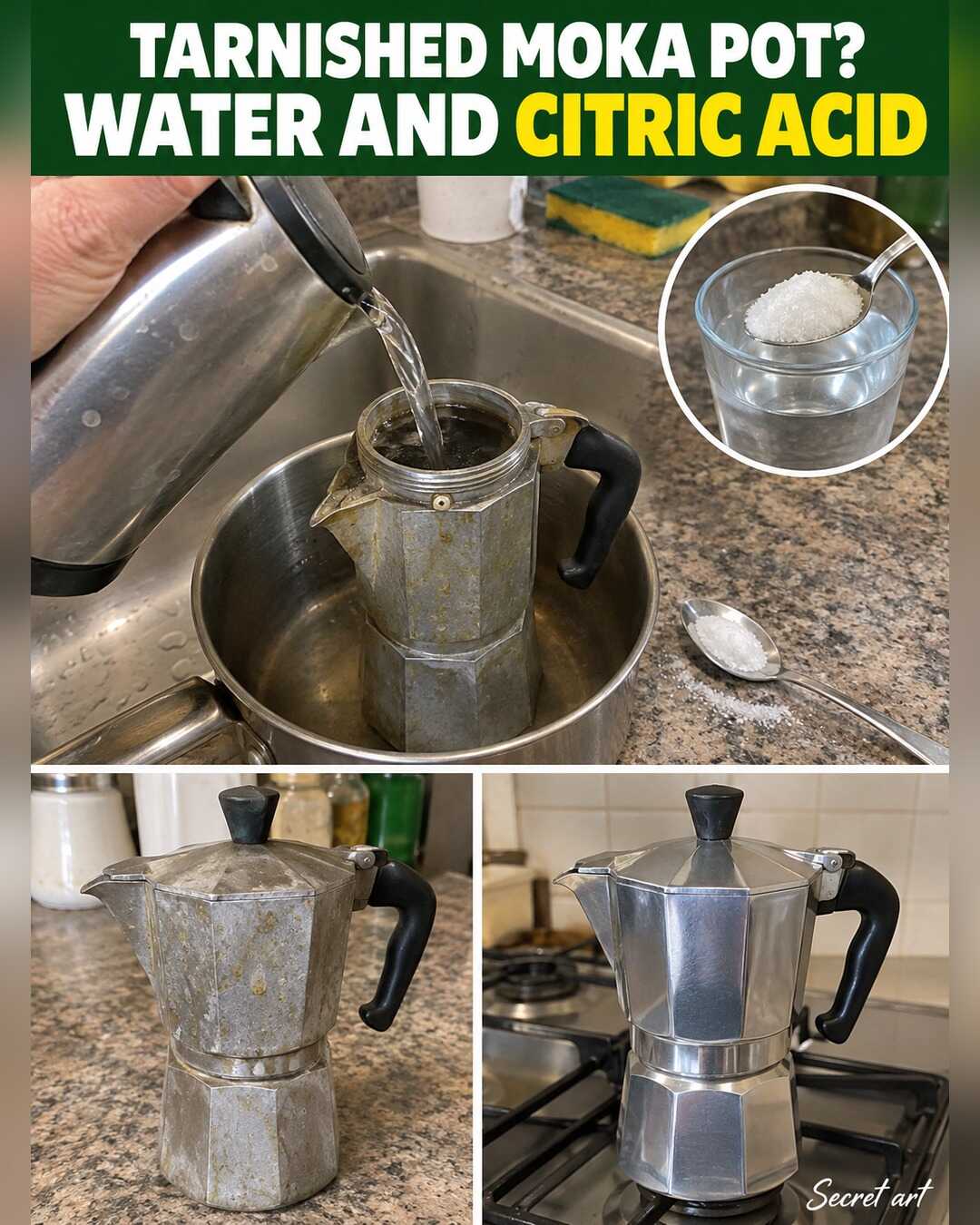
Tarnished Moka Pot? Water and Citric Acid Make It Shiny Again
Your moka pot used to gleam on the stove. Now it looks grey, a little cloudy, with chalky spots near the bottom and a dull film on the outside. You rinse it after every coffee, yet the shine never comes back, and scrubbing only seems to make it look worse.
The fix is already in your kitchen cupboard or easy to buy: citric acid and water. This guide shows you how to use them on a tarnished moka pot, how long to wait, and the mistakes that can damage the metal. It takes about twenty minutes, and most of that is waiting.
What You Need
- 1 to 2 teaspoons of citric acid powder (sold in the baking or cleaning aisle)
- Warm water
- A saucepan or a deep bowl big enough for the pot parts
- A soft sponge or a soft cloth
- A dry, clean tea towel
First, Check What Your Pot Is Made Of
Most classic moka pots are made of aluminium. Some are stainless steel. Both can be cleaned with a mild citric acid solution, but aluminium is softer and does not like long soaks. If you are not sure, a pot that feels very light and looks matte grey is almost always aluminium.
Look at the rubber ring and the filter too. If the gasket is cracked or hard, replace it. Cleaning will not fix a worn seal, and you want the pot to close properly before you try it again.
The Method, Step by Step
-
Take the pot apart. Unscrew the top and bottom chambers. Remove the filter plate and the rubber gasket. Wash everything quickly with warm water to get rid of loose coffee oil.
-
Mix the solution. Fill a saucepan or bowl with about one litre (four cups) of warm water. Stir in 1 to 2 teaspoons of citric acid until it dissolves completely. The water should look clear.
-
Soak the parts. Place the two chambers in the water so the grey areas are covered. Add the filter plate and the funnel. Keep the rubber gasket out, or give it only a short dip.
-
Wait 15 to 20 minutes. Do not leave it for hours. You may see tiny bubbles and a slight change in colour. That is the acid loosening the mineral film and the dull layer.
-
Wipe gently. Take each part out and rub with a soft sponge. Stubborn spots inside the lower chamber usually come off with light pressure. Never use a steel scourer.
-
Rinse very well. Run clean water over every part, including the small holes in the filter plate and the spout. Then make one batch of water-only “coffee” through the pot and throw it away.
-
Dry completely. Dry every piece with a tea towel and let them air for an hour before you put the pot back together. Moisture left in a closed pot is what dulls it again.
Why It Works
The grey film on a moka pot is mostly limescale from tap water, mixed with a thin layer of coffee oil and a natural oxide that forms on aluminium. Citric acid is a mild acid. It breaks down mineral deposits without needing hard scrubbing.
Because it is gentle and rinses away with plain water, it is a popular choice for kettles, taps and coffee makers. The key is a weak solution and a short soak. That is enough to bring back most of the brightness without eating into the metal.
Mistakes to Avoid
- Using the dishwasher. Detergent turns aluminium dark and dull. Hand washing is the safest way to keep it bright.
- Soaking overnight. A long soak can leave the surface pitted or patchy.
- Mixing with other cleaners. Use citric acid and water only. Never combine it with bleach or other cleaning products.
- Scrubbing hard. A steel pad leaves scratches that collect coffee oil and dull the pot faster.
- Skipping the rinse. Leftover acid can affect the taste of your next coffee.
Bonus Tips to Keep the Shine
Rinse the pot with warm water right after each use, without soap. Soap leaves a film on aluminium that can change the taste of the coffee. Dry the parts and store the pot open, with the top unscrewed a little, so air can move through.
Repeat the citric acid soak every month or two if your water is hard. Soft water areas can go much longer. For a polished look on the outside of a stainless steel pot, wipe with a cloth that is barely damp, then buff with a dry one.
Frequently Asked Questions
Can I use lemon juice instead of citric acid?
Yes, in a pinch. Dilute the juice of half a lemon in a litre of warm water and follow the same short soak. Lemon juice is less strong and leaves a sticky residue if you do not rinse well, so powdered citric acid is usually easier.
How often should I descale my moka pot?
If you live in a hard water area, once a month is a good habit. In soft water areas, every three months is enough. Watch for chalky spots or slower coffee flow, and clean when you notice them.
Will this remove the dark coffee stains inside?
Light coffee film usually lifts with a soak and a soft sponge. Older, darker marks may fade only partly. A second short soak the next day often helps more than a long first one.
Is it safe for aluminium?
A weak solution used for 15 to 20 minutes is widely used on aluminium moka pots. Avoid strong mixes, long soaks and heat. If the metal looks pitted or flaky, stop and replace the pot.
Can I soak the rubber gasket?
A very short dip is fine, but it is better to wash it separately in warm water. Replace it once it hardens, shrinks or cracks, as this is a common cause of leaks.
What if the pot is still dull afterwards?
Some dullness is simply the natural ageing of aluminium and will not disappear. The pot will still be clean and safe to use. Aim for clean and well rinsed, not a mirror finish.
A little citric acid and some patience can bring your moka pot back to life. Try it this weekend, and your next cup of coffee will come from a pot that looks as good as it brews.
Keep this simple routine in your kitchen notes and share it with a friend who loves her morning coffee.