
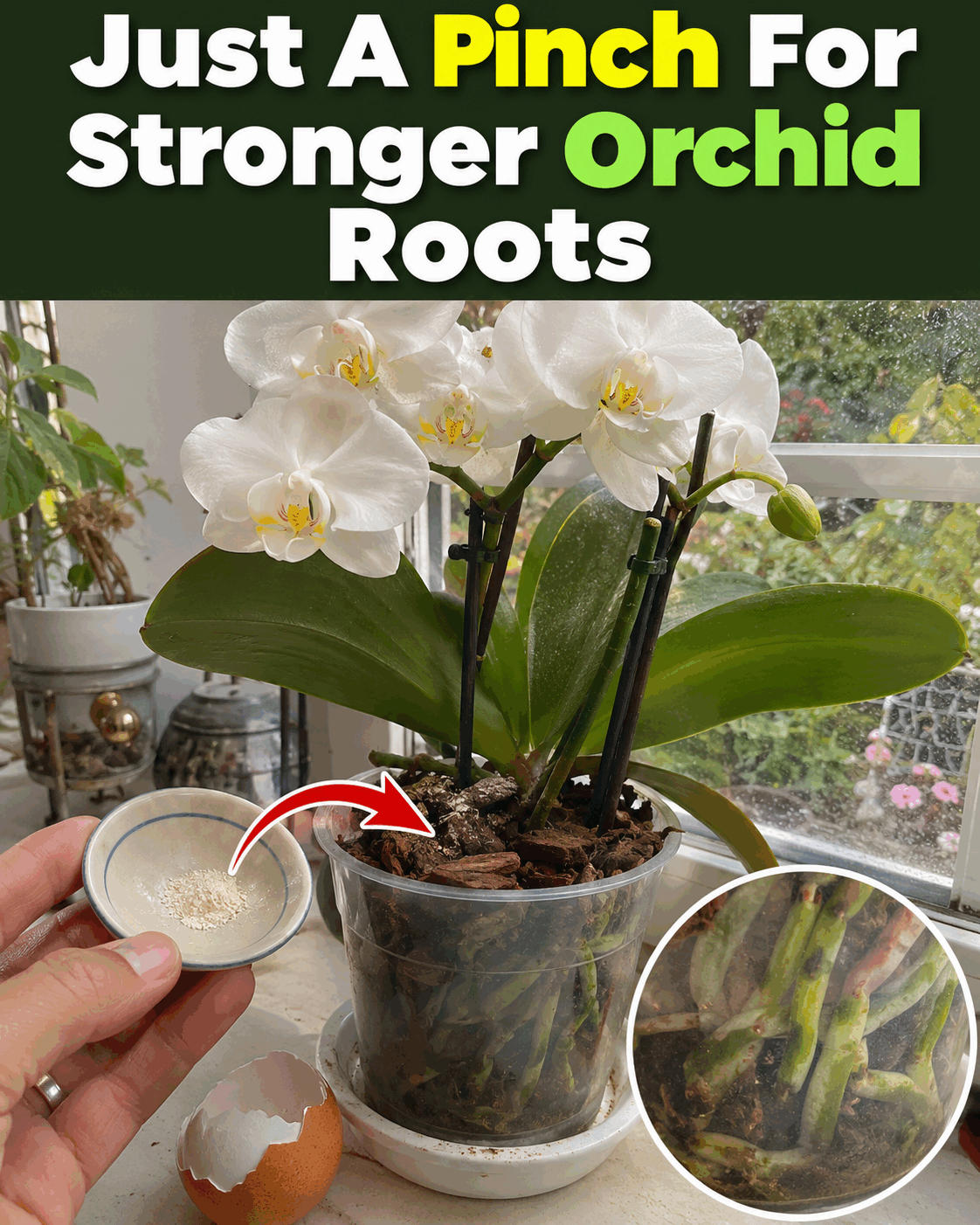
Just a Pinch of Eggshell for Your Orchid: Stronger Roots and Future Flowers
Clean, finely ground eggshell is the everyday ingredient in this small orchid-care experiment. A tiny pinch around a healthy Phalaenopsis can become part of a patient routine for sturdy roots and future flowers. Prepare the shell properly, keep it away from the crown, and let normal orchid care do the heavy lifting.
If your moth orchid has finished blooming, its quiet period is a chance to look at its roots rather than chase another flower spike immediately. The aim here is a healthy growing environment. Eggshell breaks down slowly, so consider it a modest optional addition rather than a quick substitute for balanced orchid fertilizer.
What you will need
Choose one clean eggshell from a cooked egg, a small bowl, a mortar or clean spice grinder, a measuring spoon, and a healthy Phalaenopsis growing in an airy orchid mix. Its inner pot must have drainage holes. A clear nursery pot makes checking root color and moisture especially easy.
- Clean eggshell with visible membrane removed
- A mortar or dedicated clean grinder
- A tiny pinch of powder, less than 1/16 teaspoon
- An established orchid in draining bark mix
- Plain room-temperature water
Prepare the shell before it reaches the pot
Rinse the shell to remove any remaining egg white or yolk. Peel off the loose inner membrane where practical, then let the shell dry completely on a clean plate. Do not put damp food residue into an indoor plant pot. If the shell smells unpleasant, discard it rather than trying to disguise the odor.
Crush the dry shell inside a folded towel first, then grind it as finely as your equipment allows. Avoid breathing in the dust, and keep the work away from children and pets. Coarse pieces are less useful for this little experiment because they remain recognizable in the bark for a very long time.
The method, step by step
-
Check the orchid first. Healthy roots are firm, turning green when wet and silvery as they dry. Soft brown roots, a sour smell, or a constantly wet pot call for a drainage check before any home addition. A struggling orchid needs its growing conditions corrected, not an extra ingredient layered on top.
-
Wait until a normal watering day. Set the inner pot in a sink or bowl where excess water can run away freely. Keep the plant upright and look for the open spaces between pieces of bark. Avoid the central crown and the places where new roots emerge from the stem.
-
Take only a tiny pinch of the fine shell powder, less than 1/16 teaspoon for a typical small orchid pot. Scatter it across two or three exposed pieces of bark near the outside of the pot. Do not coat the roots or create a white crust over the entire surface.
-
Water using your usual method, then allow the pot to drain fully before putting it back inside its decorative cover. Do not leave water standing underneath. Wipe away any powder that lands on the leaves. Water trapped between leaves or in the crown deserves attention regardless of which optional addition you use.
-
Record the date and leave the orchid alone. Do not repeat more often than once a month during active growth, and skip the next application if powder is still collecting. Watch root tips and emerging leaves over several weeks. A new flower spike depends on the plant’s condition, light, and season as well.
Why gardeners use eggshell
Eggshell is made mostly of calcium carbonate. Calcium is a plant nutrient, which explains the appeal of saving shells instead of throwing them away. However, intact shell is not instantly soluble plant food. Even fine powder releases material slowly, and its behavior depends on moisture and the chemistry of the potting medium.
That distinction keeps expectations sensible. A pinch can be an inexpensive way to try a familiar household practice without burying the pot in debris. It cannot correct every deficiency, reverse root rot, or guarantee a bloom date. Continue a suitable orchid-feeding routine according to the product label rather than increasing household additions to compensate.
The care that supports stronger roots
Give a Phalaenopsis bright indirect light, such as a position near an east-facing window or behind a light curtain. Harsh midday sun can scorch its leaves. Turn the pot occasionally if growth leans, but keep its location reasonably steady. The comfortable growing environment matters more than making frequent changes to its food.
Let bark approach dryness between waterings without leaving healthy roots shriveled for long periods. A clear pot helps, but also judge its weight and the moisture inside the mix. Bark that has broken down into a dense, soggy mass should be replaced at an appropriate repotting time. Powder cannot restore airflow to decomposed material.
Mistakes to avoid
Do not add vinegar, lemon juice, salt, or baking soda to turn this into a homemade chemical treatment. Do not bury whole eggs, wet membranes, or kitchen scraps in orchid bark. Their decomposition is a separate process and can create odors and attract pests. The small, clean, dry quantity is the entire point.
Avoid applying shell powder to every watering or mixing a handful into a tiny pot. More material does not mean more flowers, and repeated alkaline additions can change growing conditions. If a white deposit, unusual smell, or decline appears after the experiment, stop using it and reassess the mix and your watering routine.
A useful way to track the result
Take one ordinary photograph of the roots and leaves before the first application, then another in the same light a month later. Note watering dates and any fertilizer you use. Compare new growth rather than counting old flowers that were already present. A simple notebook prevents an attractive plant from being mistaken for proof of one ingredient.
Frequently asked questions
Can I use a whole eggshell?
A whole shell is awkward in orchid bark and breaks down very slowly. For this routine, use only a tiny pinch of completely dry, finely ground shell. Keep the rest out of the pot. The goal is a light optional addition that leaves drainage and airflow essentially unchanged.
Will this make a flower spike appear immediately?
No reliable timetable follows from a pinch of shell. Phalaenopsis orchids need healthy roots, adequate light, and suitable seasonal conditions before they can bloom well. Watch for firm growing roots and a new leaf first. Treat any later flower spike as part of the plant’s overall care history.
Can I use it on an orchid with rotten roots?
Address rot before trying this routine. Remove the decorative cover and check drainage, moisture, and the condition of the bark. Soft or collapsing roots need an appropriate assessment and, when necessary, careful repotting. Skip optional shell powder while the plant is stressed or while you are rebuilding its basic care.
Should I stop using orchid fertilizer?
No. A pinch of shell does not provide the full range of nutrients an orchid requires. Use an appropriate orchid fertilizer at its labeled dilution and schedule, adjusting for the plant’s growth stage. Avoid combining several homemade feeds at once, because you will have no clear idea what changed the potting conditions.
Keep the shell dose tiny and the observation period patient. Healthy roots, airy bark, and consistent care give your orchid the best foundation for its next flowers.