
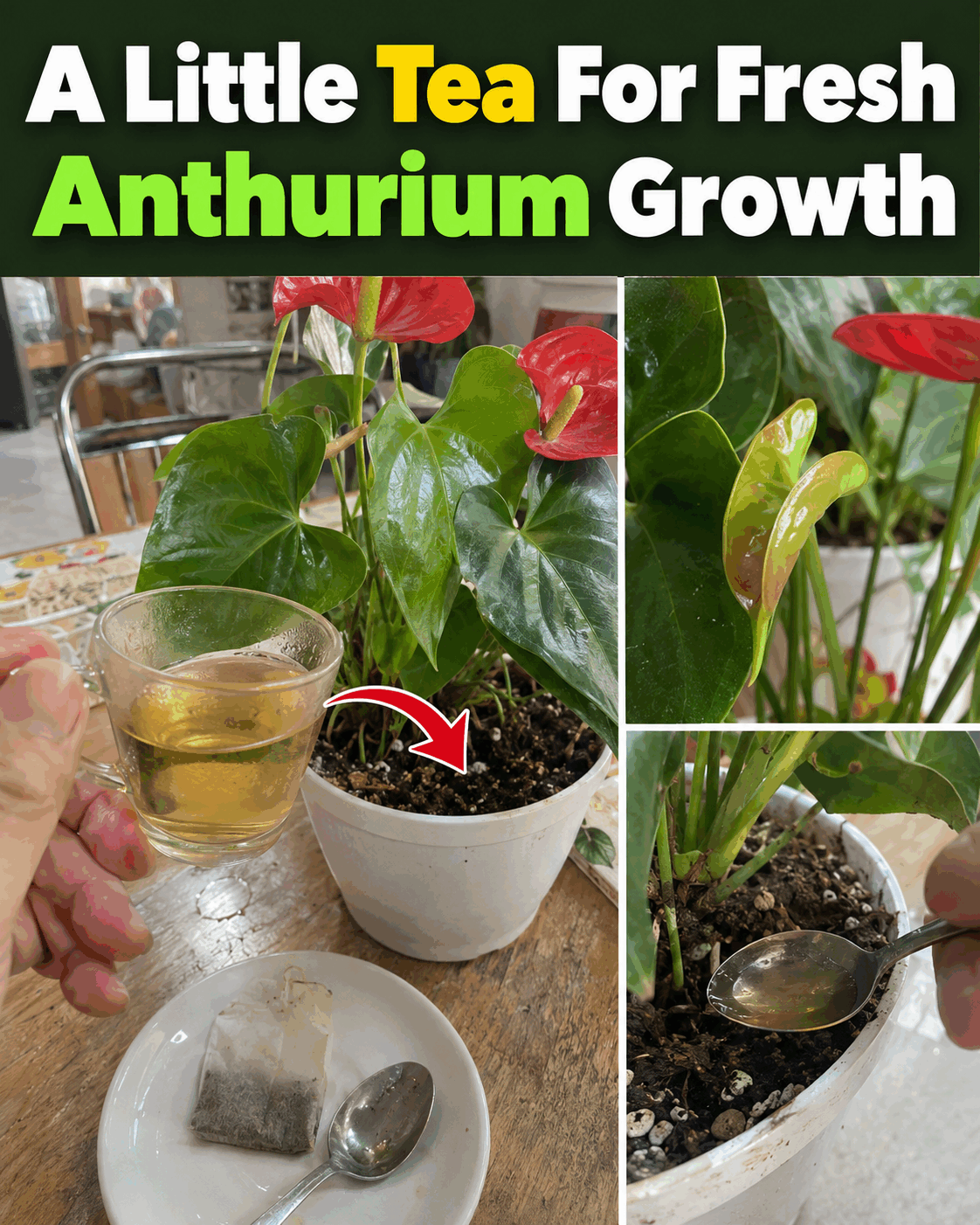
Put THIS by Your Anthurium: A Little Tea for New Leaves and Future Flowers
Plain, unsweetened black tea is the kitchen ingredient in this gentle anthurium routine. Make it fresh, dilute it until it is barely tinted, cool it completely, and use only a tablespoon. The idea is to accompany healthy leaf growth and future colorful spathes while keeping moisture and everyday care under control.
Anthuriums reward consistency. A new leaf usually unfolds slowly, and the colorful part people call a flower is a modified leaf, or spathe, surrounding the actual flowers on the central spike. This small household experiment fits around an established care routine; it should never turn the pot into a container for leftover drinks.
What you will need
Start with a healthy anthurium in a draining pot and a loose indoor-plant mix. Have a plain black-tea bag, a heatproof mug, clean water, a measuring tablespoon, and a second cup for dilution. Choose unflavored tea without sugar, milk, sweetener, citrus, or essential oils. The short ingredient list makes the routine easy to control.
- One plain black-tea bag
- About one cup of water for a brief brew
- Additional clean water for dilution
- One tablespoon of the finished pale tea
- A healthy anthurium due for watering
Make a very light infusion
Dip the tea bag into hot water briefly, about thirty seconds, rather than preparing a dark mug for drinking. Remove it and allow the liquid to cool fully. Mix one part of that weak tea with at least four parts plain water. The finished liquid should look pale, not like a strong breakfast brew.
These quantities describe a cautious household trial, not a standardized fertilizer recipe. Tea strength varies by brand, leaf size, and brewing time. If your cup is unexpectedly dark, dilute it further. Make only what you need that day and keep the measuring spoon separate from any cup containing milk or other drink ingredients.
Apply it in five careful steps
-
Check the potting mix with your finger. If the top inch or two is still moist, wait rather than adding anything. Lift the pot to learn its weight and check that water can escape underneath. A plant that is already standing in a wet decorative cover should receive no extra liquid.
-
On the next appropriate watering day, give the plant its normal plain water first, allowing excess to drain. This keeps a small experimental addition from becoming your entire watering method. Keep the leaves and the center of the plant dry, and handle new growth gently because unfurling leaves can be easily torn.
-
Measure one tablespoon of the fully cooled, heavily diluted tea for a typical small to medium pot. Pour it slowly onto the mix near the pot’s edge. Do not pour directly into the central growth point, onto red spathes, or over the leaves. The small dose is meant to avoid saturating the root area.
-
Empty the saucer or decorative cover after drainage. Put the plant back in bright indirect light, away from a heater or cold draft. Leave space around its leaves so air can circulate. There is no need to wrap the pot, enclose it in a plastic bag, or keep the soil constantly wet afterward.
-
Try this no more than once a month during active growth. Skip it when the plant is resting, recently repotted, cold, or showing signs of stress. Keep using ordinary water between trials and record the date. Stop if a film, odor, fungus gnats, or persistent dampness develops around the pot.
Why gardeners try tea around houseplants
Tea comes from plant leaves, and its infusion contains dissolved organic compounds. That gives it an appealing place among familiar household gardening practices. Yet a weak brew is not a complete or predictable fertilizer. Its nutrient content is variable, and it cannot be relied on to supply everything an anthurium needs for repeated healthy growth.
The practical value of this method is the measured approach: a fresh, plain infusion in a small amount, combined with close observation. It is not an instant flowering trigger. A new leaf or later spathe reflects the whole growing environment, including light, root health, temperature, and regular nutrition. Avoid increasing the dose simply because nothing happens immediately.
Make room for the next new leaf
Place your anthurium where it receives bright light without harsh direct afternoon sun. A plant deep in a dim corner may survive while producing little new growth. Move it gradually toward a brighter position rather than exposing shade-grown leaves to sudden strong sunlight. Look for a location that stays comfortably warm through the day and night.
A loose mix and a pot with holes are more useful than a large reservoir of extra water. Anthurium roots need air as well as moisture. If the mix stays wet for many days, inspect drainage and pot size before adding any home remedy. An oversized pot can keep the root area wetter than the foliage suggests.
When the plant is actively growing, use a suitable houseplant fertilizer according to its label. Keep the tea trial separate from complicated combinations of eggshell, coffee, banana water, or other additions. One modest change at a time makes it easier to notice a problem and return to a reliable routine if necessary.
Mistakes that make the routine less useful
Never use sweetened tea, bottled iced tea, milk tea, or an old mug left on a desk. Sugar and milk belong outside the pot. Do not bury used tea bags in a small indoor container: the bag material may not break down as expected, and damp leaves can remain wet around the roots.
Do not spray tea over foliage to make leaves shine. Anthurium leaves can be cleaned with a soft damp cloth and plain water when dusty. Do not rub newly emerging leaves or use oil-based polishing mixtures. Handle the plant carefully and keep it away from pets and children who might chew its leaves.
Observe growth without rushing it
Photograph the newest leaf once a week from a similar angle. Notice whether it expands normally and gradually firms up rather than measuring the plant every morning. Remove only fully spent flowers or damaged material using clean tools. A healthy plant may take time between new leaves, especially in the shorter days of late fall.
Frequently asked questions
Can I pour the rest of my drinking tea into the pot?
Only plain, fresh, unsweetened black tea is suitable for this particular trial, and it still needs heavy dilution and cooling. Do not empty a whole mug into the plant. Measure one tablespoon of the pale finished infusion and keep the remainder out of the pot rather than increasing the dose.
How often should I repeat it?
No more than once a month during active growth is a cautious starting rhythm for this household practice. If the plant is not growing, simply skip it. Your regular watering should continue to follow the moisture in the pot, which may change with temperature, light, pot size, and season.
Will tea turn green spathes red again?
An aging spathe can change color naturally, and tea will not reset that process. Focus on healthy new growth and suitable light for future spathes. Remove a fully spent stem only when appropriate, using clean tools. Existing flowers and bracts are not a useful test of a new root-zone routine.
What if the mix starts smelling sour?
Stop the tea trial and check whether the pot is staying too wet. Empty standing water, make sure the drainage holes are open, and assess the roots and mix if the problem persists. Do not add cinnamon, perfume, or another ingredient to cover the smell; correct the underlying moisture issue.
Keep this a little tea, a little patience, and a well-drained pot. Consistent care gives new anthurium leaves and future spathes room to develop.