
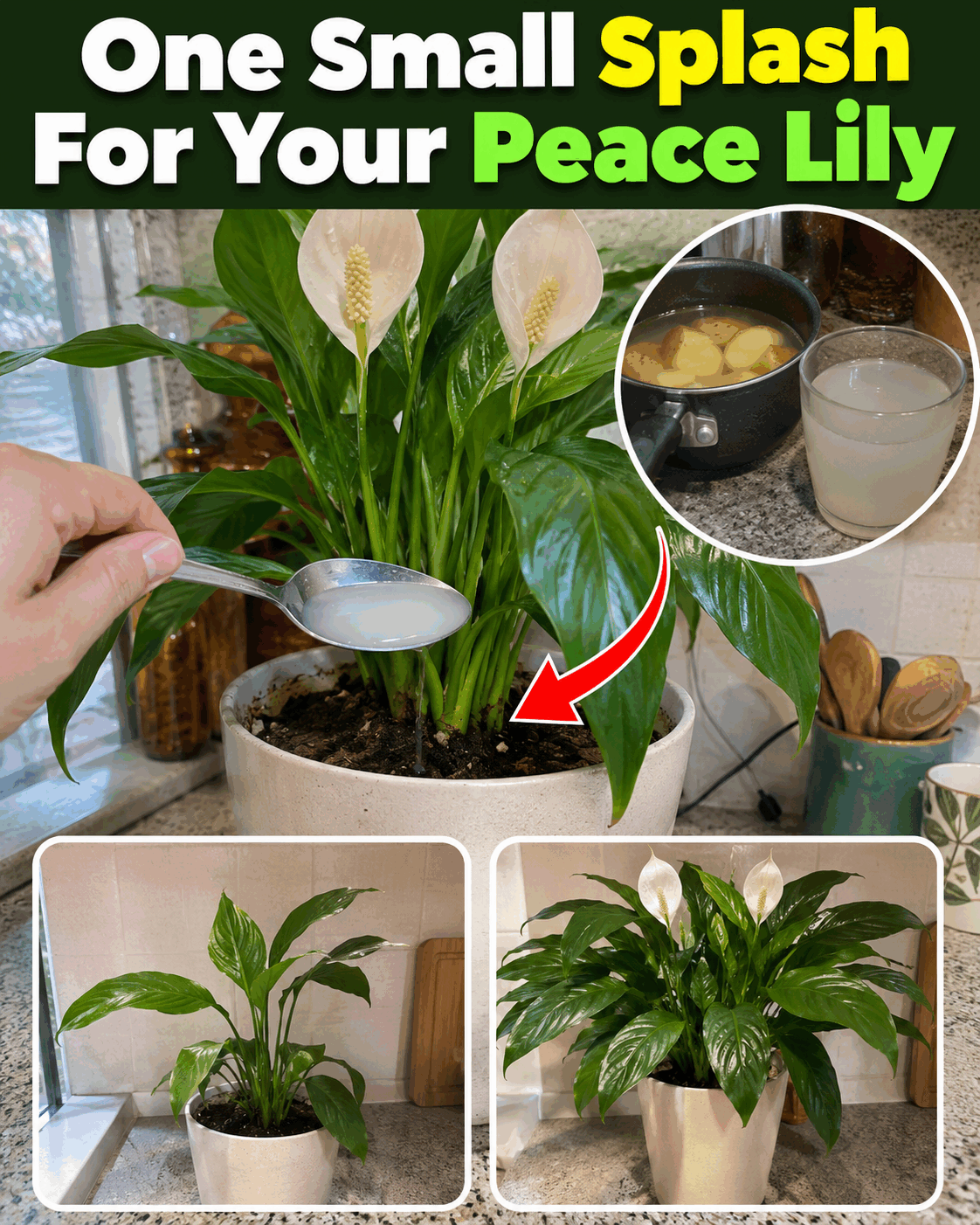
One Spoonful of THIS for Your Peace Lily: Fuller Leaves and Future Flowers
Cooled, unsalted potato cooking water is the familiar kitchen ingredient in this peace-lily routine. Save only water from plain potatoes, dilute it, and use a measured tablespoon when the plant is due for water. It is a modest household practice for accompanying leafy growth and future flowering, rather than a reason to keep the pot wet.
A peace lily looks fuller when its leaves grow steadily from a healthy root system. The white spathes come later when the plant has suitable light and enough energy. This method keeps the kitchen addition small and makes the surrounding care explicit, so a simple experiment does not turn into repeated watering or a pile of leftovers.
What you will need
Use an established peace lily in a pot with open drainage holes, a clean jar, a fine kitchen strainer, a tablespoon, and a little water saved from boiling plain potatoes. Read the cooking conditions first: water containing salt, stock, butter, milk, oil, or seasonings is unsuitable. Keep that water for its intended kitchen use instead.
- Fresh cooking water from plain, unsalted potatoes
- A clean strainer and cup
- Plain water for dilution
- One tablespoon of the diluted liquid
- A peace lily ready for its normal watering
Choose the right potato water
The water should come from sound potatoes prepared for food in a clean pan. Avoid green or badly damaged potatoes and discard water that has developed a strange smell. Do not scrape mashed potato, peel fragments, or other solids into the plant pot. This routine uses only a small amount of strained liquid.
Let the water cool completely to room temperature before you do anything near the plant. Hot or warm cooking water can harm roots. Strain out potato fragments, then mix one part potato water with four parts plain water. If the original liquid is very thick or gelatinous, skip it rather than trying to pour starch paste into soil.
How to use one small splash
-
Feel the upper layer of potting mix and lift the pot. A peace lily that is still heavy and moist does not need another drink. If leaves are drooping while the soil is wet, investigate the roots and drainage first. Wilting can have more than one cause, so it is not an automatic instruction to add water.
-
Wait for an ordinary watering day. Take the nursery pot out of its cover and place it where excess liquid can escape. Give it its usual plain water, allowing the mix to moisten evenly. Avoid splashing into the center of the plant, and do not leave the pot sitting in a sink full of water indefinitely.
-
Measure one tablespoon of the cooled, diluted potato water for a typical medium indoor pot. Apply it slowly to the surface near the outer edge, spreading the tiny amount over two spots. Do not pour the whole cup into the pot. A kitchen ingredient is easier to manage when the quantity stays deliberate and small.
-
Let drainage finish, empty the saucer, and return the plant to its regular bright, sheltered position. Rinse the cup and spoon rather than saving a batch of potato water for weeks. Fresh preparation and a clean measuring routine reduce the chance of forgotten leftovers becoming an unpleasant indoor gardening project.
-
Repeat no more than once a month while the plant is actively growing, and skip the trial if the room is cool or the soil dries slowly. Keep regular watering separate from the experiment. If the surface develops a film, mold, odor, or fungus gnats, stop and return to plain-water care while reassessing moisture.
Why people save cooking water for plants
Cooking water can contain dissolved material released by potatoes, including some minerals and starch. That is why gardeners sometimes save it rather than pouring it away. Its composition varies with the potatoes and the cooking method, however. It is not a measured, balanced plant fertilizer and should not be described as a guaranteed bloom treatment.
The sensible version uses little liquid and pays attention to the pot afterward. A fuller peace lily develops through steady growth, sufficient light, and functioning roots. Water saved from cooking is simply an optional part of that wider routine. If your plant already grows well with plain water and appropriate nutrition, there is no need to complicate its care.
Give the foliage the conditions it needs
Choose bright indirect light, such as a position near a window where direct sun is softened by a curtain. A peace lily can tolerate lower light, but tolerance is different from strong growth and regular flowering. Avoid moving it from a dim corner straight into intense sun, which can damage leaves that developed in shade.
Keep the root zone evenly comfortable without keeping it permanently saturated. How quickly a pot dries depends on light, temperature, airflow, container size, and the condition of the mix. A rigid calendar can miss those changes. Checking the plant before watering is especially useful when heating starts in the fall and indoor conditions begin to shift.
Dust can dull the appearance of broad leaves. Support each leaf gently and wipe it with a soft cloth dampened with plain water. Skip oils, mayonnaise, and homemade polishing mixtures. Keep the peace lily away from pets and children who may chew it, and wash your hands after handling sap or cutting spent growth.
Mistakes to avoid
Salt is the clearest reason to reject a batch of cooking water. Do not try to fix salted water by adding a splash of fresh water and hoping it is diluted enough. Start with a genuinely unsalted batch. Also avoid water from potatoes cooked with stock cubes, spice mixes, butter, or sauces, even if the liquid looks plain.
Do not store the water at room temperature for days, ferment it, or mix it with several other kitchen feeds. Do not add it daily in the hope of forcing flowers. Starchy residues and persistently damp soil are an unhelpful combination indoors. A small occasional fresh dose is a different practice from treating a pot like a kitchen-waste container.
Watch new growth, not yesterday’s flowers
Mark the day you try the routine and take a photograph of the whole plant. Over the following weeks, look for normally expanding leaves and a stable, fresh appearance. Existing spathes naturally age and change color. The plant’s response is easier to judge when you avoid changing its location, fertilizer, pot size, and watering method all at once.
Frequently asked questions
Can I use water from salted boiled potatoes?
No. Use only cooking water that was unsalted from the start and contained no other additions. There is no practical benefit in guessing how much salt might remain. Save a small amount from a separate plain batch if you want to try the method, or simply continue using ordinary water.
Can potato water replace fertilizer?
It does not supply a predictable balance of nutrients. Continue a suitable houseplant fertilizer according to the label when your peace lily is actively growing. Do not increase fertilizer and household additions together. A stable feeding routine makes more sense than assuming a variable kitchen liquid can meet every nutritional need.
Should I use it whenever leaves droop?
No. Check soil moisture first. Dry soil and wet, unhealthy roots can both be associated with drooping leaves, and adding more liquid to a saturated pot can worsen the situation. Correct the watering or drainage problem before considering any optional ingredient. A small trial belongs on a healthy, established plant.
How long until the peace lily blooms?
There is no dependable countdown from one spoonful of cooking water to a new white spathe. Light, maturity, season, root health, and nutrition all matter. Look for healthy new leaves first and keep expectations patient. Photographing the plant monthly is more useful than adding extra doses when no flower appears.
Keep the potato water fresh, unsalted, cooled, and limited to a small measure. A well-drained peace lily with steady light has a stronger foundation for full leaves and future flowers.