
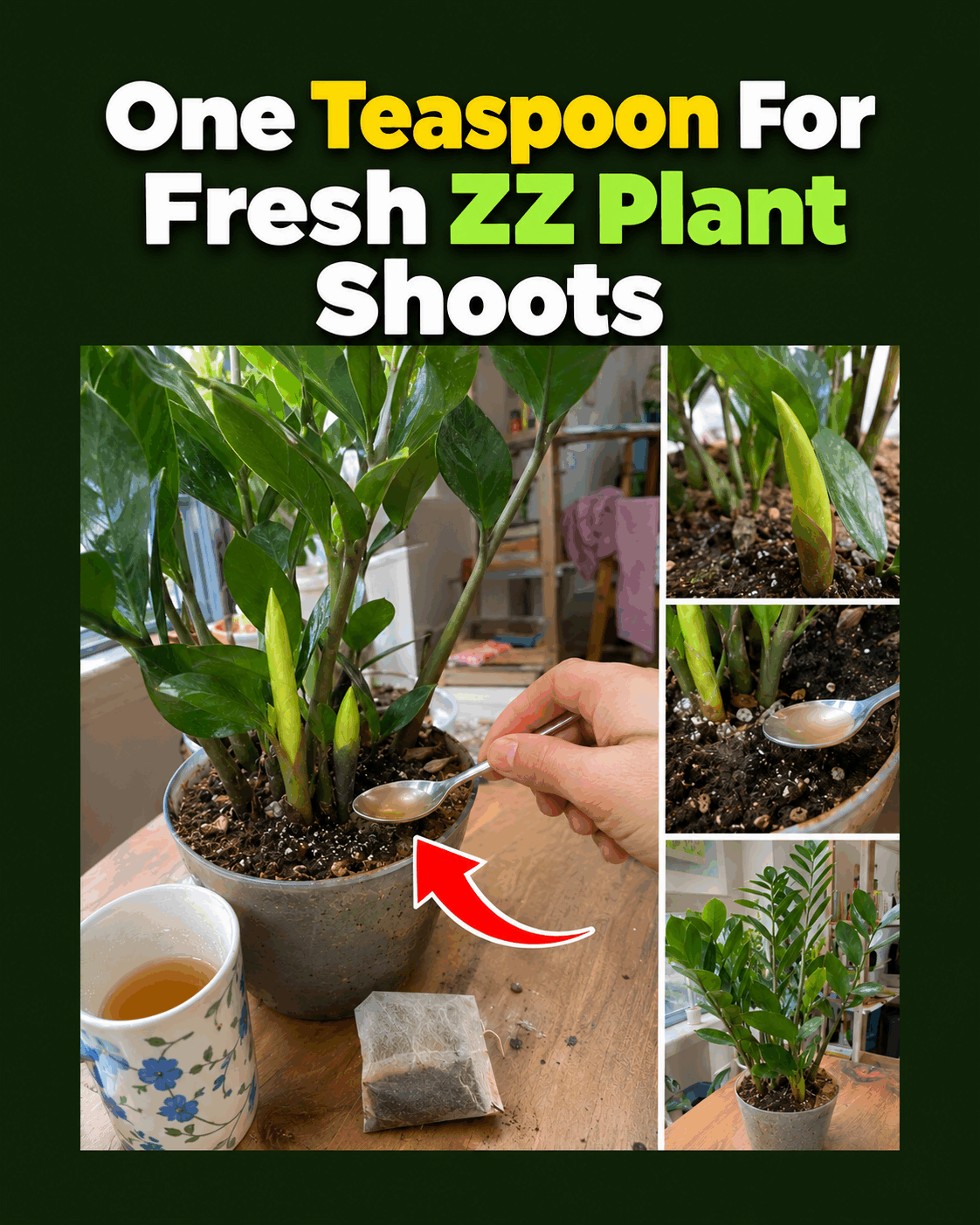
Just One Teaspoon of Tea for Your ZZ Plant: Support Fresh New Shoots
Fresh, very weak black tea is the small household addition in this ZZ-plant routine. One teaspoon of a cooled, heavily diluted infusion is enough for a cautious trial alongside regular care. The aim is to accompany new shoots without overwhelming the slow-drying root zone that makes Zamioculcas such an easy indoor plant.
A ZZ plant stores water in thick underground rhizomes and fleshy roots. That reserve helps it cope when you forget a watering, but it also means repeated little drinks can be more trouble than help. Use the teaspoon on a proper watering day, then give the pot time to dry before adding anything else.
What you will need
Choose a healthy Zamioculcas zamiifolia in a pot with drainage holes. Gather a plain black-tea bag, a mug, clean water, and an actual measuring teaspoon. Keep the brew unflavored and free of sugar, milk, sweetener, lemon, or oils. You also need enough patience to observe the plant over weeks rather than days.
- One plain black-tea bag
- Clean hot water for a short brew
- Extra water for generous dilution
- One measuring teaspoon
- A ZZ plant with a mostly dry root zone
Prepare a pale, fresh infusion
Briefly dip the tea bag in a mug of hot water for about thirty seconds, remove it, and let the tea cool completely. Dilute one part of that weak brew with at least four parts clean water. It should be lightly tinted. There is no need to make a strong drink and then guess whether the roots can handle it.
Keep the preparation simple and use it the same day. An old mug of tea from a desk is not the same ingredient, especially if someone added milk or sugar. If the liquid smells stale or contains floating debris, leave it out of the plant. The tiny dose makes fresh preparation easy rather than wasteful.
The teaspoon method, step by step
-
Check whether the plant actually needs water. Feel more than the very surface and compare the pot’s weight with its weight after watering. A dry crust over damp mix is not a green light. If you are uncertain, wait and check again; a ZZ plant generally handles a short delay better than chronically wet roots.
-
On a normal watering day, remove the inner pot from its decorative cover. Water the mix evenly with plain water and let the excess drain away. Use room-temperature water rather than water straight from a very cold or hot tap. Keep the plant upright and avoid filling the spaces around clustered stems with standing liquid.
-
Measure one teaspoon of the pale, completely cooled tea. Put it onto the mix near the outer edge of a typical small or medium pot. Do not pour tea onto a new shoot or rub it over the leaves. The quantity is intentionally modest and should not become an excuse to add another cup afterward.
-
After drainage, empty the saucer and return the plant to a bright position with indirect light. Leave it in place while you observe new growth. Repeatedly moving, repotting, and feeding the plant makes it harder to understand what it needs and can disturb emerging shoots just when they are beginning to unfold.
-
Do not repeat more often than once a month during active growth, and only on a watering day when the mix has dried suitably. If the plant needs water less frequently than that, follow the plant rather than the calendar. Skip the tea during a long resting period or if the root zone stays cool and damp.
Why a tiny amount makes more sense
Black-tea infusion contains dissolved compounds from the leaves, and gardeners sometimes use it as a household plant-care experiment. Its composition is not standardized, and a teaspoon of diluted tea is not a complete feed. Keep that distinction clear: the routine can accompany care, but it cannot promise a certain number of new shoots.
Small quantities reduce the temptation to keep the soil wet while waiting for a result. ZZ plants do not need a daily drink, and their underground storage structures make prolonged saturation particularly unhelpful. If fresh shoots appear, enjoy them as a sign of overall healthy growth rather than claiming that one kitchen ingredient caused the change by itself.
Recognize a healthy new ZZ shoot
A new shoot often emerges as a pale green spear close to the existing stems. It gradually rises and its folded leaflets separate, then darken as they mature. Avoid pulling it open or turning it repeatedly for a better photograph. Give it space, reasonably steady light, and time to complete the process naturally.
Do not confuse normal new growth with a soft, collapsing stem. Healthy developing shoots feel structured and continue to expand. A stem that turns mushy or yellow at its base deserves a look at watering and roots. Adding tea, coffee, or another ingredient does not solve a root zone that has remained saturated for too long.
Light and drainage for fuller growth
ZZ plants are often sold as suitable for low light. They may tolerate those conditions, but growth can be slower there. For a fuller appearance, place yours in bright indirect light, away from harsh direct sun. Make any move gradually so the existing leaves can adjust rather than being exposed suddenly to a much stronger window.
Use a draining mix and a pot that fits the root system rather than a large container full of extra wet soil. When repotting is necessary, choose a sensible increase in size and avoid burying stems deeper. Do not repot simply to add tea or inspect a promising shoot. Routine disturbance can be less useful than stable care.
A suitable houseplant fertilizer can supply a balanced nutrient source when used according to its label during active growth. The tea trial does not replace that role. Avoid combining several homemade feeds in the same month. If you want to learn from the experiment, keep the rest of your care ordinary and easy to describe.
Mistakes to avoid
Never bury a wet tea bag next to a ZZ rhizome. The bag and leaves can stay damp long after the visible surface looks dry. Do not add a teaspoon every day, either; frequent small additions can keep part of the root zone moist without providing the thorough watering and drying rhythm the plant needs.
Do not use concentrated tea, flavored blends, sweet drinks, or fermenting leftovers. Do not mist the foliage with tea to make it glossy. Clean dust from mature leaves with a soft damp cloth and plain water, handling them gently. Keep the plant out of reach of pets and children who might chew it, and wash your hands after cutting stems.
Keep a short growth record
Write down the watering date and the teaspoon trial in the same place. Photograph the base of the plant every few weeks in similar light. A new shoot can take time to appear, and growth often comes in bursts rather than a steady weekly increase. A simple record helps you notice progress without repeatedly checking inside the pot.
Frequently asked questions
Is a tablespoon better than a teaspoon?
For this routine, keep the intended teaspoon rather than scaling up in search of faster growth. A kitchen infusion has variable strength and is not a labeled fertilizer. More tea does not mean more shoots. The useful discipline is a small fresh quantity applied only when the plant already needs its normal watering.
Can I use green tea instead?
This method is written for plain black tea, so keep that ingredient consistent if you choose to try it. Avoid experimenting with several blends at once. If you do not have suitable plain tea, use ordinary water and carry on with good light and drainage; the optional addition is not essential to growth.
Why has my ZZ plant made no shoots for months?
Growth rate depends on light, season, root condition, and the plant’s stored resources. Check whether the location is very dim or the mix remains wet for a long time. Do not try to force progress with repeated feeds. A stable plant with healthy foliage can have quiet intervals between bursts of new stems.
What should I do if leaves start yellowing?
Pause optional additions and inspect the whole care routine. Older individual leaves can age naturally, but widespread yellowing, soft stems, or wet soil may point to a more serious moisture problem. Check drainage and root condition as needed. Do not interpret yellow leaves as an automatic demand for a stronger tea brew.
Let the teaspoon stay a teaspoon, and let the pot dry according to the plant’s needs. Patient observation and steady growing conditions are the best companions for fresh ZZ shoots.