
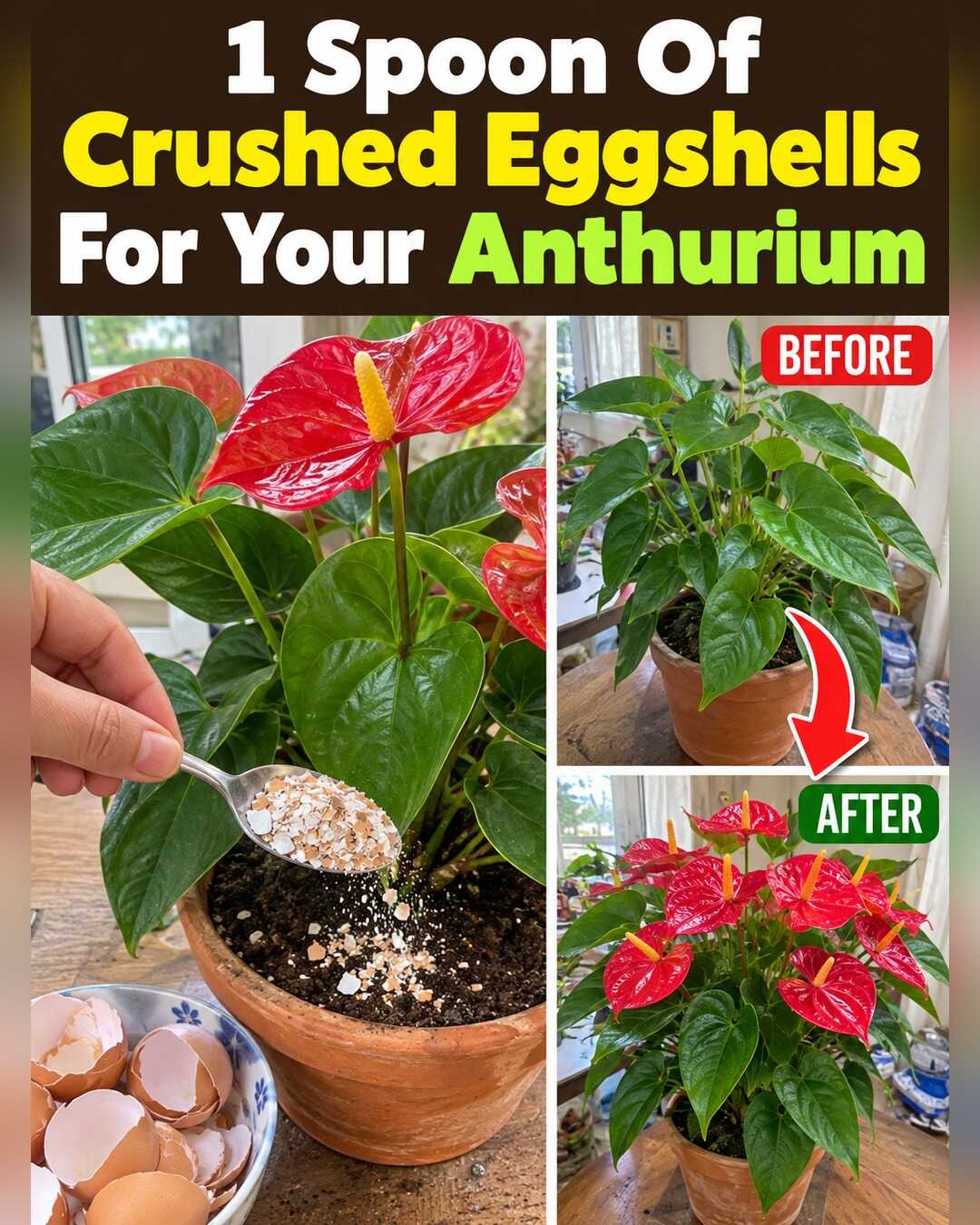
1 spoon of this kitchen scrap and your anthurium explodes with blooms
The kitchen scrap in question is something you crack open almost every day: eggshells. One spoonful of clean, dried and finely crushed eggshells worked into the top of the soil once a month helps your anthurium build strong leaves and push out more of those glossy red, heart-shaped blooms. No store-bought product, just what is left over from breakfast.
Anthuriums, also called flamingo flowers, are one of the most popular flowering houseplants in America. Their waxy blooms can last for weeks. But many owners notice that after the first round of flowers, the plant just sits there growing leaves. In this guide you will learn why eggshells help, how to prepare them, how much to use, how often, and which mistakes to avoid.
Why eggshells help your anthurium bloom
Eggshells are made almost entirely of calcium carbonate. Home gardeners have used them for generations in pots and vegetable beds, and anthuriums benefit too:
- Calcium for strong growth. Plants use calcium to build sturdy cell walls. A strong anthurium has more energy left over for flowers.
- Slow release. Finely crushed shells break down gradually with each watering, so there is no risk of burning the roots.
- Better soil texture. Tiny shell pieces keep the top layer of soil loose and airy, which anthurium roots love.
- Zero waste. Something you would throw away becomes plant care.
Gardeners who use eggshells regularly report firmer, shinier leaves first, and then new flower buds rising from the base of the leaf stems.
How to prepare the eggshells
1. Rinse
Rinse the shells under running water to remove any egg white. Leftover egg causes odor and attracts gnats.
2. Dry
Spread the shells on a plate and let them dry on a sunny windowsill for a day or two. Or bake them for 10 minutes at 250 °F to dry them fast.
3. Crush very fine
Grind them in a coffee grinder or blender, or crush them with a rolling pin inside a zip bag. The finer the powder, the faster it works.
4. Store
Keep the powder in a jar with a lid. It lasts for months.
Step-by-step: how to use eggshells on your anthurium
- Measure 1 tablespoon of crushed eggshell for a 6 to 8-inch pot. For a small 4-inch pot, 1 teaspoon is plenty.
- Sprinkle it evenly over the soil surface, a little away from the stems.
- Work it gently into the top half inch of soil with a fork.
- Water as usual with room-temperature water.
- Repeat once a month in spring and summer, and every two months in fall and winter.
Option 2: eggshell water
Put the shells of 4 or 5 eggs in a quart of water, let them soak overnight, then strain. Use one cup of this water instead of a regular watering once a month. It is gentler and gets to the roots a bit faster.
What to expect and when
- After 2 to 4 weeks: firmer, glossier leaves.
- After 1 to 2 months: new buds appearing at the base of the leaf stems.
- After that: with bright indirect light and warmth, your anthurium can bloom almost all year.
Remember that light and warmth matter just as much. Anthuriums need bright, indirect light, temperatures between 65 and 80 °F, and some humidity.
Mistakes to avoid
- Unwashed shells. Egg residue smells and attracts bugs. Always rinse.
- Big pieces. Large chunks take months or years to break down. Crush them fine.
- Too much at once. One tablespoon a month is enough. More will not speed things up.
- Overwatering. Anthuriums hate soggy roots. Water when the top inch of soil is dry and never leave water in the saucer.
- A cold windowsill. In winter, cold glass and drafts slow blooming. Move the pot a little away from the window.
More tips for an anthurium covered in blooms
Cut off old flowers once they turn green or brown, right at the base of their stem. The plant stops feeding them and puts energy into new ones. Wipe the leaves with a damp cloth every few weeks so they can catch more light.
Anthuriums like an airy, chunky mix. Repot every two years in spring, using a blend of potting soil and orchid bark, and choose a pot only an inch or two larger. In a pot that is too big, the plant spends its energy on roots instead of flowers. When you repot, you can mix a tablespoon of crushed eggshell into the new soil.
Dry indoor air from heating can make leaf tips turn brown. Set the pot on a pebble tray with a little water, or group it with other plants. Mist around the leaves if you like, but avoid spraying the blooms, which can spot.
Try it this week: save the shells from your next breakfast, dry and crush them, and give your anthurium a spoonful. It is one of the easiest habits for a plant that keeps flowering.
Frequently asked questions
Can I use shells from boiled eggs?
Yes. Raw or boiled, they work the same, as long as they are clean and dry.
How often should I add eggshells?
Once a month in spring and summer, every two months in fall and winter.
Will eggshells attract pests?
Not if they are rinsed, dried and finely crushed.
Do eggshells work on other plants?
Yes, gardeners also use them for peace lilies, tomatoes, roses and African violets, in small amounts.
Why is my anthurium not blooming?
Most often it needs more light or more warmth. Move it to a brighter spot without harsh direct sun and give it a few weeks.