
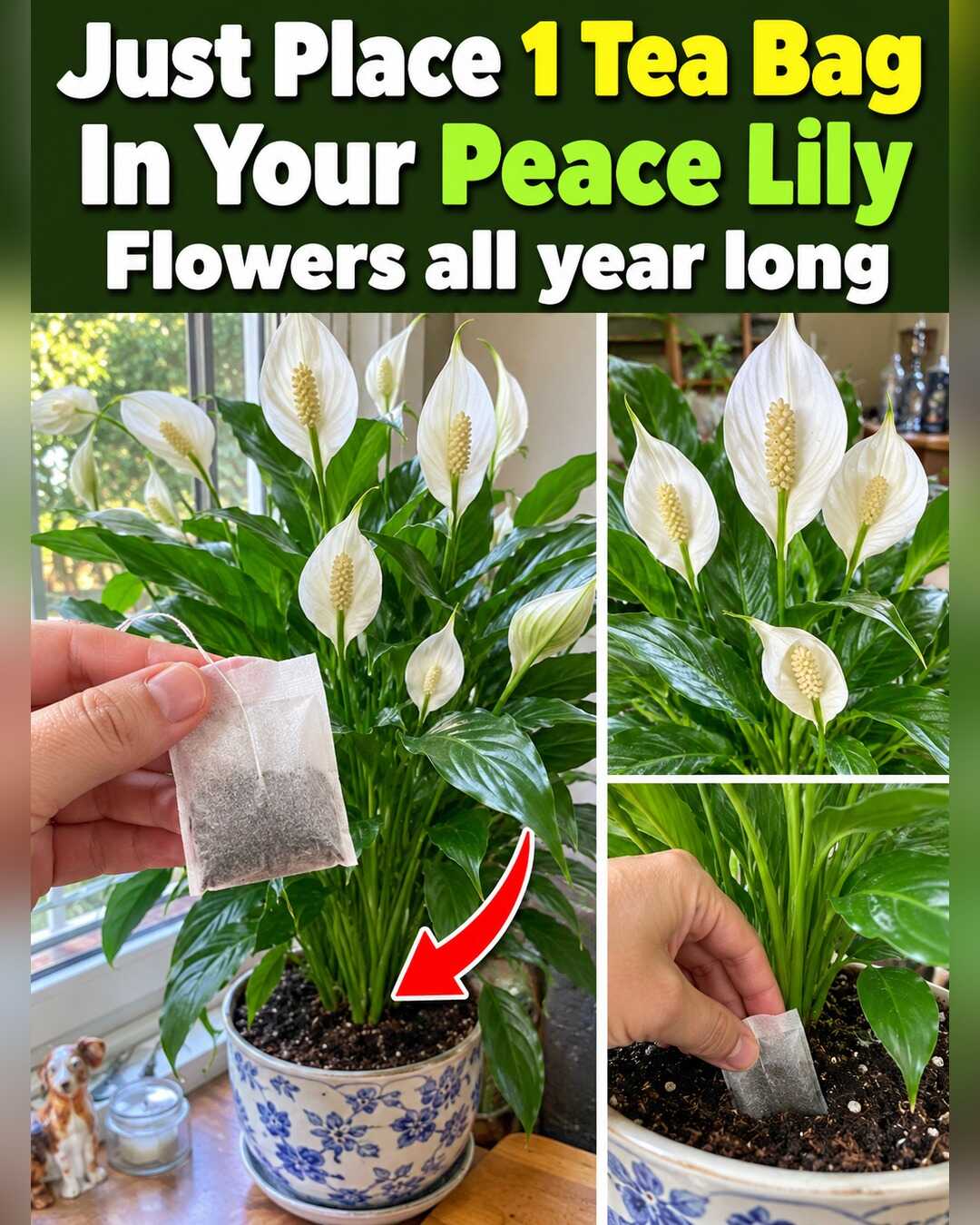
Place THIS in your peace lily pot: flowers all year long
The secret is sitting in your kitchen cupboard: one tea bag. A single used tea bag, opened and its damp leaves worked into the top of the soil once a month, gives your peace lily (Spathiphyllum) a gentle boost. Gardeners who do this see glossy dark green leaves and new white flowers popping up through the year. It costs nothing, and you probably made a cup of tea this morning anyway.
The peace lily is one of the most popular houseplants in America. It handles low light, tells you when it is thirsty and gives those elegant white blooms. But a lot of people find that after the first flush of flowers, their peace lily only grows leaves. In this guide you will learn why a tea bag helps, exactly how to use it, how often, and which mistakes to avoid.
Why a tea bag helps your peace lily
Used tea leaves are a classic home-gardening trick. Here is why so many plant lovers swear by them:
- A little nitrogen. Tea leaves contain small amounts of nitrogen as they break down, which supports healthy, deep green foliage.
- Slightly acidic. Peace lilies like slightly acidic soil, and tea leaves help keep it that way.
- Better soil texture. The fine leaves add organic matter, so the top of the soil stays loose and holds moisture evenly.
- Gentle and slow. Unlike strong fertilizer, a tea bag will not burn the roots when used once a month.
A strong plant with healthy leaves has more energy to spare, and that energy goes into new flowers. With enough light, you can expect blooms several times a year.
What you need
- 1 used tea bag of plain black or green tea (no sugar, milk, lemon or flavoring);
- scissors;
- a fork or a small spoon.
Step-by-step: how to use the tea bag
- Let the tea bag cool completely after brewing your tea. Squeeze out the extra liquid.
- Cut it open with scissors. Throw away the paper bag and string, especially if it is a plastic-based “silky” bag.
- Spread the damp leaves around the base of the plant, on top of the soil, keeping them a little away from the stems.
- Mix them in lightly with a fork, into the top half inch of soil.
- Water as usual. The water carries the nutrients down to the roots little by little.
- Repeat once a month in spring and summer, and every 6 to 8 weeks in fall and winter.
For a large peace lily in an 8-inch pot or bigger, you can use two tea bags. For a small 4-inch pot, half a bag is enough.
Option 2: weak tea water
Prefer not to put leaves in the pot? Brew one tea bag in a quart of water, let it cool completely, and use one cup of this weak tea instead of plain water, once a month. Never use a strong cup of tea, and never add sugar.
What to expect and when
- After 2 to 3 weeks: leaves look firmer and glossier.
- After 1 to 2 months: new leaves and the first flower buds rising between them.
- Over the year: with good indirect light, your peace lily can bloom again and again.
Light is the number one factor. A peace lily survives in shade but blooms in bright, indirect light, a few feet from an east or west window, out of harsh afternoon sun.
Mistakes to avoid
- Burying the whole bag. Many tea bags contain plastic and do not break down. Always open the bag and use only the leaves.
- Sweet or milky tea. Sugar and milk attract fungus gnats and mold. Plain tea only.
- Too much, too often. One bag a month is plenty. Piling on leaves can create a moldy layer.
- Soggy soil. Peace lilies like moist soil, not wet feet. Empty the saucer 15 minutes after watering.
- A dark corner. No amount of tea will make a peace lily bloom without light.
More tips for a peace lily that blooms all year
Your peace lily will droop dramatically when it is thirsty, then perk up a few hours after watering. That is handy, but do not let it happen too often, because each droop costs the plant energy that would go into flowers. Water when the top inch of soil feels dry.
Cut off old blooms that turn green or brown at the base of their stem. The plant stops feeding them and starts making new ones. Wipe the big leaves with a damp cloth every few weeks so they can catch more light. Repot in spring when roots poke out of the drainage holes, into a pot just one or two inches bigger.
Peace lilies love humidity. In winter, when the heating dries out the air, set the pot on a tray of pebbles with a little water, or group it with other plants. If your tap water is heavily chlorinated, let it sit out overnight before watering.
Try it tomorrow morning: when you finish your tea, save the bag for your peace lily. One small habit, and in a few weeks you will see the difference.
Frequently asked questions
Can I use any kind of tea?
Plain black or green tea works best. Avoid flavored teas with added oils, sugar or dried fruit.
How often should I add a tea bag?
Once a month in spring and summer, every 6 to 8 weeks in fall and winter.
Will tea leaves attract bugs?
Not if you use plain tea, mix it into the soil and avoid overwatering. Sugary tea is what attracts gnats.
Does this work for other houseplants?
Yes, gardeners also use tea leaves for ferns, anthuriums, African violets and roses, always in small amounts.
Why is my peace lily still not blooming?
Usually it needs more light. Move it to a brighter spot with no harsh direct sun and give it a few weeks.