Few People Know This Simple Trick to Propagate Roses 🌹 (Fast & Easy)
Few People Know This Simple Trick to Propagate Roses 🌹 (Fast & Easy)
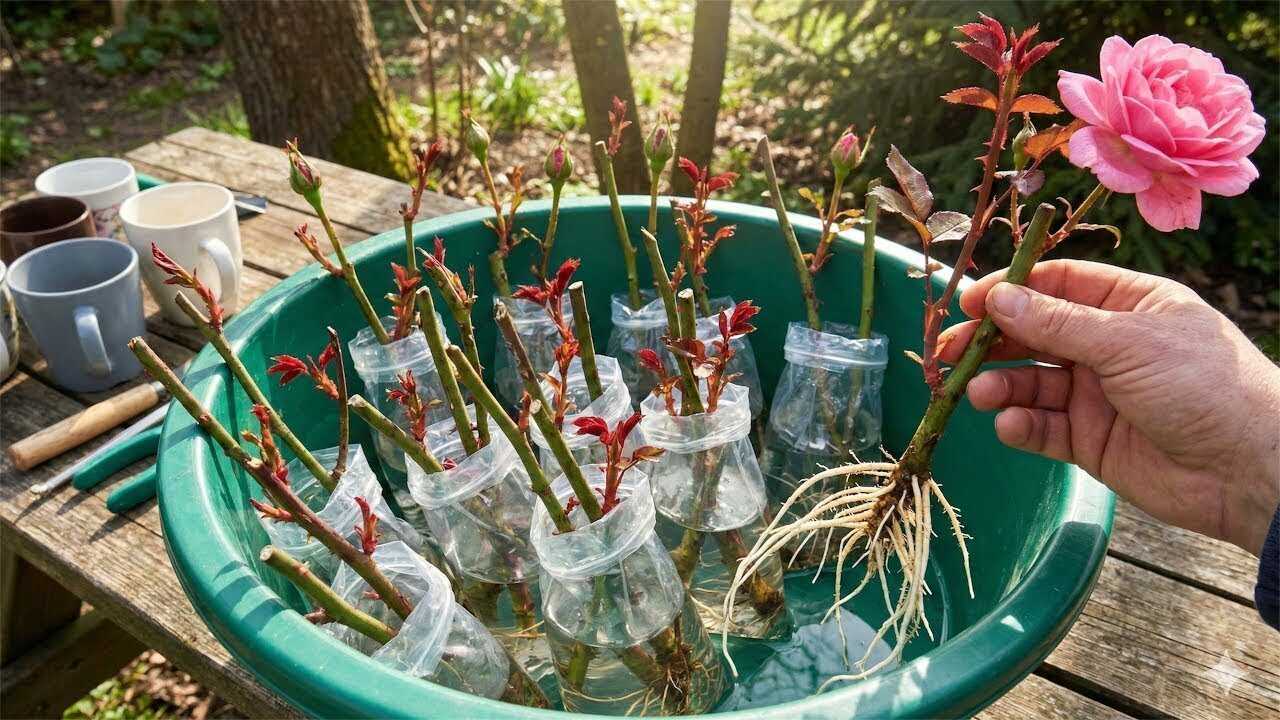
Look closely at the photo: clear **plastic bottle collars** holding rose cuttings upright in a tub of water. This simple, low-cost setup is the heart of a reliable propagation hack: using cut clear PET bottles as individual water reservoirs and supports to root rose cuttings. The clear plastic lets you watch root development, keeps bases submerged at a steady level and reduces handling stress while roots form over several weeks.
Why this works (botanical facts)
Root formation on cuttings is driven by **auxin-driven adventitious rooting** and a steady supply of moisture and oxygen at the wounded basal tissue. A clear water reservoir keeps the cutting hydrated and allows oxygen exchange at the surface; adding a rooting hormone containing indole‑3‑butyric acid (**IBA**) speeds and increases rooting success. This method complements—not replaces—good light, temperature and hygiene.
What you need
- Clear PET bottles (0.5–1.5 L) — one per cutting
- Sharp, clean pruning shears and a small knife
- Commercial rooting hormone (powder or quick‑dip, **1000–3000 ppm IBA** recommended)
- Large plastic basin or tub
- Clean water (or optional willow water — see note)
- Thermometer (optional) and labels
Step‑by‑step: create the bottle collars and root the cuttings
Follow these precise actions and doses for a consistent result. Timeline: expect visible roots in **3–6 weeks** under warm, stable conditions.
- Prepare bottles: Cut each PET bottle into a short tube 6–8 cm high (use the neck/top portion or the bottom portion — the goal is a clear cylinder). Remove caps and clean thoroughly. Sanitize in a 5% bleach solution for 10 minutes, then rinse well.
- Take cuttings (spring to early summer best): Choose healthy new wood and cut 12–15 cm long with 3–4 nodes. Make the basal cut at a 45° angle. Remove all but the top 2 leaflets to reduce transpiration.
- Optional wound: Lightly nick or scrape a 5 mm strip of bark off one side at the base to expose cambium (improves rooting on older wood).
- Apply rooting hormone: Dip the lowest 2 cm of the cutting into rooting hormone. Use **powdered IBA** or a **quick dip**: for a quick dip, use ~3000 ppm IBA for 5–10 seconds for tougher cuttings; 1000–2000 ppm works well for typical rose semi‑hardwood. Tap off excess powder; do not overcoat.
- Assemble in bottles: Fill each clear bottle tube with water so the water level submerges 2–3 cm of the basal end. Insert the cutting through the neck so the treated base sits in the water and the leaf zone stays dry. Place each bottle tube upright in the larger basin so all are stable.
- Environment: Keep the basin in bright, indirect light (avoid hot midday sun). Ideal air temperature 18–24°C. Maintain high humidity around the shoots but avoid condensation dripping onto leaves.
- Water maintenance: Change the water and rinse the tubes every 7 days to prevent stagnation and algae. Top up water as needed to keep 2–3 cm submerged.
- Monitoring: Watch through the clear plastic for white root primordia. Expect first roots in **3–6 weeks**; let roots reach 2–4 cm before potting on.
- Potting on: When roots are 2–4 cm, plant each cutting into a free‑draining potting mix, keep shaded for 7–14 days, then gradually expose to more light to harden off.
Practical tips from experience
- Use clear plastic: It’s easier to spot root initiation and address problems early.
- Consistency beats extremes: Stable temperature and clean water are more important than extra humidity tricks.
- Label everything: Write variety and date on waterproof tape so you track success rates.
- Willow water option: If you prefer a natural auxin boost, soak 200 g fresh willow twigs in 2 L clean water for 24–48 hours and use that water to fill the tubes. Use within 48 hours and change weekly.
Common mistakes to avoid
- Keeping leaves submerged — this causes rot. Only the basal 2–3 cm should touch water.
- Skipping sanitation — dirty bottles or stagnant water cause bacterial and fungal growth.
- Transplanting too early — potting before roots reach 2–4 cm increases failure risk.
- Full direct sun — clear bottles magnify heat; bright, indirect light is safer.
- Relying on this as a miracle fix — it speeds rooting but does not replace good pruning hygiene, light or aftercare.
Seasonal and frequency notes
Best season: late spring to early summer for semi‑hardwood cuttings. Prepare and change water weekly. Expect roots in 3–6 weeks. If attempting hardwood cuttings in late winter, expect longer rooting times (often 6–12 weeks) and adjust expectations accordingly.
Conclusion — try it this week
This cheap, visible, and repeatable trick — using clear plastic bottle collars as small water reservoirs — makes rose propagation less fiddly and easier to monitor. Follow the step‑by‑step method, use a modest dose of rooting hormone (1000–3000 ppm IBA or willow water as an alternative), change the water weekly, and be patient for **3–6 weeks**. If you try it, take photos of the roots forming and share your results — propagation success is one of the most rewarding parts of gardening.