Growing Celery on the terrace, this way is both easy and effective
Growing Celery on the terrace, this way is both easy and effective
Intro: what the picture shows and why it works
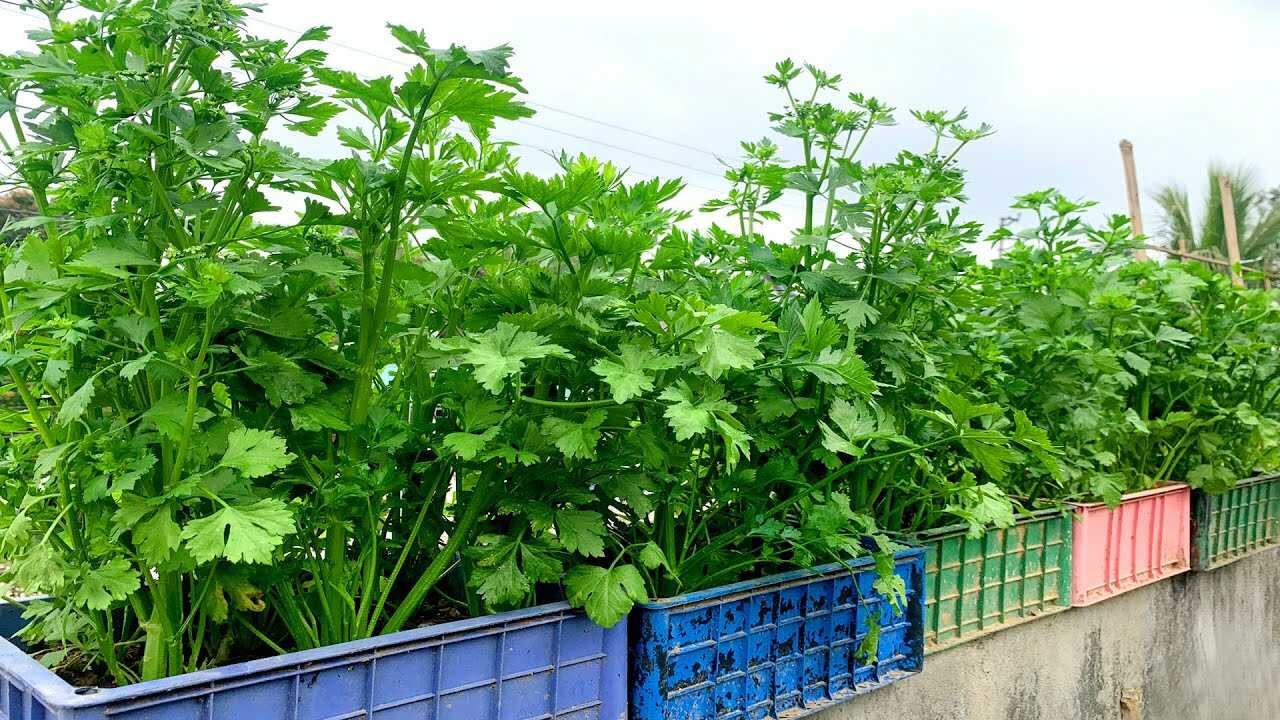
The photo shows lush green celery plants growing in recycled plastic crates lined up on a terrace. This setup works because celery needs a consistent supply of moisture and nutrients, plus a deep, moisture-retentive potting mix — conditions you can easily create in crates. Using crates as planters gives you good drainage, mobility and a protected microclimate on a terrace.
Step-by-step: plant celery in plastic crates
- Choose the crates: pick sturdy plastic crates about 30–40 cm long and at least 20–25 cm deep. Drill 8–12 drainage holes in the bottom and raise the crates 2–3 cm on small feet or bricks so water can exit freely.
- Prepare the mix: fill crates with 20–25 cm of a well-draining, organic-rich medium: 50% quality potting soil, 30% well-rotted compost, 20% perlite or coarse sand. Celery needs both moisture retention and aeration.
- Planting: transplant seedlings when they have 4–6 true leaves. Space plants 15–20 cm apart. Firm the soil around roots and water thoroughly until water runs from the drainage holes.
- Watering routine: keep the soil consistently moist. In warm weather, check daily; typically apply about 2–3 liters per medium crate until you see drainage. In cooler weather reduce to every 2–3 days. The goal is even moisture, never bone-dry or waterlogged.
- Feeding: celery is a heavy feeder. Use a balanced water-soluble fertilizer (for example 10-10-10) at half the manufacturer’s rate every 7–10 days during active growth for several weeks. Alternatively, apply a diluted compost tea (1 part compost steeped 24–48 hours, then diluted 1:4 with water) weekly.
- Light and temperature: place crates where celery gets 4–6 hours of morning sun or bright filtered light. Celery prefers cool to mild temperatures; avoid placing crates in intense afternoon sun in hot summers to reduce bolting risk.
- Blanching (optional): if you want pale, tender stalks, mound soil or use a collar around stems 2–3 weeks before harvest to exclude light.
Why this method is botanically sound
Celery has high tissue water content and is a continuous feeder. It performs best when roots have steady access to water and soluble nutrients. Organic matter (compost) improves moisture retention and supplies slow-release nutrients, while regular liquid feeding supports steady stalk growth. In crates the root zone is compact and easier to keep evenly moist — that directly helps stalk formation and reduces stress that causes bolting.
Practical season and timing notes
Start seedlings indoors or buy transplants in early spring or late summer for an autumn crop. Expect full stalk development in about 10–16 weeks from transplanting, depending on cultivar and conditions. Maintain the watering and feeding routine throughout these several weeks for best results.
Tips from experience (make them routine)
- Line crates with landscape fabric to keep soil from leaking while still allowing drainage.
- Mulch the surface with a thin layer of compost or straw to slow evaporation and keep roots cool.
- Rotate crates slightly every week if some plants receive uneven light, promoting even growth.
- Remove any yellowing lower leaves promptly to reduce disease pressure and redirect energy to stalks.
- If wind is strong on your terrace, shield crates with a low screen — celery stems can break in gusts.
Common mistakes to avoid
- Overcrowding: planting closer than 15 cm will reduce air flow and produce thin stalks.
- Letting the soil dry out: episodic drought leads to tough, stringy stalks and possible bolting.
- Poor drainage: standing water causes root and crown rot. Always ensure crates drain freely.
- Skipping regular feeding: celery is a heavy feeder; lack of nutrients makes stalks small and pale.
- Using very shallow containers: anything less than 20 cm depth restricts root development and reduces yields.
Conclusion and call to action
Growing celery in plastic crates on a terrace is a practical, space-saving method that delivers steady, flavorful stalks when you provide consistent moisture, organic-rich soil and regular feeding over several weeks. Try one crate as a trial this season: prepare the mix, plant 3–4 seedlings, follow the watering and weekly feeding routine, and watch a compact bed of celery thrive. Share your results or questions — the terrace harvest is more rewarding when you tweak and learn as you grow.