How to grow Cucumbers vertically, extremely lots of fruit, Growing cucumbers
How to grow Cucumbers vertically, extremely lots of fruit, Growing cucumbers
Introduction — what you see in the image
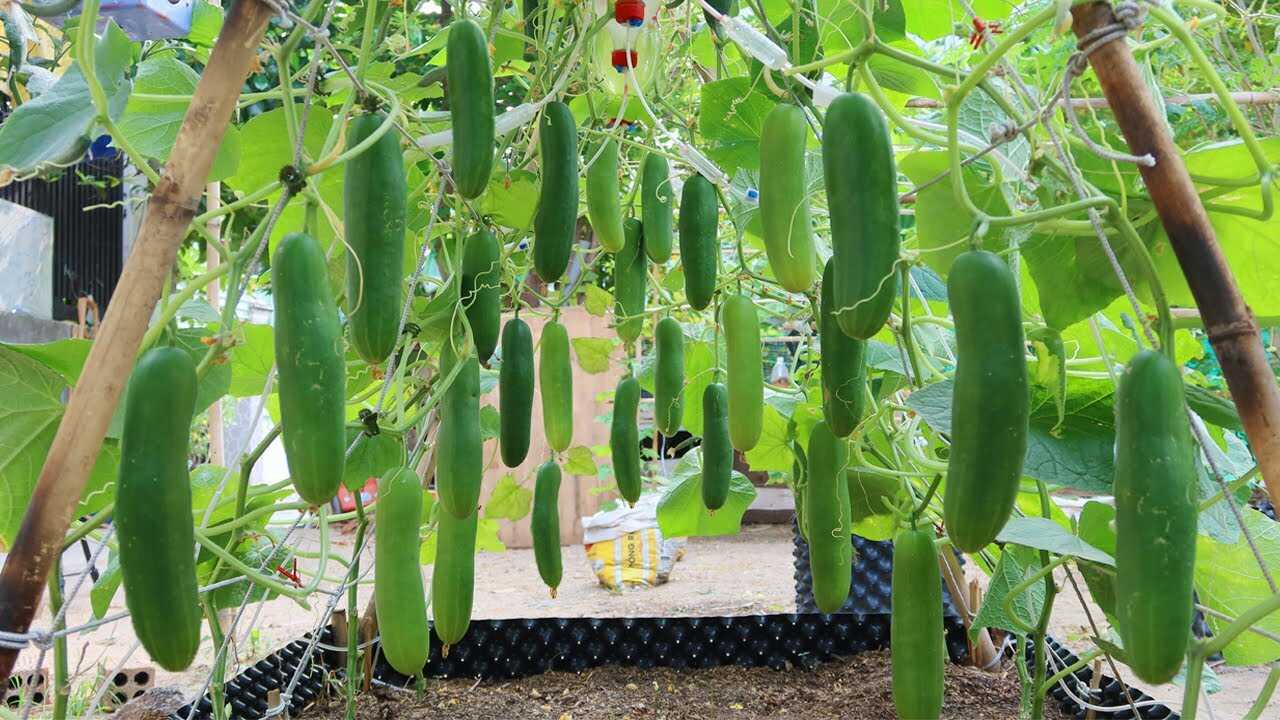
The photo shows a lush vertical trellis loaded with long, slender green **cucumbers** hanging straight down from a dense vine. This is exactly the effect you want when growing vining cucumbers: good light, strong support and tidy vines that make harvesting easy and boost fruit set. Below I explain a precise, evidence-based method to replicate this high-yield vertical system.
Why vertical training works (botanical facts)
Training **cucumbers** vertically improves **air circulation**, exposes more leaf surface to light (increasing photosynthesis), reduces soil-borne disease contact, and makes pollinators access flowers more easily. Combined with balanced feeding (sufficient nitrogen early, then more potassium during flowering/fruiting), these cultural steps lead to more flowers setting and more fruits per vine. This method complements—never replaces—good light, drainage and regular watering.
Step-by-step: build the trellis and plant for maximum fruit
- Choose your variety: pick a vining or English/long-slicing cucumber for vertical growth. Bush types won’t climb well.
- Trellis size & material: install a sturdy trellis 1.8–2.4 m (6–8 ft) tall. Use welded wire, nylon netting or taut garden twine supported on posts or bamboo. Space trellises 60–90 cm (24–36 in) apart for row access.
- Soil prep: work in 5–10 cm (2–4 in) of compost into the top 15 cm (6 in) of soil. Aim for loose, well-draining soil with pH 6.0–7.0.
- Planting spacing: plant seedlings 30–45 cm (12–18 in) apart along the trellis base. Plant at the same depth as in the pot and firm soil around roots.
- Initial fertilizer (at planting): sprinkle 50 g (about 1/4 cup) of a balanced granular fertilizer (10-10-10) into the planting hole or side-dress and work lightly into soil per plant.
Training and pruning routine (exact actions and timing)
- First 2–3 weeks: let vines establish and produce leaves; gently tie the main shoot to the trellis with soft twine every 20–30 cm (8–12 in).
- After 3–4 weeks: select 1–2 strong main leaders per plant. Pinch off the tip of any additional leaders to focus energy. This encourages more flowering along the main stem and reduces excessive leaf growth that shades fruit.
- Weekly maintenance: every 7 days inspect vines and remove tangled growth and any diseased leaves. Train side shoots up the trellis rather than allowing them to sprawl.
- Support big fruits: for heavy or long varieties, use small fabric slings or mesh (old pantyhose or garden mesh) to cradle fruit if they hang in windy spots; attach the sling to the trellis so the vine isn’t carrying all the weight.
Watering and feeding schedule (precise doses and frequency)
- Watering: provide about 2.5 cm (1 in) of water per week (total) during active growth. In practice, water deeply twice a week (each session delivering ~0.5 in) so roots stay evenly moist—more in hot, dry weather. Avoid wetting foliage in late afternoon to reduce disease risk.
- Side-dress fertilizer: once flowering begins (about 3–4 weeks after transplant), apply 25–30 g (about 2 tablespoons) of the same balanced granular fertilizer per plant every 3 weeks until the main harvest phase. Work it 5–10 cm (2–4 in) away from the stem and water in.
- Liquid feed option: apply a high-phosphorus or potassium-rich liquid such as fish emulsion or seaweed: 15 ml (1 tablespoon) per 3.8 L (1 US gallon) of water every 10–14 days during flowering and fruiting to support set and fruit development.
- Pest spray (optional, preventive): for insect pressure use cold-pressed neem oil at 30 ml (2 tablespoons) per 3.8 L (1 gallon) of water with an emulsifier; spray every 7–14 days if needed. Stop sprays during heavy pollinator activity (early morning) or use targeted methods to avoid harming bees.
Pollination and flower care
Cucumbers have separate male and female flowers. Good pollination increases fruit set. Encourage bees by planting flowers nearby. In enclosed frames or greenhouses, hand-pollinate female flowers by transferring pollen from male flowers with a small brush once daily during peak bloom for several weeks. If you use a parthenocarpic (seedless) variety, pollination is not required.
Harvesting: timing and technique
Harvest when fruits are firm, evenly colored and before seeds bulge—for many slicing cucumbers that’s 50–70 days from sowing depending on variety. During peak production pick regularly to encourage new fruit: harvesting often keeps plants producing. Expect to see increased yield within 3–6 weeks after establishing trellis, training and feeding routines.
Common mistakes to avoid
- Too much nitrogen: excessive nitrogen leads to lush foliage but fewer flowers and fruits. If vines are overly leafy, reduce nitrogen and increase potassium-rich feeding.
- Irregular watering: fluctuating soil moisture causes bitterness and increases blossom drop. Maintain even moisture as outlined above.
- Poor trellis strength: flimsy supports let vines sag and fruits touch the ground, increasing disease and rot. Use sturdy posts and check fastenings weekly.
- Over-pruning: removing too many leaves reduces photosynthesis and can reduce yields. Only remove damaged or superfluous growth—keep a healthy canopy for light capture.
- Ignoring pollination: in protected environments, failure to pollinate can lead to many unfilled fruits—hand-pollinate or choose parthenocarpic varieties.
Practical tips from experience
- Train vines early and consistently—small adjustments weekly save tangled chaos later.
- Mulch under the trellis to retain moisture and reduce soil splash that spreads disease—use 5–7 cm (2–3 in) organic mulch.
- Mark the first female flowers with a small tag so you can monitor fruit set and pollination success over the next several weeks.
- Harvest in the morning for the firmest fruits and to reduce heat stress on the plant.
Conclusion — get hanging cucumbers like in the photo
By using a sturdy vertical trellis, training 1–2 main leaders, keeping soil evenly moist and following the precise feeding schedule above, you’ll replicate the high-density hanging cucumbers shown in the image. This approach relies on proven horticultural principles—light capture, airflow, balanced nutrition and timely pruning—and is designed to work alongside good basic care. Try the routine for one season and expect visible yield improvements within 3–6 weeks; then refine spacing, support and feeding to push production even higher. Happy growing—clip, tie and harvest!