How to grow orchids! Water and fertilize to keep them blooming all year round
How to grow orchids! Water and fertilize to keep them blooming all year round
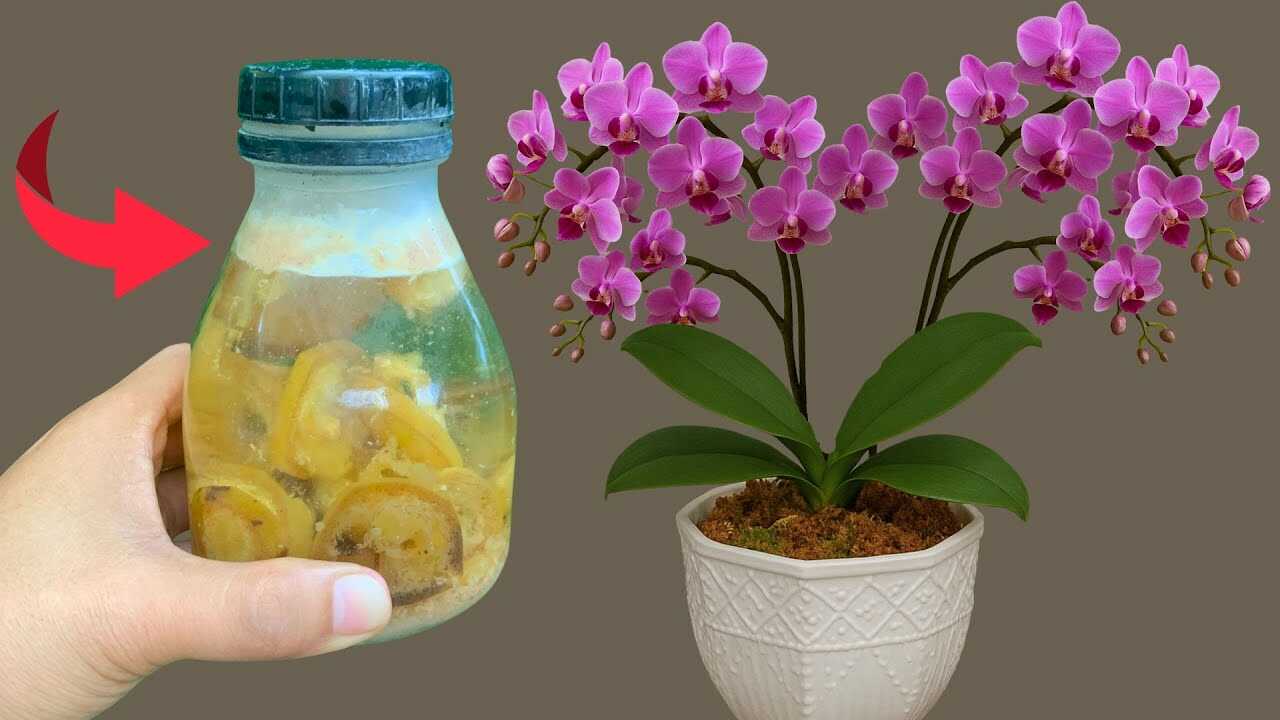
The photo clearly shows a small jar of **lemon slices** fermenting in liquid — bright yellow citrus peels suspended in a cloudy brew. This article explains how to use that exact ingredient, a **fermented lemon peel tea**, safely and effectively as a supplemental fertilizer for orchids. The technique taps the nutrients and microbial activity in citrus peels while respecting orchids’ sensitive roots.
Why lemon peels? Botanical facts you can trust
**Citrus peels** contain soluble **potassium (K)** and small amounts of phosphorus and micronutrients, plus sugars that feed beneficial microbes during fermentation. When properly prepared and diluted, a fermented citrus peel extract (a type of fermented plant juice) can release these soluble nutrients and microbes into the water you give your orchid. Remember: this is a supplement — it does not replace basic care like correct **light**, **watering**, **drainage**, and balanced commercial orchid fertilizer.
Step-by-step: make a safe fermented lemon peel tea (visual match to the jar)
- Ingredients and gear: 200 g chopped lemon peels (no seeds), 1 L non-chlorinated water, 1 tablespoon molasses or cane sugar, a clean glass jar with lid, mesh or cloth for straining.
- Step 1 — Chop and fill: Place the chopped peels in the jar and cover with the water. Add the molasses and stir to dissolve; this feeds fermentation.
- Step 2 — Ferment: Close the jar loosely (allow gas to escape) and keep at room temperature (18–24 °C / 65–75 °F) out of direct sun for 7–10 days. Open once a day to release gases and stir — aim for a mild ferment, not a foul-smelling rot. The jar in your picture shows mild cloudiness and foam typical of an active ferment.
- Step 3 — Strain and store: After 7–10 days, strain the liquid into a clean container. Discard solids into compost. The liquid is your concentrated lemon peel tea (do not use undiluted).
How to apply to orchids — exact doses and frequency
Orchids are sensitive. Use the fermented lemon tea conservatively and always dilute.
- Concentrate dilution for root drench: Mix 1 part lemon tea with 100 parts water (1:100). Example: 10 mL concentrate + 1 L water.
- Concentrate dilution for foliar spray: Mix 1:200 (5 mL concentrate + 1 L water). Spray in the morning only, avoiding open flowers.
- Frequency — growing season (spring–summer): Root drench every 3 weeks. Foliar spray every 2 weeks if humidity is low.
- Frequency — rest season (autumn–winter): Reduce to one root drench every 6–8 weeks or stop entirely for plants in strict rest.
- Expectations: Any improved vigor or better bud set will appear over several weeks to a couple of months; this is a slow supplement, not an instant bloom trigger.
Practical tips from experience
- Measure pH: Citrus brew can be acidic. After dilution the pH usually lands in a safe range, but check — orchids prefer about pH 5.5–6.5 in the potting medium. Adjust water if needed.
- Aerate, don’t anaerobe: The jar in the photo is fine if you vent daily. Avoid long, sealed anaerobic brews that go rotten — they can produce phytotoxic compounds.
- Combine with balanced fertilizer: Use a commercial orchid fertilizer on a regular schedule (e.g., half-strength every 1–2 weeks during growth). The lemon tea is a supplementary potassium/microbial boost, not a full N-P-K replacement.
- Use clean tools: Always strain and store the diluted mix in a clean sprayer or watering can to prevent pathogens.
- Adapt to potting mix: Bark mixes dry faster and benefit from small, frequent, diluted applications. Sphagnum moss holds moisture — reduce frequency to avoid root rot.
Common mistakes to avoid (real botanical consequences)
- Pouring undiluted fermented lemon tea onto orchid roots — can cause root burn and acid stress.
- Using a foul-smelling, moldy brew — this indicates anaerobic decay and possible toxins; discard and restart with better venting.
- Relying solely on citrus tea and skipping balanced fertilization — lemons do not provide adequate nitrogen for leaf growth.
- Applying during winter rest — excess nutrients and moisture at low temperatures invite rot rather than blooms.
- Getting spray on flowers — citrus residue can spot petals; only mist foliage in the morning and avoid blooms.
Conclusion — start small, watch your orchids respond
That jar of fermented lemon slices can become a useful **supplement** for orchids when prepared carefully and used at the right dilution (1:100 root drench, 1:200 foliar). Expect measurable benefits over several weeks to months: steadier bud development and a gentle boost of potassium and microbes. Always pair this tip with correct **light**, measured **watering**, good **drainage**, and a balanced orchid fertilizer. Try one diluted application this growing season, keep notes on how your plant responds, and adjust frequency accordingly — your orchids will thank you with healthier leaves and more reliable blooms.
Action now: If your jar looks like the photo, vent it daily, strain after 7–10 days, dilute 1:100 for a test root drench, and schedule repeats every three weeks during spring and summer.