How To Grow Sprouted Rice As Feed For Egg Laying Chickens
How To Grow Sprouted Rice As Feed For Egg Laying Chickens
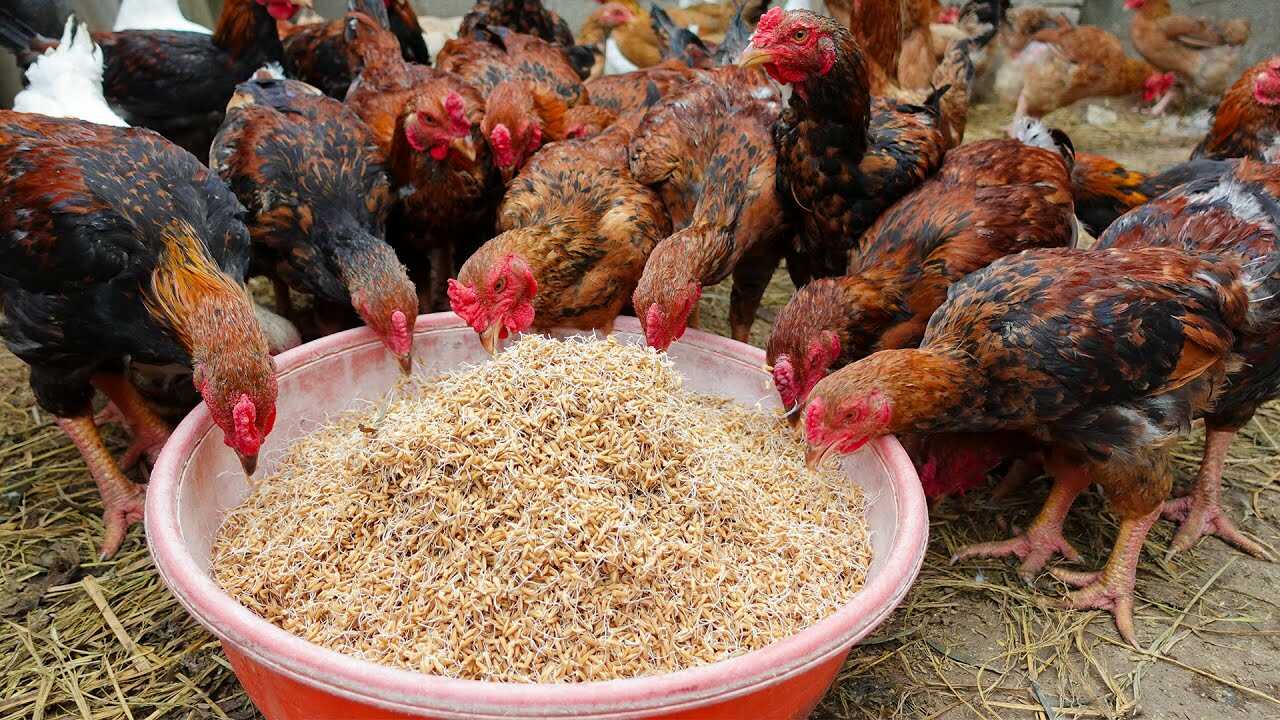
The photo above shows a large bowl of freshly **sprouted rice** being pecked by laying hens. In this guide you’ll learn how to germinate rice safely and use it as a nutritious supplement for egg-laying chickens. I’ll explain exactly how to sprout rice, why it helps (real, verifiable plant-biology and nutritional points), precise doses and frequency, seasonal adjustments, and common mistakes to avoid.
Why sprouted rice helps laying hens (botanical and nutritional facts)
- Germination activates enzymes (amylase, protease) that break down starches and some proteins into simpler sugars and amino acids, making the grain easier for chickens to digest.
- Reduction in anti-nutrients: sprouting reduces phytic acid levels in whole grains, which improves mineral availability (notably zinc and iron) compared with unsprouted rice.
- Small increases in B-vitamins and free amino acids occur during germination, contributing to better feed efficiency when sprouted grains are included as part of a balanced diet.
- Important caveat: sprouted rice is low in calcium and should never replace a formulated layer feed or free-choice calcium (oyster shell, limestone) needed for strong eggshells.
Materials and exact recipe to sprout rice (what I use)
- Whole brown rice or whole paddy rice (unpolished) — white polished rice often will not germinate well because the germ is removed.
- Clean container or tray with drainage, a fine mesh strainer, fresh water, and a towel or breathable lid.
- Sanitation: use food-safe containers and rinse thoroughly to reduce bacterial load.
Step-by-step: how to germinate rice safely
- Measure: For a small flock, start with 500 g of whole brown rice. This gives a practical batch size that is easy to manage and reduces spoilage risk.
- Rinse and soak: Rinse rice until water runs clear. Soak in cool water at a 3:1 water-to-rice ratio for 12 hours at room temperature (18–25 °C) to rehydrate the grain.
- Drain and spread: Drain completely and spread the rice in a shallow, well-drained tray or mesh bag so air can circulate. Cover loosely to keep moisture but allow airflow.
- Rinse cycles: Rinse and drain the rice twice daily (morning and evening). Keep the rice moist but never waterlogged.
- Germination time: Expect visible radicles (tiny white sprouts) within 24–48 hours. Stop germination once sprouts reach about 2–5 mm—this is the optimal stage to feed. Do not let sprouts grow long green shoots.
- Storage before feeding: Use sprouted rice fresh within 48 hours. If you must keep it longer, refrigerate for up to 48 hours and inspect for off-odors or sliminess before feeding.
Precise dose, frequency and seasonal adjustments
- Standard dose: Offer sprouted rice as a supplement at up to 20% of the daily feed ration for adult laying hens. For a typical layer that consumes about 110 g of complete layer feed per day, this equals roughly 20–25 g of fresh sprouted rice per hen per day (about 1–2 tablespoons).
- Treat option: As a treat, you may offer up to 50 g (≈ 1/4 cup) of sprouted rice per hen once daily, but do NOT exceed 30% of the total daily intake on a regular basis.
- Seasonal tuning: In winter, hens need more energy — you can raise the sprouted-rice supplement up to 25–30% of the daily ration, but ensure calcium and protein needs are still met by the layer feed. In hot summer months reduce to 10–15% so birds don’t overheat from extra fermentation risk and to keep diet balanced.
- Transition period: Expect nutritional changes (egg-size, shell quality, feed conversion) to show over 4–8 weeks of consistent feeding — sprouted rice is a supplement, not an immediate fix.
How to present sprouted rice to hens
- Offer in a shallow tray or trough so multiple birds can peck without crowding.
- Mix sprouted rice with chopped greens or a small amount of layer mash to encourage balanced intake.
- Do not leave large piles unattended for long in warm weather — remove uneaten sprouted rice after a few hours to lower mold risk.
Common mistakes to avoid (real botanical and husbandry errors)
- Feeding only sprouted rice: This dilutes essential nutrients (especially calcium and certain amino acids). Always pair with a complete layer feed.
- Using polished white rice: White rice often won’t germinate; use whole brown or paddy rice for reliable sprouting.
- Ignoring mold and smells: Mold can produce mycotoxins. If sprouts smell sour, are slimy, or show fuzzy mold, discard immediately and sanitize equipment.
- Overfeeding: Too much sprouted rice can reduce intake of formulated feed and cause soft-shelled eggs or nutrient imbalances.
Practical tips from experience
- Work in small batches (250–1000 g dry rice) so you can feed fresh sprouts daily and avoid spoilage.
- Keep rinse water and equipment clean—good hygiene is the single best step to prevent bacterial growth.
- If hens don’t take to sprouts right away, mix a small portion with their usual feed and increase slowly over 7–10 days.
- Keep free-choice grit and calcium (oyster shell) available at all times to support digestion and eggshell formation.
Conclusion — try a batch and observe
Sprouted rice, as pictured, is a low-cost, digestible supplement that can improve feed efficiency and variety for your flock when used correctly. Prepare small, clean batches, limit to about 20% of daily intake (adjust seasonally), and expect to see measurable effects on condition and performance over 4–8 weeks. Always pair sprouted rice with a balanced layer feed and free-choice calcium. Try a single 500 g batch this week, note changes over the next month, and adjust portions to suit your hens.
Ready to sprout your first batch? Gather clean brown rice, set up a tray, and start soaking tonight—then observe your flock for gradual improvements over the coming weeks.