How to Root Orchids Faster Than Ever and Bloom All Year Round!
How to Root Orchids Faster Than Ever and Bloom All Year Round!
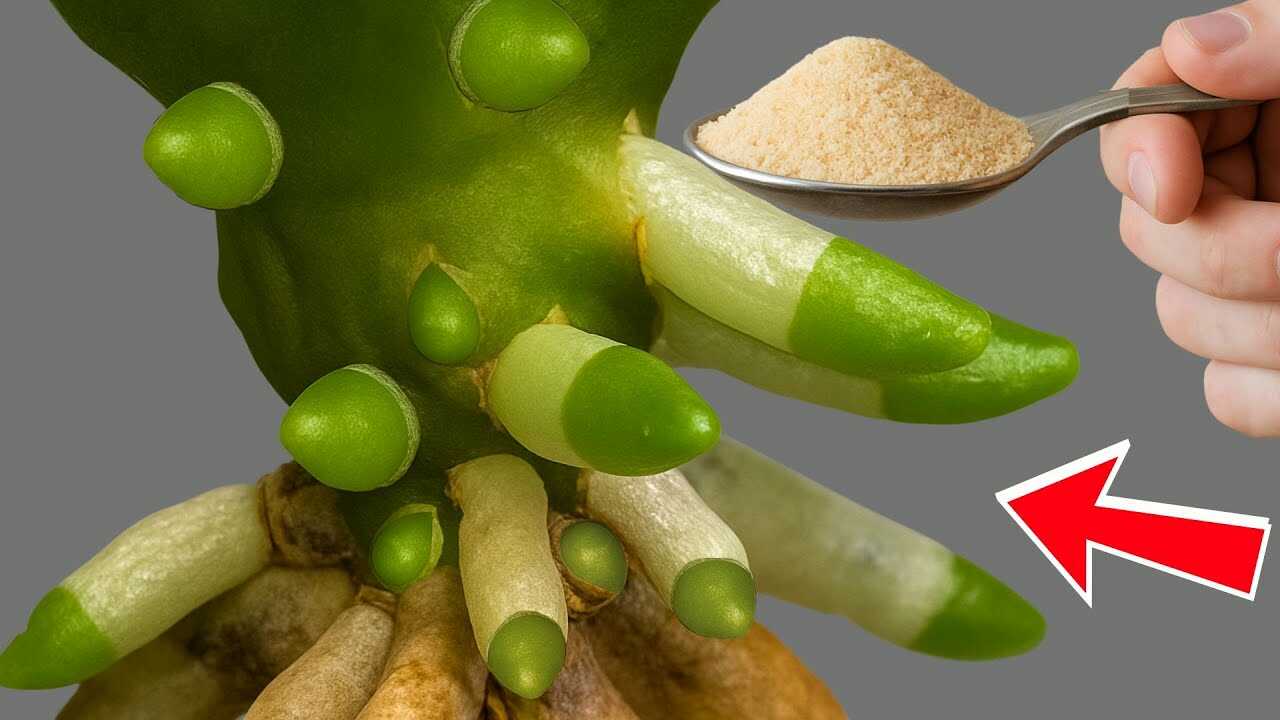
In the image above you can see fresh green **orchid root tips** and a spoonful of a beige powder — clearly **ground cinnamon**. This article shows how to use powdered cinnamon as a simple, evidence-backed **natural antifungal** during repotting and root care to protect cuts and help new roots establish. Remember: cinnamon is a support technique, not a miracle — combine it with correct light, watering, drainage and feeding.
Why cinnamon helps orchid roots
Ground cinnamon contains cinnamaldehyde and other compounds with documented **antifungal and antibacterial** activity. When used judiciously on trimmed or wounded orchid roots, cinnamon can reduce surface pathogens that cause rot, improving the odds that new root primordia will survive and grow. Cinnamon does not replace rooting hormones (auxins), but it lowers infection risk so roots can develop over several weeks.
What you’ll need
- Store-bought ground cinnamon (not essential oil)
- Sterile cutting tool (scissors or snips cleaned with rubbing alcohol)
- Clean container and paper towel
- Optional: small sieve or shaker for even dusting
- Orchid potting medium (bark/sphagnum per your species) and a clean pot
Step-by-step: dusting orchid roots with cinnamon
Follow this routine when repotting, treating a cut root, or when you see soft/brown areas on roots.
- 1. Remove the orchid from its pot and gently clear old medium from roots so you can see live tissue and rot.
- 2. Sterilize your snips (wipe with 70% isopropyl alcohol). Cut away any clearly rotted tissue back to healthy white or green tissue.
- 3. Let the cuts air-dry briefly — 1–3 hours in bright shade. This allows a slight callus to begin forming and reduces immediate infection risk.
- 4. Apply cinnamon powder directly to the cut surfaces and to the base of emerging root tips. Use a small pinch (~0.1 g) per cut or a light dusting from a shaker. The goal is an even thin coating, not a paste.
- 5. Repot in fresh bark or your chosen orchid medium and place in bright, indirect light with good air circulation.
Optional: cinnamon “tea” rinse for extra protection
If you prefer a liquid application for a quick rinse:
- Steep 1 teaspoon (≈2–3 g) ground cinnamon in 250 ml (1 cup) very hot water for 15 minutes.
- Strain through a fine cloth or coffee filter so the liquid is free of particles.
- Cool to room temperature and briefly soak cleaned roots for 5–10 minutes, then air-dry 1–3 hours before repotting.
Dosage, timing and frequency (season-aware)
- Dosage for dusting: a light pinch (~0.1 g) applied only to cuts or the immediate area of new roots.
- Dosage for tea: 1 teaspoon cinnamon per 250 ml water; use as a single soak per repotting event.
- Frequency: Use cinnamon dusting at each repotting or anytime you trim rotten tissue. Do not re-dust healthy roots more than once unless you see new signs of infection.
- Season: Apply primarily during active growth (spring–summer) when roots are forming. As a preventive in humid seasons, a cinnamon tea rinse every 4–6 weeks is reasonable — avoid frequent use in winter when growth is slow.
- Expected timeline: improvements in **root health** and continued root emergence should be visible over 4 to 12 weeks, not days.
Practical tips from experience
- Always prioritize sterile tools and clean hands — infection enters through cuts, not cinnamon powder.
- Use cinnamon as a targeted treatment: dust wounds and the base of keikis or new root tips, rather than coating entire healthy roots.
- Combine with proper orchid medium (pine bark, sphagnum, or mix suitable to your species) for good drainage and air to the roots.
- Keep humidity and light consistent: bright, indirect light and good air movement speed recovery.
- If you want hormonal stimulation too, you can use a commercial rooting hormone (IBA) on the wound BEFORE cinnamon dusting — apply hormone, let it dry, then dust a light layer of cinnamon to protect the site.
Common mistakes to avoid
- Applying large amounts of cinnamon: thick layers can trap moisture and encourage mold rather than prevent it. Thin dusting only.
- Using essential cinnamon oil undiluted on tissues — oils are concentrated and can damage delicate root tissue.
- Relying on cinnamon alone: it prevents surface pathogens but won’t fix poor light, overwatering, compacted media, or nutrient deficiency.
- Expecting instant rooting: new root growth takes weeks to months. Don’t change your whole routine after a few days.
- Neglecting tool hygiene — cutting without sterilizing spreads pathogens far more than any powder can stop.
Conclusion — get healthier roots, then more blooms
Using **ground cinnamon** as a light dusting on cuts and new root bases is an inexpensive, low-risk way to reduce fungal pressure and protect vulnerable orchid tissue during repotting. When paired with excellent light, proper watering, fresh bark medium and consistent feeding, this small step can contribute to stronger root systems and more reliable blooming over the coming months. Try it during your next repot — dust sparingly, be patient, and watch for steady progress over 4–12 weeks.
Ready to try it? Clean your snips, prepare a tiny pinch of cinnamon, and repot in bright indirect light this season. Share your results after a few months — I’d love to hear how your orchids respond!