I don’t need to buy Lemons anymore, grow Lemons for fruit all year round
I don’t need to buy Lemons anymore, grow Lemons for fruit all year round
Introduction — what you’re seeing in the picture
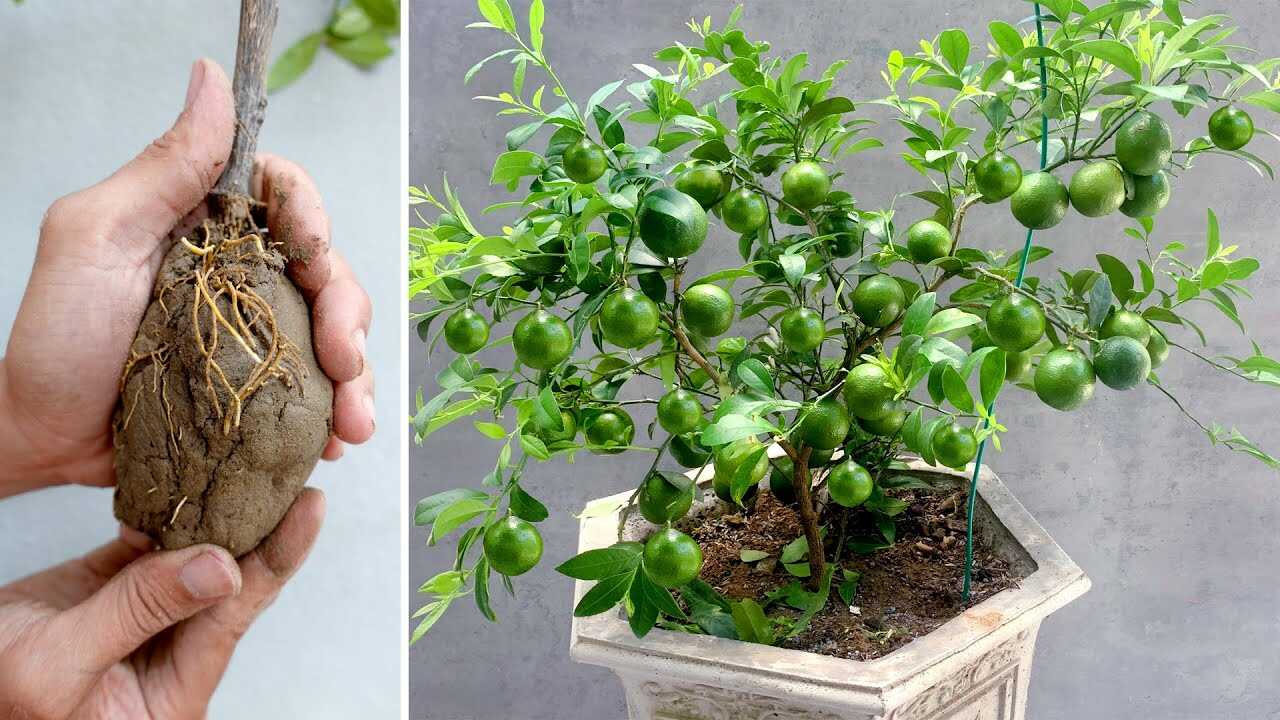
The photo shows a potted lemon tree heavy with small green fruit and, on the left, a compact brown root ball in someone’s hands — the result of an air-layering or rooted cutting technique. That brown, clay-like mass is a moistened rooting medium packed around newly formed roots. This exact little root ball is the central trick: preserving a moist, aerated medium around developing roots produces stronger transplants and speeds successful establishment of new lemon trees.
Why this root ball method works (botanical facts)
Keeping a consistently **moist but aerated rooting medium** encourages the formation of adventitious roots because cellular division and root primordia development require water, oxygen and local carbohydrate supply. Using a clean, high‑moisture medium (sphagnum/peat + perlite or fine potting soil) holds humidity around the wounded stem and reduces desiccation. Adding a low‑dose auxin rooting hormone (IBA) is a documented way to increase rooting percentage in citrus. This method complements—never replaces—good light, drainage and regular feeding.
Materials and exact recipe (prepare this root ball)
- Rooting medium: 3 parts long‑fiber sphagnum moss (or peat moss) + 1 part perlite by volume. Example dose: 3 cups sphagnum + 1 cup perlite for one air‑layer on a medium branch.
- Moisture: Moisten the mix to field capacity — damp throughout but not dripping. Squeeze test: only a few drops should appear when compressed.
- Rooting hormone (optional but recommended): Indole‑3‑butyric acid (IBA) at ~1,000 ppm (0.1% w/v) as a quick dip or a light dusting per product label to promote rooting in citrus cuttings/air layers.
- Wrap: Clear plastic film or a small plastic bag and twine/clips to seal the medium around the stem so the moisture stays constant.
Step-by-step: air-layering a lemon branch using the root ball method
- 1. Choose the time: Late spring to early summer is best for lemons — the tree is actively growing and will callus and root faster. Expect roots in 6–12 weeks.
- 2. Select a branch: Pick a healthy semi-ripe branch about pencil-thick with no signs of disease.
- 3. Wound the stem: About 10–15 cm from the tip, remove a 2–3 cm ring of bark (girdle) down to the wood. Scrape the outer wood lightly to encourage rooting.
- 4. Optional hormone: Apply IBA ~1,000 ppm to the exposed wood or dust lightly (follow product instructions). This raises rooting odds but is not absolute.
- 5. Pack the medium: Wrap a 10–15 cm length of the moistened sphagnum/perlite mix around the wounded area and compress gently into a firm ball roughly 5–7 cm diameter so roots can closely contact the medium.
- 6. Seal: Encase the ball in clear plastic and tie both ends snugly to keep humidity; cover with foil or tape to block light if desired (roots like darkness).
- 7. Wait and check: Keep the ball sealed and check after 6 weeks. You will see roots through the plastic or when you carefully unwrap after 6–12 weeks. Do not remove earlier.
- 8. Detach and pot: Once there’s a good root mass (several cm of white roots), cut below the root ball and pot into a 20–25 cm pot with a citrus mix: 2 parts loam/compost, 1 part coarse sand or perlite for drainage.
Exact aftercare: doses and schedule
After potting, water deeply once to settle the mix. Maintain consistent moisture (about 60–70% of potting‑mix water holding capacity):
- Watering: In the first 8 weeks after potting keep the surface slightly moist; water thoroughly once per week in warm growing weather (adjust to local humidity and pot size). In cooler months reduce to once every 10–14 days while allowing the top 2–3 cm to dry between waterings.
- Light: Give bright, indirect to full sun (6+ hours daily) to encourage fruiting.
- Fertilizer: Start feeding 4–6 weeks after potting with a balanced citrus fertilizer (example NPK 6-4-6) at label rate. Typical home dose: 20 g per 10 L pot every 6–8 weeks during spring and summer, reduce frequency in fall/winter.
- Pruning: Prune lightly to shape and remove vertical suckers; heavy pruning can delay fruit by a season.
Practical tips from experience
- Always use clean, sharp tools — disinfect with 70% isopropyl or 10% bleach solution to prevent disease transfer.
- Keep the sealed root ball shaded during rooting to prevent overheating; roots form best at moderate temperatures (18–26°C / 65–80°F).
- If your climate is colder, perform air‑layering on container trees or move the whole plant to a protected area; potted lemons fruit more readily year‑round when protected from frost.
- When potting the new tree, choose a pot with good drainage and do not overpot — slightly snug pots encourage quicker fruiting.
Common mistakes to avoid (real botanical errors)
- Do not unwrap the root ball too early. Removing it before a robust root mass (6–12 weeks) causes failure and desiccation.
- Avoid waterlogged medium. Constant saturation leads to root rot by soil pathogens — the medium should be moist, not soggy.
- Don’t skip the bark ring or callus step: insufficient wounding limits adventitious root initiation.
- Don’t expect instant fruit: newly rooted plants are best allowed to establish for one growing season before heavy fruiting is encouraged with high fertilizer doses.
Conclusion — your next steps
That compact brown root ball you saw is the small, practical core of producing new lemon trees that fruit reliably. Follow the precise medium mix (3:1 sphagnum:perlite), use IBA ~1,000 ppm if available, and be patient — expect roots in 6–12 weeks and keep consistent weekly to biweekly care thereafter. This technique reduces transplant shock and helps you grow home lemons year‑round when combined with proper light, drainage and feeding. Try one air‑layer this season — then scale up and enjoy fresher lemons from your own trees.
Ready to try it? Pick a healthy branch today, prepare the 3:1 moss mix, and start your first root ball — share your progress and questions and I’ll help troubleshoot each step.