I Poured Vinegar Into My Toilet… I Was Shocked by the Results!
I Poured Vinegar Into My Toilet… I Was Shocked by the Results!
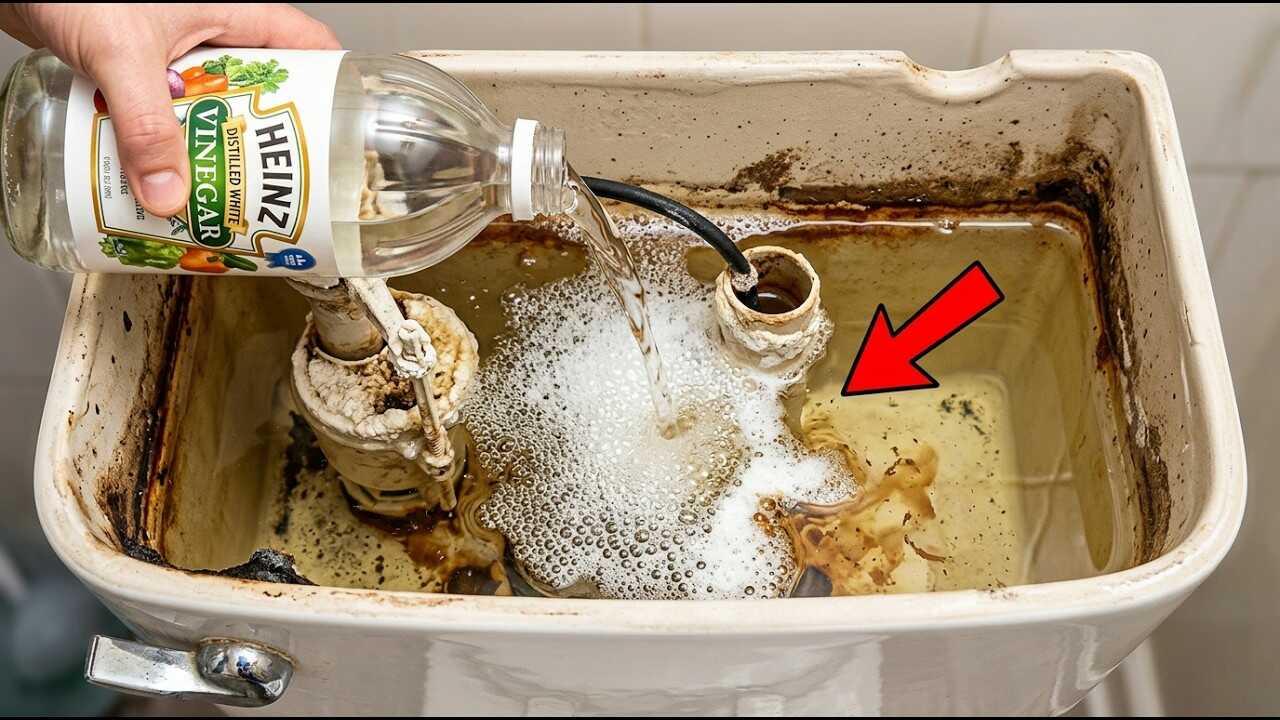
In the photo you can see a clear bottle of distilled white vinegar (the familiar Heinz 5% acetic acid) being poured into a heavily stained toilet cistern with visible mineral scale and brown deposits. That simple bottle is the hero of this post: the same household white vinegar can be a cheap, effective tool in the gardener’s kit — for descaling water containers, cleaning pots and tools, and as a spot-treatment for small weeds. Below I explain how to use it safely, precisely, and as a companion to proper plant care.
Why distilled white vinegar works (brief, factual)
White vinegar contains about 5% acetic acid. Acetic acid is a mild organic acid that:
- acts as a **descaler**, dissolving calcium carbonate and other mineral deposits on surfaces;
- has **contact antimicrobial** properties that help break down biofilms and some surface microbes;
- works as a **non‑selective, contact desiccant** on tender green tissue (it denatures cell membranes on direct contact).
These are real, documented mechanisms — but note: vinegar is not a fertilizer, not systemic, and not a cure-all. Use it as a targeted tool alongside good light, watering, drainage and feeding.
Step-by-step: Descale and clean water containers, tanks and equipment (cisterns, water butts, watering cans)
This is the direct analogue to the toilet-tank photo — the goal is to remove scale and organic residue safely so stored water and irrigation parts stay cleaner.
- Supplies: 5% distilled white vinegar, warm water, soft scrubbing brush, gloves, clear-rinse water source.
- Mix ratio: For routine cleaning, use 1 part vinegar to 10 parts warm water (1:10). For moderate scale use 1:5. For heavy mineral scale, you may use full-strength 5% vinegar applied locally, but never mix with bleach.
- How to do it: Empty the container. Pour a 1:5 vinegar solution into the tank or container so that affected surfaces are submerged or wetted. For a typical 20‑liter water butt, use 2 liters vinegar + 8 liters water (1:5) to fill and soak the lower surfaces.
- Soak time: Let soak 1–3 hours for routine deposits; for very stubborn scale leave up to overnight, then scrub with a brush and drain.
- Rinse thoroughly: Flush with clean water until no vinegar smell remains. Repeat the rinse twice for anything that will supply water to plants.
- Frequency: Clean storage tanks and irrigation parts once each spring and once each autumn (every ~6 months), or more often if you see build-up.
Step-by-step: Clean and restore terracotta pots, trays and tools
- Mix: 1 part vinegar to 4 parts warm water for routine cleaning. For heavy stains use 1:1 for a 20–30 minute soak (no longer than 30 minutes for porous terracotta).
- Action: Submerge pots or soak tools, then scrub and rinse completely. Allow to air-dry in sun.
- When: Clean pots before repotting in spring, and disinfect used pots between plants to reduce disease transfer.
Step-by-step: Spot weed control with household vinegar
If you are considering vinegar to spot-treat small annual weeds, follow these safety-minded steps:
- Product: Use 5% distilled white vinegar at full strength (undiluted) for above‑ground contact treatment of small seedlings and annual weeds.
- Application: Apply with a handheld sprayer or brush, targeting the foliage only. Do this on a dry, sunny day to maximize foliar desiccation and limit wash-off.
- Frequency: Reapply every 7–14 days as needed. Expect to repeat treatments over several weeks to fully suppress regrowth; vinegar is not systemic and will not kill deep roots.
- Limitations: Do not use within a few inches of desirable plants; it is non‑selective and will injure foliage and seedlings. Avoid using on woody plants or perennial weeds (roots persist).
Practical tips from experience
- Test a small area: When cleaning a new surface, test a spot to ensure no unwanted surface damage.
- Protect metal and painted parts: Vinegar can corrode some metals and dull finishes — rinse quickly and dry metal parts after cleaning.
- Rinse containers well: If the container supplies water for plants, rinse until no vinegar odor remains to avoid short-term pH shifts in water applied to sensitive seedlings.
- Use gloves and eye protection: Even 5% vinegar can irritate skin and eyes on prolonged contact.
- Store safely: Keep vinegar away from bleach or chlorine products — mixing produces toxic chlorine gas.
Common mistakes to avoid
- Pouring vinegar directly into soil around established roots repeatedly — repeated acid application can disrupt soil microbes and nutrient availability.
- Thinking vinegar is a fertilizer — it does not provide plant nutrients and cannot replace proper feeding or soil amendment.
- Using vinegar to “kill” deep perennial weeds — many will resprout because vinegar is only a contact desiccant and does not move into roots.
- Mixing vinegar with bleach, or applying it to sensitive metals/finishes without rinsing.
- Expecting permanent results after a single application — for weed control and surface biofilms, plan on multiple treatments or complementary measures over several weeks.
Conclusion — make distilled white vinegar a deliberate tool in your garden routine
That bottle in the cistern photo is a great reminder: plain distilled white vinegar is an inexpensive, multi‑use household ingredient with real horticultural uses — descaling water containers, refreshing pots, cleaning tools, and spot‑treating tiny weeds. Use the precise mixes and frequencies above, always rinse surfaces that will touch plants, and remember vinegar supplements — it doesn’t replace good watering, light, drainage or fertilization. Try a small, well‑contained test (clean a single pot or spot‑treat a weed patch) and observe results over several weeks. If it works for you, add it to your seasonal cleaning and maintenance checklist.