Just Look At This SPOT To Pick SWEET, JUICY Watermelons — A Secret Sellers Never Tell You!
Just Look At This SPOT To Pick SWEET, JUICY Watermelons — A Secret Sellers Never Tell You!
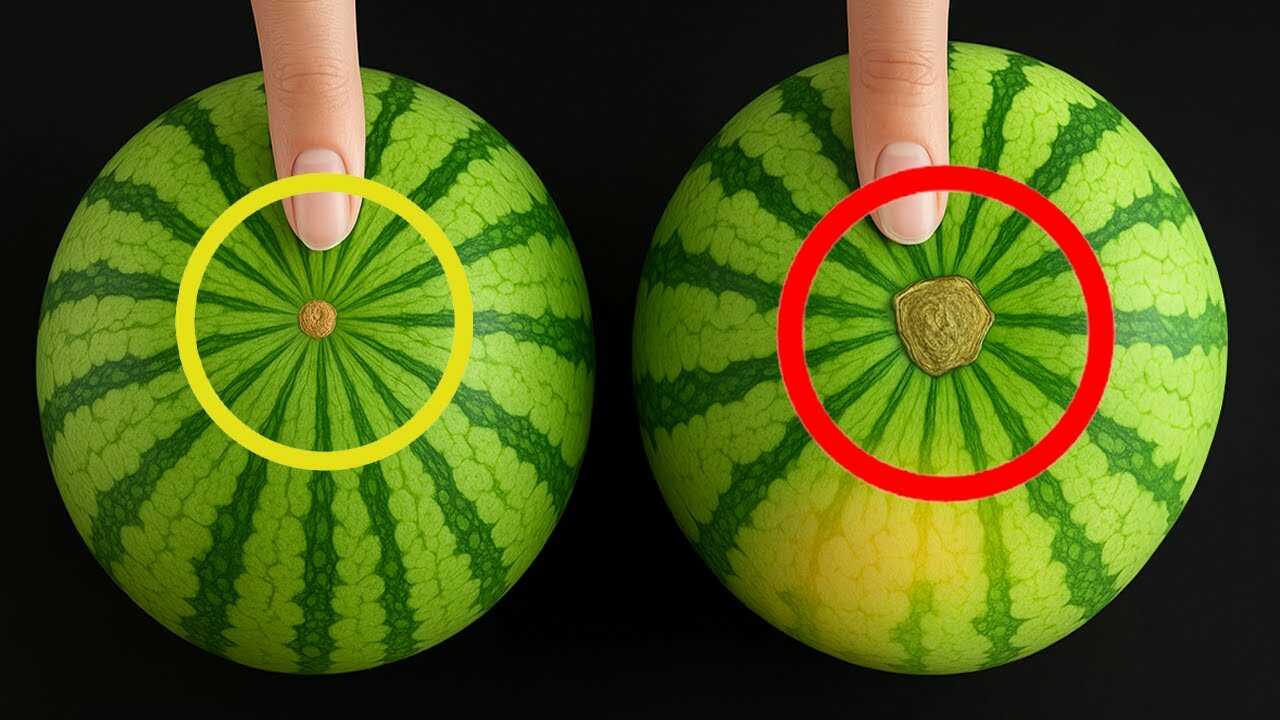
Look closely at the picture: the finger is pointing to the tiny dried disc at the center of the fruit’s bottom — the watermelon’s blossom-end scar (the remnant of the flower). This small, corky spot is a reliable botanical clue if you learn how to read it alongside basic care. In this article I’ll show you, step by step, how to use that exact spot to pick sweeter, juicier melons every season.
Why the blossom-end scar matters (short, factual)
The blossom-end scar is the dried remnant of the female flower. As a watermelon matures after successful pollination, that floral tissue dries and becomes corky and brown. In properly developing melons this change correlates with physiological maturity and sugar accumulation in the flesh. Checking the scar is not a miracle test on its own, but a fast, field-ready indicator when combined with other signs.
Step-by-step: inspect the blossom-end like a pro
- Mark pollination dates: when a female flower is pollinated, tag it with a small tie and date. Most watermelons reach harvest maturity about 30–45 days after pollination, depending on variety.
- Start weekly checks: begin a visual check once the fruit reaches softball size (about 4–5 weeks after pollination). Inspect the blossom-end scar once per week from week 4 onward.
- What to look for in the scar: a ripe/near-ripe scar is dry, corky and tan-to-brown, usually about 5–15 mm across and either flush with the rind or slightly recessed. It should be firm, not soft or waterlogged.
- Confirm with two other signs: (1) the ground or field spot (where the melon touched soil) is creamy yellow rather than white or pale green; (2) the nearest vine tendril within an inch of the stem is brown and brittle. All three together greatly raise confidence of ripeness.
- Final check before harvest: when the blossom scar is corky and the field spot is yellow, harvest within the 30–45 day window after pollination. If still unsure, wait one week and re-inspect — you are operating on a multi-week timeline, not instant changes.
Practical tips from experience
- Keep a simple calendar: write pollination dates on a tag or notebook. Counting by weeks is far more reliable than guessing by size alone.
- Clean view: gently wipe the blossom end with a soft cloth before judging—damp soil or mildew can mask the corky remnant.
- Don’t rely on shine: some ripe melons stay glossy; others become dull. Use the blossom scar plus field spot and tendril, not skin shine alone.
- Watering dose while fruits develop: provide roughly 1–2 inches (2.5–5 cm) of water per week in the summer, delivered as deep soakings. Maintain consistent moisture during weeks 2–5 after pollination to support sugar transport; check soil moisture weekly and adjust for rainfall.
- Label varieties: different cultivars ripen at different days-from-pollination. Note variety names when you tag flowers to refine your 30–45 day expectation.
Common mistakes to avoid (real botanical errors)
- Picking only by fruit size: large can be unripe; ripeness is physiological, not size alone.
- Confusing a soft or sunken blossom end with ripeness: soft or mushy blossom ends indicate rot or insect damage, not maturity.
- Waiting for the stem to fall off: a detached stem does not guarantee internal ripeness and can invite rot on the vine.
- Overwatering late in development: sudden overwatering in the final weeks can dilute sugars. Keep moisture steady; check the soil rather than guessing.
- Ignoring pollination records: without date tracking you’ll rely on guesswork rather than the 30–45 day biology window.
Conclusion — try this on your next harvest
Next time you choose or harvest a watermelon, make the blossom-end scar your primary quick-check. Look for a dry, corky, tan/brown floral remnant, confirm a creamy-yellow field spot and a dry tendril, and work from your pollination date (about 30–45 days after pollination). This simple, botanical cue—used weekly during the final month—will improve your hit rate for truly sweet, juicy watermelons. Try it this season, mark your dates, and share what you find!