Just need 1 cup, use once, flowers bloom all year long
Just need 1 cup, use once, flowers bloom all year long
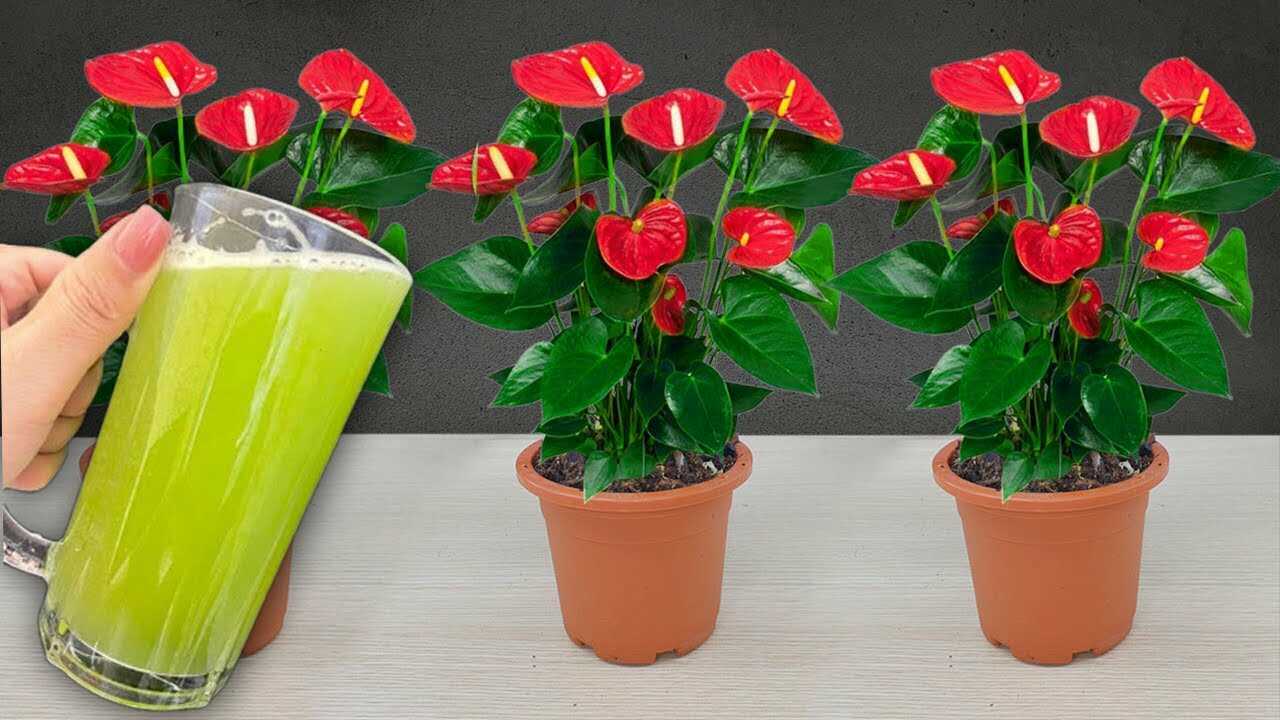
In the photo you can see a bright **green liquid** in a glass being offered to potted red anthuriums. That liquid is best interpreted visually as a **grass clippings tea / blended grass juice** — a quick, nitrogen-rich homemade liquid fertilizer. Below I explain, step by step, how to make and use exactly one cup of this preparation safely as a single supplement to help your flowering houseplants perform better over the growing season.
Why grass clippings tea works (the botanical facts)
Fresh grass clippings release **soluble nitrogen** as they break down. Nitrogen is a primary macronutrient plants need for healthy **leaf and stem growth**, and when used correctly it supports overall plant vigor so flowering plants like anthuriums can produce more and better blooms. Grass tea also contains small amounts of potassium and micronutrients and can boost soil microbial activity. Important: this is a **supplement** to good light, watering, drainage and balanced fertilization — not a miracle cure.
Exact recipe and dose (follow these measurements precisely)
- Ingredients: 1 cup tightly packed fresh lawn grass clippings (no seedheads, pesticide-free), 4 cups clean water.
- Make the tea: Place 1 cup clippings + 4 cups water in a blender. Blend 20–30 seconds until evenly green and frothy. Let sit 30–60 minutes to settle, then strain through a fine sieve or cheesecloth into a clean container. Discard solids or add to compost (if no herbicide risk).
- Dilution: Dilute the strained tea 1:5 with water (1 part tea + 5 parts water). This yields a weak, plant-safe feed.
- Application dose: Use exactly 1 cup (250 ml) of the diluted mixture per average 4–6 inch potted anthurium (as shown in the image).
- Frequency: Use once at the start of the active growing season (spring or early summer). Do not repeat unless you see poor growth later; if needed, repeat at most once more after 8–12 weeks in the active season.
Step-by-step application
- Step 1 — Check source: Only collect clippings from lawns that have not been treated with herbicides, pesticides or persistent lawn products for at least 6 weeks.
- Step 2 — Prepare tea: Follow the exact recipe above. Do not ferment anaerobically (no sealed jars for long periods) — off odors mean discard.
- Step 3 — Water first: Moisten the potting mix with plain water so the soil is slightly damp before applying the cup of diluted tea. This avoids concentrated zones.
- Step 4 — Apply: Pour 1 cup of the diluted tea evenly over the soil surface around the plant base (avoid pouring directly on leaves). Let excess drain away if the pot has drainage holes.
- Step 5 — Resume care: Continue normal light, humidity and watering routines. Expect any plant response to develop over several weeks to months; do not expect changes in days.
Practical tips from experience
- Best timing: For indoor anthuriums, apply once in spring when new growth starts. This gives plants a gentle nitrogen boost as they enter the bloom-producing phase.
- Combine wisely: If you want more flower initiation, pair this one-time application with a balanced houseplant fertilizer that supplies phosphorus (blooming nutrient) according to label directions — the grass tea is a complement, not a full fertilizer program.
- Storage: Use the strained, diluted tea immediately. Do not store diluted mix more than 24 hours; it will oxidize and smell.
- Plant type: Use on foliage and flowering houseplants that tolerate mild nitrogen — avoid frequent use on succulents or desert plants that prefer low nitrogen.
Common mistakes to avoid (real botanical errors)
- Too concentrated: Applying undiluted tea or a stronger dilution often causes ammonia buildup and root burn. Always dilute 1:5.
- Overuse: Frequent nitrogen-only feeds encourage leaf growth at the expense of flowers. Stick to the one-time application guideline and, if repeating, wait 8–12 weeks and reassess.
- Using treated clippings: Clippings from lawns recently treated with herbicides can carry residues that damage houseplants — never use them.
- Pouring on leaves: Direct contact with concentrated green juice can cause spotting or fungal issues on leaves — pour to soil surface only.
- Poor drainage: Adding any liquid fertilizer when soil is waterlogged increases root-rot risk. Make sure pots drain well before applying.
What to expect and timeline
Do not expect instant changes. With proper light and care, a single application can contribute to healthier growth and improved bloom set over a period of 6–12 weeks. If you maintain feeding, light and humidity after this single boost, many house-flowering plants will produce more consistent blooms through the active season — but this is a supportive technique, not a guarantee of year-round flowering on its own.
Conclusion — try it safely
That bright green cup in the image is a simple, cost-free way to give potted anthuriums a targeted nitrogen boost. Follow the recipe, use exactly **1 cup** of the diluted tea per pot **once** at the start of the season, avoid the common mistakes above, and always combine this with correct light, watering and a balanced fertilizer program. Do this, and you’ll likely see stronger plants and better flowering over the coming months — now grab fresh clippings and give it a careful try.