
Just one cup a week! Keep your orchids blooming year-round with strong roots.
Just one cup a week! Keep your orchids blooming year-round with strong roots.
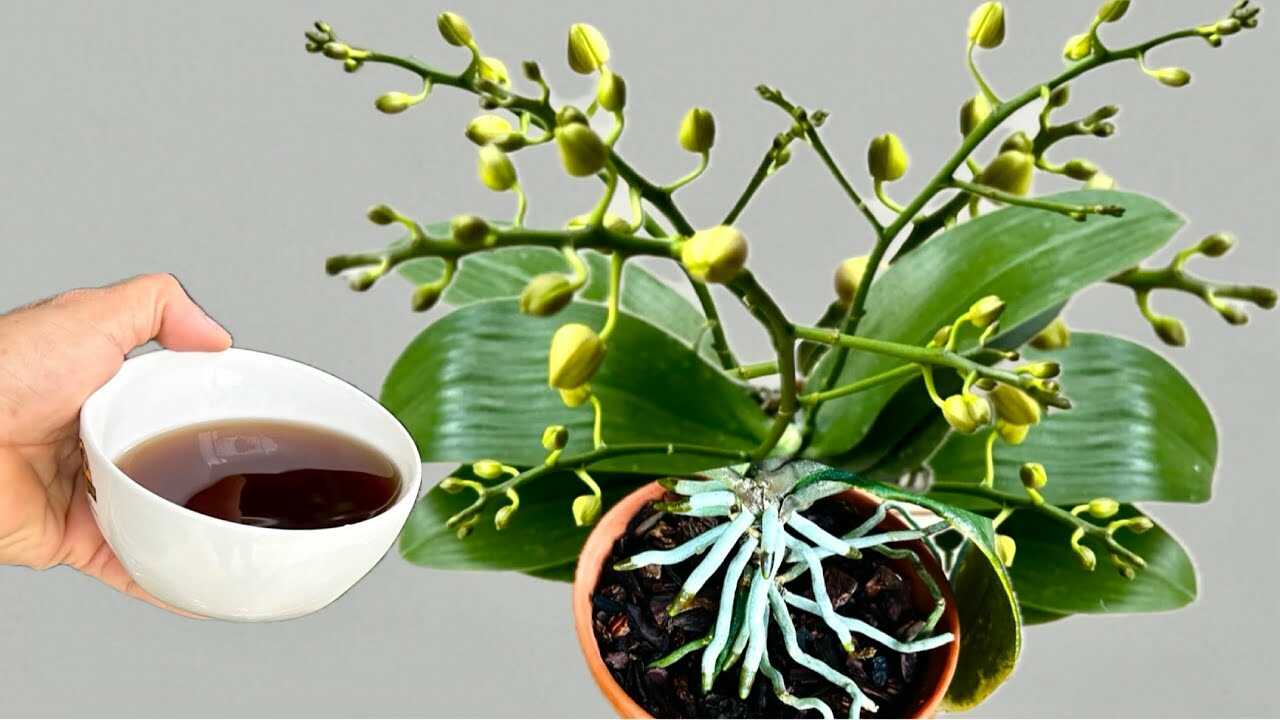
In the photo you can clearly see a small white cup of **brewed coffee** being brought toward a potted orchid. That dark, liquid coffee is the central tip in this article: used carefully as a very weak weekly *root drench*, brewed coffee can be a safe, supplemental source of soluble **nitrogen** and trace nutrients for potted orchids grown in bark mixes.
Why brewed coffee can help orchids (brief, factual)
Brewed coffee contains small amounts of **soluble nitrogen**, potassium and micronutrients and organic acids that can slightly lower the substrate pH and improve short-term nutrient availability. In a very dilute form it may also encourage beneficial microbial activity in a bark medium, which helps organic matter break down slowly and releases nutrients to roots. These properties are real but modest — this is a supplemental technique, not a replacement for proper light, drainage, routine orchid fertilizer and repotting.
Step-by-step: safe weekly coffee drench for orchids
- What you need: 1 cup (240 ml) cooled, plain **black brewed coffee** (no milk, cream, sugar or flavored syrups), fresh filtered water, a clean measuring cup or jug.
- Prepare the dilution: Mix 1 cup (240 ml) of cooled brewed coffee into 3 liters (3,000 ml) of room-temperature filtered water. This creates a very weak solution (about 1:12 coffee:water).
- How much to apply: For a small orchid pot (6–12 cm / 2.5–5 in), apply **200–250 ml** of the diluted solution around the potting medium once per treatment. For medium pots, use 300–500 ml. Let the water drain freely; orchids must never sit in water.
- When to use: Use this diluted coffee drench **once a week** during the active growth season (spring through early autumn) for a trial period of **8–12 weeks**. In fall–winter reduce to **once every 2–4 weeks** or stop entirely if the plant is dormant.
- Aftercare: Once every 4 weeks flush the pot thoroughly with plain water to prevent any buildup of salts or organic residues in the bark.
Practical tips from experience
- Always cool the coffee. Hot liquid damages roots and can encourage pathogens.
- Use plain black coffee only. Any dairy or sugar encourages mold and pests in the potting media.
- Test on one plant first. Try the method on a single healthy orchid and watch root color and bloom retention for 8–12 weeks before applying to your whole collection.
- Prefer morning application. Watering in the morning lets the medium dry a bit by evening and reduces the risk of crown or root rot.
- Monitor substrate pH occasionally. If you have pH test strips, check that the bark is not becoming excessively acidic over months of use; orchids like slightly acidic to neutral conditions.
Common mistakes to avoid (real botanical errors)
- Don’t pour coffee into the crown. Coffee sitting in the crown or leaf axils can cause crown rot and fungal infection.
- Never use concentrated espresso or cold brew undiluted. High concentration raises caffeine and acid levels that can harm roots.
- Don’t use sweetened or milky coffee. Sugars and fats promote microbial overgrowth and pests in the potting media.
- Avoid overuse. Weekly at the weak dilution above is a supplement; overuse can lower pH too far or accumulate residues that stress roots.
- Do not apply to newly repotted or very young seedlings. Young roots are more sensitive; wait until roots are established (several weeks after repotting).
What to expect and timing
This is a gradual, supportive practice. If the treatment helps, you should notice firmer, plumper roots and better bloom retention over a period of **6–12 weeks** of consistent use in the active season. If you see yellowing leaves, slimy roots or a sour smell from the medium, stop the coffee treatment and flush the pot thoroughly with plain water.
Conclusion — a gentle, science-based booster
Used in a controlled, diluted way, a single cup of brewed coffee a week can be a harmless, low-cost supplement to support root health in bark-potted orchids by supplying small amounts of **nitrogen** and organic compounds that improve nutrient availability. Remember: this is an adjunct to, not a substitute for, good orchid care — proper light, appropriate watering, fresh bark when needed and balanced orchid fertilizer remain essential. Try it on one plant for 8–12 weeks, observe results, and adjust frequency seasonally. Happy growing — and enjoy those stronger roots and more reliable blooms!