Just One Fruit! The Orchid Immediately Produces Roots and Blooms Year-Round
Just One Fruit! The Orchid Immediately Produces Roots and Blooms Year-Round
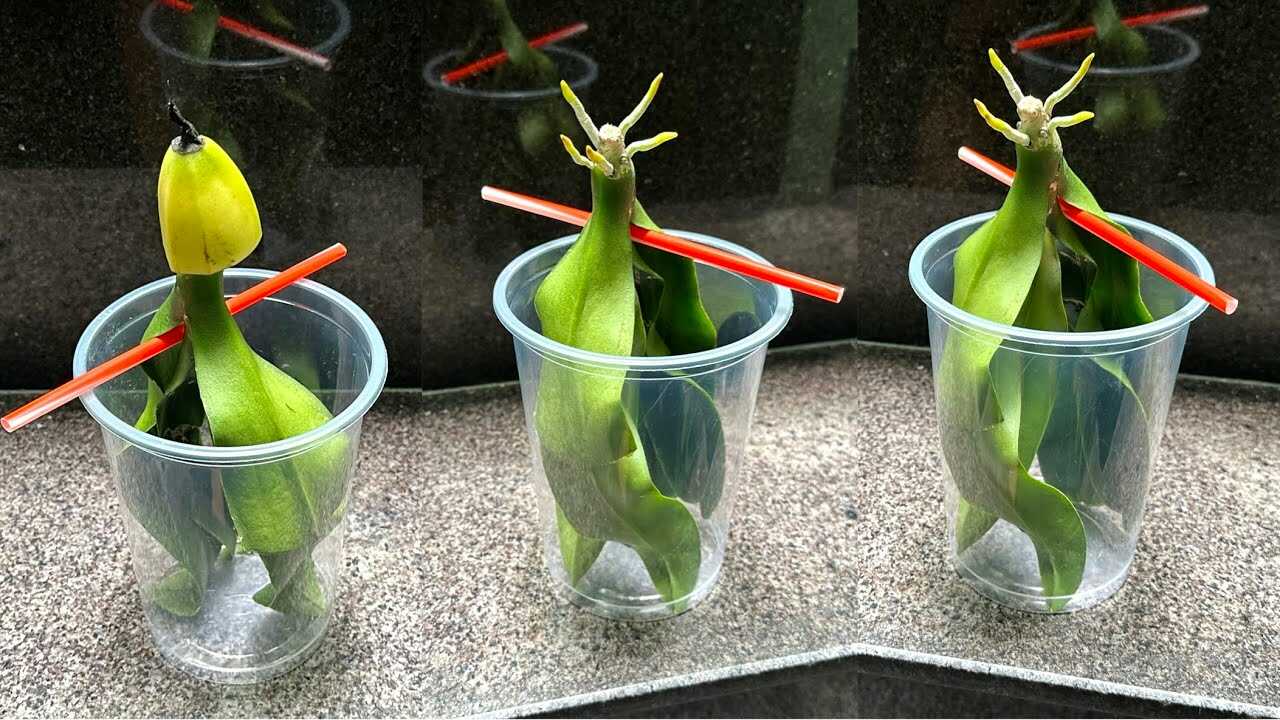
In the photo above you can clearly see a single ripe banana — yellow skin with a slightly browned blossom end — placed upright on an orchid crown inside a clear plastic cup. That bright, smooth, curved fruit is the visual anchor for a safe, science-backed trick: using the banana (and especially its peel) as a controlled organic supplement to support root growth and improve the plant’s ability to produce healthy blooms.
Why a banana works (the real botany)
Ripe bananas are botanically relevant for two reasons you can verify: they emit the plant hormone **ethylene** as they ripen, and their peel contains **potassium (K), phosphorus (P) and calcium (Ca)** plus trace micronutrients. Potassium is a well-established nutrient that helps plants regulate water, build strong cell walls and support reproductive processes (flowering). Using banana-derived inputs carefully can therefore be a useful supplement alongside standard orchid care.
Important safety note
Do not expect the banana to be a miracle cure. This method is a supplement to good orchid basics — correct light, watering, drainage, and a balanced fertilizer. Also: placing a whole, moist fruit directly on the orchid crown or in contact with stem/roots can cause rot and pest attraction. The safe, effective approach is to use banana peel preparations or controlled ethylene exposure only when appropriate (and with caution).
Step-by-step: Banana Peel Tea to Stimulate Roots and Better Blooms
- What you need: 1 medium ripe banana (peel only), 1 liter (≈1 quart) of non-chlorinated water, a clean jar with lid, a fine strainer, and a spray bottle or small pour container.
- Prep (48-hour cold brew): Cut the peel into 2–3 pieces, place in the jar, cover with 1 liter of water, close loosely and let steep at room temperature for 48 hours. Refrigerate if your room is >25°C (77°F) to limit unwanted fermentation.
- Strain and store: Remove peels, strain the liquid. Use fresh within 48 hours or keep refrigerated up to 5 days. Discard if it smells of strong fermentation (vinegar/rot).
- Dilution for orchids: Mix 1 part banana-tea to 3 parts clean water (final dilution 1:4). This provides a mild potassium supplement without osmotic stress.
- Application (root drench): In spring–summer (active growth), apply 50–100 ml (≈2–4 fl oz) of diluted tea to the potting mix around each small-moderate Phalaenopsis every 3–4 weeks. For larger plants use up to 150 ml. Do not saturate — just wet the bark around roots.
- Application (foliar spray): If you wish to foliar feed, further dilute to 1:10 and mist leaves early morning only; avoid spraying flower spikes or buds.
- Winter schedule: Reduce frequency to once every 6–8 weeks (cooler, slower growth).
Alternative: Dried peel amendment
Dry banana peel pieces in a warm, ventilated spot or low oven until crisp, grind into small flakes. Mix one teaspoon of the dried powder into the top inch of the bark per small pot once every 3 months. This slowly releases nutrients but avoid adding fresh peel directly to prevent rot.
Timing and expected results
Be consistent. With regular monthly applications in the growing season you may notice improved root sheen, steadier new root tips and a stronger plant vigor in 4–12 weeks. Flowering responses depend on species and overall plant health; this method supports the plant’s nutrition and can increase the chance of reliable blooming when combined with proper light, temperature and phosphorus-rich bloom feeding.
Practical tips from experience
- Keep things clean: Always strain and discard peels promptly; decaying peel left in the pot invites fungus and pests.
- Avoid crown contact: Never let wet banana pieces touch the crown or rhizome — crown rot is common and hard to reverse.
- Balance nutrients: Use banana-tea as a supplement, not a replacement for a balanced, low-dose orchid fertilizer (e.g., 20-20-20 or specialized orchid fertilizer at 1/4–1/2 strength every 1–2 weeks during growth).
- Monitor salts: Flush pots with clear water monthly to prevent salt buildup from regular fertilizing.
- Use sealed ethylene only with caution: Some growers place ripe banana in a bag near a plant to create a short ethylene exposure to induce ripening/flowering in sensitive crops. For orchids this can backfire (bud drop). If you try ethylene exposure, do so briefly (24–48 hours) and monitor buds closely — avoid direct contact.
Common mistakes to avoid
- Placing whole, fresh banana or peel directly on the crown — leads to bacterial/fungal rot.
- Using undiluted banana tea or very concentrated peel slurries — causes root burn or attracts pests.
- Expecting instant blooms — improvements take multiple weeks and depend on light, temperature and overall health.
- Neglecting basic care — no supplement will replace correct watering, drainage, and appropriate light.
Conclusion — try it smartly and watch your orchid thrive
The yellow fruit in the picture — a ripe banana — is a handy, natural source of potassium and (if used carefully) gentle ethylene exposure. When converted into a properly diluted banana peel tea and used as a routine supplemental feed, it can support healthier roots and better bloom potential over weeks to months. Remember: this is an addition to, not a substitute for, solid orchid care. Try the recipe for one season, track changes week to week, and adjust frequency in cooler months. Happy growing — and if you try it, share your results so we can learn what works best for different orchid varieties!