Just put lemon on the roots and the old orchid will bloom immediately
Just put lemon on the roots and the old orchid will bloom immediately
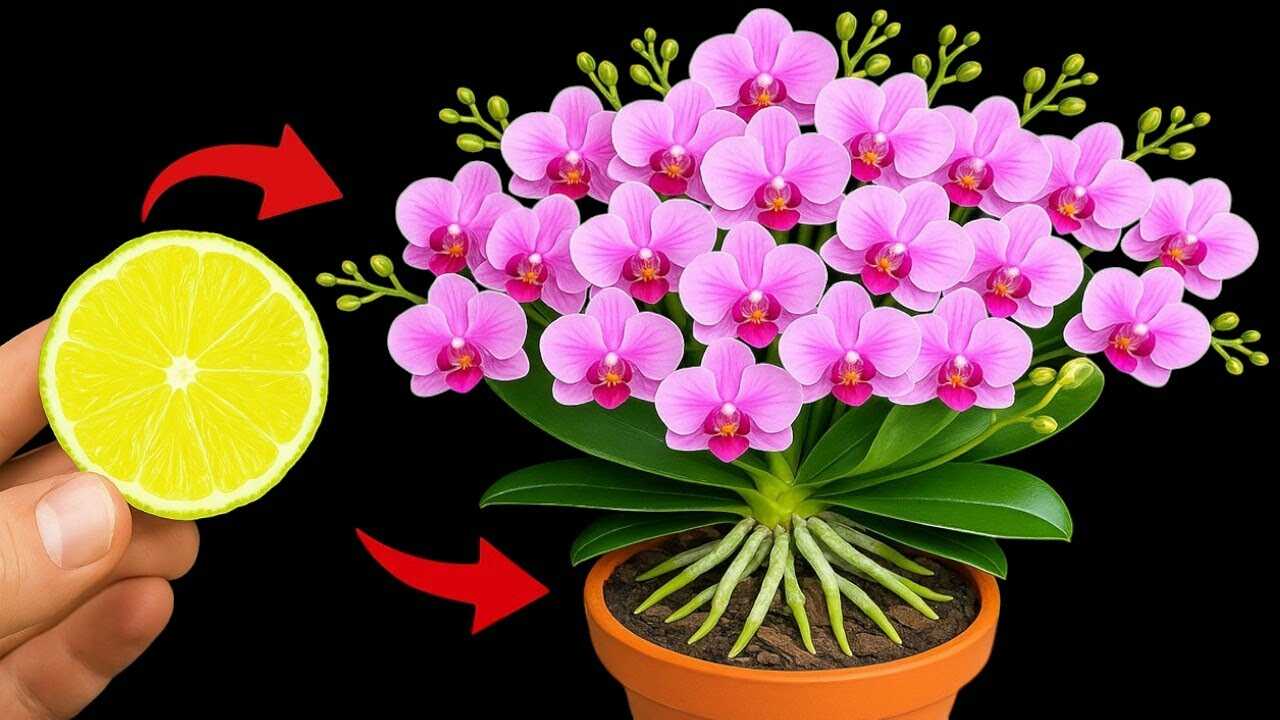
What you see in the picture: a fresh half lemon (bright yellow, juicy, visible pulp) held near a potted Phalaenopsis-style orchid. The central tip below focuses on using a very diluted lemon juice solution on an orchid’s roots and potting medium — carefully, as a complement to proper care, not a miracle cure.
Why lemon juice at the roots might help (real botanical reasoning)
Lemon juice contains **citric acid** and small amounts of **potassium** and micronutrients. Citric acid can temporarily **lower the pH** of water and the potting medium and acts as a mild **chelator**, helping make iron and other micronutrients more available in slightly alkaline conditions. These are real, documented properties of citrate compounds used in horticulture. That said, fresh lemon juice is acidic and concentrated — used incorrectly it can damage root tissue or unsettle beneficial microbes. Consider this an occasional pH adjustment and micronutrient aid, not a replacement for light, humidity, drainage, and balanced fertilizer.
Step-by-step: safe lemon solution for orchids (exact recipe and schedule)
- Ingredients: 1 teaspoon (≈5 ml) fresh lemon juice (no sugar or additives) and 1 liter (≈1 quart) of room-temperature, filtered or distilled water.
- Mixing: Squeeze fresh lemon, strain out seeds and pulp, measure 1 tsp juice, mix thoroughly into 1 L water. The resulting solution is very weak (about 0.5% juice by volume).
- Application method: Use this solution as a watering supplement — pour it over the potting medium until water drains from the pot’s holes (do not pour directly into the crown or saturate leaves). For mounted or bare-root orchids, mist roots lightly at the base, avoiding direct contact with flower spikes.
- Frequency: During active growth (spring–early autumn) use once every 4 weeks. In cooler, slower-growth months, reduce to once every 6–8 weeks or stop entirely.
- pH check (optional but recommended): If you have a pH meter or strips, aim for a potting-medium pH around 5.5–6.5 for most Phalaenopsis. Use the lemon solution only if your medium is trending neutral to slightly alkaline.
When to use this — and when not to
Use the diluted lemon treatment when your orchid shows signs of micronutrient deficiency (yellowing between veins on new leaves), or when you know your water is very alkaline and you suspect nutrient lockout. Do not use concentrated lemon juice. Avoid use if roots are slimy and rotting — in that case, trim dead roots, repot into fresh bark, and treat with clean water and appropriate orchid fertilizer.
Practical tips from horticultural experience
- Always dilute. Straight lemon juice is too acidic and risks burning roots.
- Use fresh lemon.
- Combine with proper care. Ensure bright, indirect light, correct temperature range (day 20–26°C / night 15–20°C for many Phalaenopsis), good drainage, and a balanced orchid fertilizer (use at 1/4–1/2 strength during weekly or biweekly feedings).
- Repot correctly. If the medium is compacted or breaking down, repot into fresh bark or sphagnum — lemon tweaks won’t help if roots lack oxygen.
- Track results consistently. Expect subtle improvements over 4–12 weeks (improved leaf color, root vigor, better bud set). Flowering may follow if other conditions are met.
Common mistakes to avoid (real botanical errors)
- Applying undiluted lemon juice. This can burn roots and kill beneficial microbes, causing more harm than good.
- Expecting immediate flowering. Changing nutrient availability and root health takes time; do not expect blooms in days — allow several weeks to months.
- Using lemon instead of addressing core problems. Poor light, wrong temperature, waterlogged roots, or an exhausted potting medium will prevent blooms regardless of lemon treatments.
- Pouring into the crown or onto flowers. Acids can discolor petals and cause crown rot if water pools in the crown area.
Quick troubleshooting
- If leaves yellow quickly after treatment: stop lemon applications and flush the pot with plain water; check roots and repot if necessary.
- If roots look plumper and firmer over 4–8 weeks: continue monthly maintenance as part of your routine.
- If no improvement after 3 months: re-evaluate light, temperature, humidity, fertilizer, and potting medium — these factors are more decisive for flowering than occasional pH tweaks.
Conclusion — realistic, encouraging action
Yes, the lemon half in the photo can be turned into a **very weak citric-acid solution** that occasionally helps with pH and micronutrient availability around orchid roots. Follow the precise recipe (1 tsp lemon juice per 1 L water), apply only once every 4 weeks during active growth, and always use this approach as a supplement to proper lighting, watering, drainage, and fertilizing. Expect gradual improvement over several weeks to months — and if you pair this with sound orchid care, you may well see stronger roots and better chances of rebloom.
Try it on one plant first, observe for 4–12 weeks, and share what happened — your orchid (and your gardening confidence) will thank you for careful, patient care.