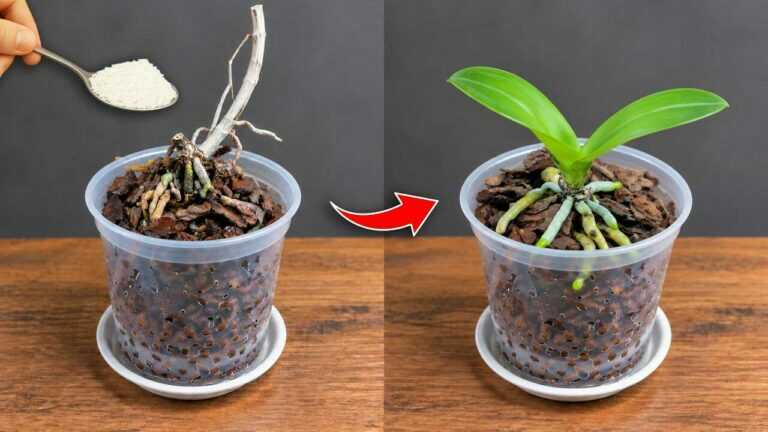
Just Sprinkle It On! And Orchids Will Bloom Brilliantly All Year Round!
Just Sprinkle It On! And Orchids Will Bloom Brilliantly All Year Round!
Introduction: what you see in the photo—and why it matters
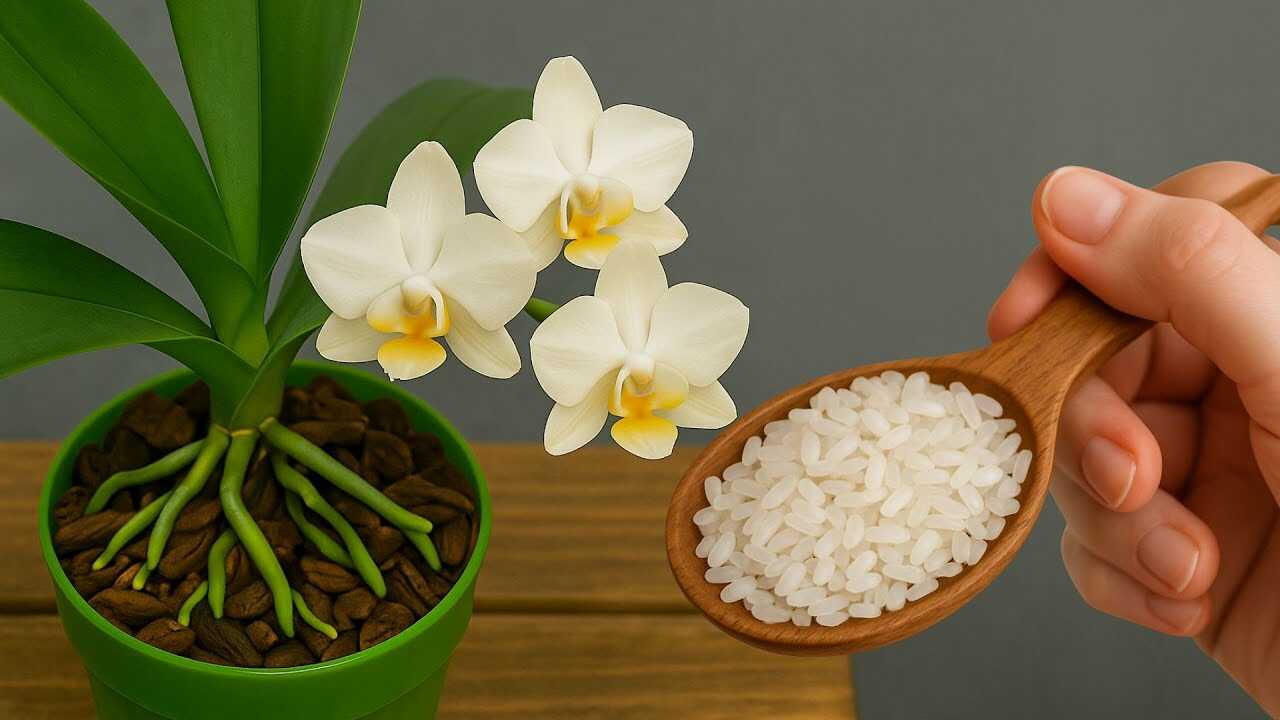
The image shows a wooden spoon heaped with **white rice** next to a potted orchid. That spoonful of rice is the star of this tip. Used correctly as a simple homemade nutrient source—specifically **fermented rice water**—it can support root vigor and microbial life around orchid roots. This is a gentle, low-cost supplement to regular orchid care, not a substitute for proper **light**, **watering**, **drainage**, and balanced **fertilizer**.
Why rice water helps orchids (the factual part)
Rinsing or fermenting white rice releases **starch**, trace minerals and water-soluble compounds that serve as a short-term carbon source for beneficial microbes. Fermentation increases availability of some nutrients and introduces mild organic acids that can modestly improve nutrient uptake by roots. These are documented properties of rice water used in horticulture as a low-strength organic supplement—useful when applied carefully and diluted.
When to use it
- Use during the orchid’s **active growth and blooming season** (spring–summer) as a supplement to regular feeding.
- Reduce frequency in **autumn and winter** when growth slows.
- Expect visible improvement in root health and bloom consistency after **several weeks to a few months** of regular, correct use—not overnight.
Step-by-step: prepare and apply fermented rice water (exact doses)
- Ingredients: 1/2 cup (about 100 g) uncooked white rice, 2 cups (480 ml) clean water.
- Rinse method: Place rice in a bowl, pour the 2 cups of water over it, swirl for 30 seconds, then strain the cloudy water into a clean jar. This is non-fermented rice rinse; skip to dilution below if using immediately.
- Fermentation option (recommended): After straining into the jar, cover loosely and leave at room temperature (20–25°C / 68–77°F) for 36–48 hours until it smells mildly sour. This fermented rice water has higher microbial activity and organic acids.
- Dilution: Always dilute fermented rice water before use. Mix 1 part fermented rice water with 9 parts fresh water (1:10 dilution).
- Application dose: For a typical 12–15 cm (4–6 inch) orchid pot, apply 100–150 ml of the diluted solution directly to the potting medium around the roots (not on the leaves) every 3–4 weeks during spring and summer.
- Winter schedule: Apply once every 6–8 weeks and reduce dose to 50–75 ml per pot because orchids slow growth and require fewer nutrients.
- Rinse/flush: Once per month, water with plain fresh water to flush salts and prevent buildup—especially if you live in a hard-water area.
Practical tips from experience
- Always use a **loose-draining orchid medium** (bark, charcoal, perlite). Never leave rice grains in the pot—grains rot and attract pests.
- If you see any moldy film on the medium after application, pause the rice-water routine and flush thoroughly with plain water; reduce frequency.
- Keep the diluted solution at room temperature and use it within 24 hours of dilution. Discard any strongly foul-smelling batches—too long fermentation risks unwanted microbes.
- Combine this routine with a balanced orchid fertilizer at half-strength once a month during active growth; rice water is a supplement, not a full fertilizer.
- Label jars and note fermentation time so you maintain a consistent routine; inconsistent strength causes stress in sensitive orchids.
Common mistakes to avoid (real botanical errors)
- Pouring undiluted rice water: Undiluted or strongly fermented rice water can cause root burn or encourage pathogenic fungi.
- Adding rice grains to the pot: Raw or cooked rice will rot, produce bad odors, and attract pests—do not place grains in the medium.
- Using rice water as the only feed: Orchids need balanced macro- and micronutrients; rice water lacks sufficient nitrogen, phosphorus and potassium to replace fertilizer.
- Applying to leaves: Spraying undiluted rice water on foliage can create sticky residues and promote fungal spots. Apply at the root zone only.
- Skipping regular flushing: Over time organic residues and salts accumulate; monthly flushing keeps roots healthy.
Conclusion and call to action
That simple spoonful of **white rice** can become a gentle, budget-friendly booster for your orchids when turned into properly diluted fermented rice water and used as a root-zone supplement. Follow the precise recipe and schedule above, pair it with sound **light**, **watering**, and **drainage** practices, and you should notice better root vigor and more reliable blooms over the next several weeks to months. Try one plant first, observe for two growth cycles, and if it responds well, add the routine to your regular care. Ready to try it? Grab a spoon, make a small jar, and start next spring—your orchids will thank you.