Knowing this secret! Both roots and Orchids Bloom all year round
Knowing this secret! Both roots and Orchids Bloom all year round
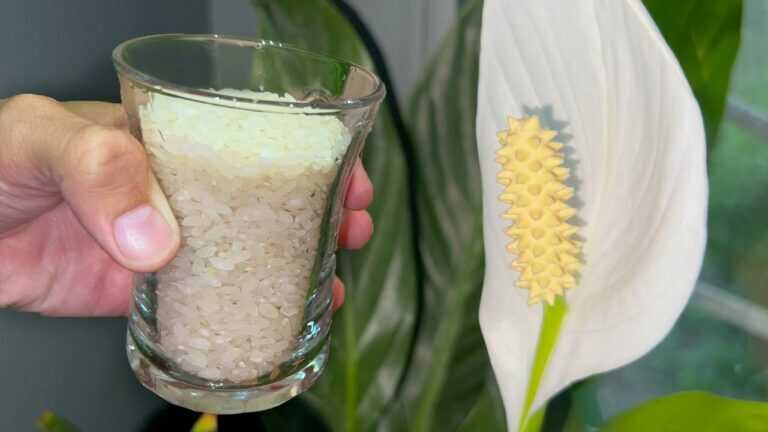
Right away you can see a hand holding pale, elongated grains — **uncooked long-grain rice** — pointed toward a potted Phalaenopsis. The little trick I share below uses that exact rice, prepared into a diluted **rice rinse** to support orchid root health and microbial activity. This is a gentle supplement to regular care, not a miracle cure.
Why rice rinse can help orchids (briefly and factually)
Rinsed rice releases small amounts of soluble starches and trace minerals into the water. Those dissolved organics can feed beneficial **microbes in the rhizosphere**, which in turn can improve nutrient mineralization available to roots. Used correctly, rice rinse is a mild, organic supplement to standard orchid feeding — it does not replace balanced orchid fertilizer, proper light, water, or drainage.
Step-by-step: how to prepare and use rice rinse safely
- Measure: Use 2 tablespoons (about 30 g) of uncooked long-grain rice — the same kind shown in the image — per 250 ml (1 cup) of water.
- Rinse: Place rice in a jar, add 250 ml cool water, swirl for 20–30 seconds, then pour the cloudy water through a fine strainer into a clean container. Discard the rinsed rice or use it for cooking.
- Dilute: Dilute the collected rice rinse with fresh water at a ratio of 1 part rice rinse : 4 parts water (for example 250 ml rinse + 1,000 ml fresh water). This creates a mild solution safe for orchids.
- Apply: For a standard 12–15 cm (4–6 in) pot, give a light root drench of 50–150 ml of the diluted rice-water solution so it moistens the bark but does not stay pooling in the saucer. Allow full drainage.
- Frequency & season: Use once every 3–4 weeks during the active growth season (spring and summer). Reduce to once every 6–8 weeks in autumn and stop in winter when growth slows.
- Watch and adapt: After 8–12 weeks monitor root color and bloom quality. If roots become soft or you detect mold, stop and flush the pot with plain water; the rice rinse may be too frequent or the medium too wet.
Optional: fermented rice water (use with caution)
Some growers ferment rice rinse for 48–72 hours to increase microbial activity. If you try this, ferment in a covered jar at room temperature, then dilute the finished liquid 1:10 before use. Because fermentation can produce strong odors and undesirable anaerobes, only use fermented rice water sparingly (once every 6–8 weeks) and never in pots that stay wet.
Practical tips from experience
- Use good medium: Rice rinse works best with well-aerated bark or charcoal mixes used for Phalaenopsis. Poor drainage magnifies risk of rot.
- Always dilute: Undiluted rice rinse (or adding raw rice into the pot) encourages pests, mold and root decay. Never bury grains in the medium.
- Combine wisely: Continue your regular orchid fertilizer regimen (weak fertilizer applied during growth). Consider rice rinse as a microbial and trace-mineral booster, not as the main nutrient source.
- Use lukewarm, dechlorinated water: Chlorine can harm beneficial microbes — let tap water sit 24 hours or use filtered water if possible.
Common mistakes to avoid (real botanical pitfalls)
- Placing uncooked rice grains directly into the pot — this invites rodents, mold and anaerobic pockets that damage roots.
- Overapplying rice rinse or using it weekly year-round — increases risk of root rot and microbial imbalance.
- Using rice rinse in already waterlogged pots or compacted media — poor aeration + organics = root decline.
- Expecting immediate bloom results — any improvement in root health or flowering takes several weeks to months of consistent, correct care.
Conclusion — try it, observe, and keep basic care first
If you want a simple, low-cost supplement that pairs well with good orchid culture, try the diluted rice rinse routine for a season (several months) while keeping your **light, watering, potting medium and fertilizer** consistent. Track root firmness and bud development — gentle benefits often appear after a few growth cycles. Use the visual cues of healthy green roots and steady bud set to decide whether to continue.
Give this rice rinse method a careful try, and share your observations after two to three months — healthy roots are the real secret to longer-lasting blooms.