New gardening method | How to propagate chili peppers in bananas
New gardening method | How to propagate chili peppers in bananas
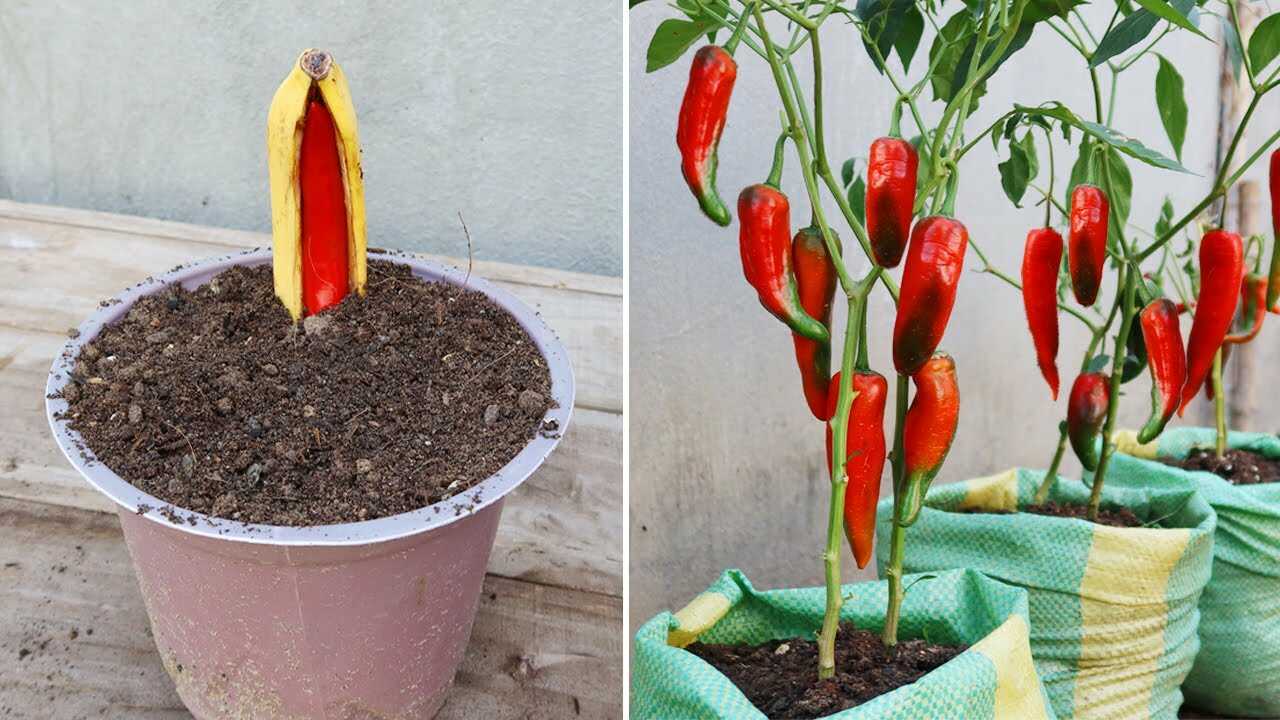
In the photo you see a **yellow banana peel** split and placed into potting soil with a red **chili fruit/seedling** nearby — a simple visual of using banana peel as an organic booster while starting chilies. This article explains, step by step, how to use banana peel safely and effectively to help **chili pepper propagation**, why it works botanically, and exactly how much and how often to apply it. Remember: this is a complement to proper **light**, **water**, **drainage**, and **fertilizer**, not a miracle cure.
Why use banana peel for chili propagation (real, verifiable reasons)
Banana peels are rich in **potassium (K)** and contain measurable amounts of **phosphorus (P)**, **calcium**, and **magnesium**. Phosphorus supports **root formation**, and potassium supports cell function and general stress tolerance — both useful during seed germination and early root development. As banana peel decomposes it also adds **organic matter** and stimulates beneficial microbial activity in the root zone. These are documented plant-nutrient facts; they do not replace a balanced fertiliser or good cultural care.
What you’ll need
- Fresh ripe banana peel (no heavy mold) — about 1 medium peel per 4–6 small seedlings or one 12–15 cm pot.
- Quality seed-starting mix or well-draining potting soil.
- Clean pots or seed trays with drainage.
- Optional: a jar for making banana peel tea (soak method).
- Seeds or healthy chili cuttings.
Step-by-step: two safe methods (buried peel or banana-tea)
Method A — Buried chopped peel (best for small pots and transplant holes)
- Chop one medium banana peel into small pieces (~1 cm cubes). A medium peel ≈ 30–40 g fresh.
- For each small seedling pot (8–10 cm / 3–4 inch pot), mix 1 tablespoon (≈15 g) of chopped peel into the bottom third of the potting mix. For larger 12–15 cm pots use 2 tablespoons.
- Cover the chopped peel with 2–3 cm of soil so the peel is buried (prevents flies and odour).
- Sow one or two chili seeds atop the soil (or place seedling/cutting), keep soil evenly moist and at 20–27°C for germination or rooting.
- Expect to see root development and healthier seedlings over the course of 4–8 weeks as peel decomposes and nutrients become available.
Method B — Banana peel tea (best for cuttings and foliar-friendly feeding)
- Chop 1 medium banana peel and place in 1 litre of water in a jar. Let steep for 48–72 hours at room temperature (cover, do not ferment more than 72 h).
- Strain the liquid and discard solids into compost. This liquid is concentrated — dilute it 1:10 (one part tea to nine parts water) before use.
- For cuttings: water the cutting substrate lightly with this diluted tea once every 2 weeks during active rooting (typically 4–8 weeks in spring/summer).
- For established seedlings or potted chilies: apply diluted tea to soil at the base once every 3–4 weeks during the growing season (spring through summer). Do not use in cold dormancy periods.
Practical tips from experience
- Use ripe banana peels (yellow to brown); they contain more soluble potassium than green peels.
- Always bury or compost chopped peel — whole peels on the surface attract fruit flies, slugs, rodents and cause odours.
- Chop finely: smaller pieces decompose faster and lower the risk of anaerobic pockets that can damage roots.
- Combine this practice with a balanced seed starter (low in salts) and proper warmth; banana boosts but does not replace a complete seed-start nutrient regime.
- Keep records: note application dates and seedling response so you don’t over-apply.
Common mistakes to avoid (real botanical errors)
- Do not bury whole peels against the stem — large, unchopped peels rot slowly and can cause root rot or attract pests.
- Avoid excessive use: too many fresh carbon-rich scraps can temporarily tie up nitrogen as microbes decompose them. If foliage looks pale, reduce peel additions and use a balanced nitrogen source.
- Don’t expect instant germination or rooting results. Improvements in root mass and vigor typically appear over several weeks (4–8 weeks), not days.
- Do not substitute banana peel for a root hormone when doing softwood cuttings — banana helps nutrition but is not a proven rooting hormone substitute. For reliable rooting you may still use a commercial rooting hormone if needed.
Seasonal dosing and frequency — exact guidance
- Sowing seeds (spring): incorporate 1 tbsp chopped peel per 8–10 cm pot at sowing; repeat at repotting only. Expect benefits across 4–8 weeks.
- Cuttings (spring–early summer): use diluted banana tea at 1:10 every 2 weeks during active rooting for up to 8 weeks.
- Established potted chilies (growing season): apply diluted tea or bury 1–2 tbsp chopped peel per 12–15 cm pot every 6–8 weeks. Stop applications in autumn/winter dormancy.
When to skip banana peel
Avoid using fresh banana peel if your seed mix is already rich in organic slow-release fertilizer or if your pots show signs of salt build-up. If you notice persistent odour, pest visits, or soft rotten stems near the base, remove the peel and refresh the potting medium.
Conclusion — try it, measure it, and combine it
Using a chopped banana peel or a mild banana peel tea can be a low-cost, natural way to supply extra **potassium** and **phosphorus** and to build beneficial soil life around germinating chili seeds and young plants. Apply with the precise doses and frequencies above, expect visible benefits over **several weeks**, and always pair this tip with correct **light**, **watering**, **drainage**, and balanced feeding. Ready to try it? Start one pot with the buried-peel method and one without — compare them after 6 weeks and you’ll see whether banana peel earns a permanent place in your chili propagation routine. Happy growing!