One Cup a Week – The Secret for Orchids to Grow Roots and Flower Clusters Year-Round
One Cup a Week – The Secret for Orchids to Grow Roots and Flower Clusters Year-Round
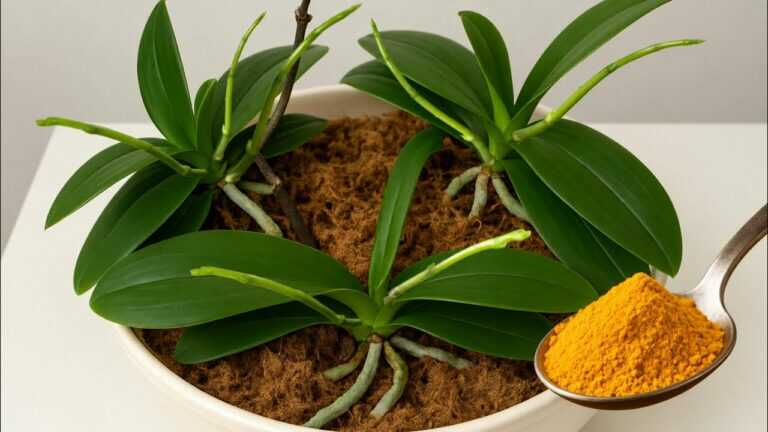
Introduction: what you see in the picture — a glass of brewed coffee
That dark brown liquid in the glass is **brewed coffee** — unsweetened and cooled. In the photo it’s being offered next to a blooming Phalaenopsis to show a simple, low-cost supplement you can use safely on many bark‑potted orchids. This article explains precisely how and why a small, diluted cup each week can support **root growth** and healthier blooms when used as a complement to proper light, watering and fertilizing.
Why brewed coffee can help orchids (the botanical facts)
Brewing coffee removes most oils but leaves a solution containing small amounts of **plant‑available nitrogen**, potassium and trace minerals. Brewed coffee is mildly acidic (typical pH ~5–6), so a dilute application can temporarily increase micronutrient availability for orchid roots in **bark or chunky mixes**. Additionally, caffeine has demonstrated antimicrobial effects in lab studies against some microbes — but in potting mixes results vary, so use with care. Importantly, this is a supplement, not a replacement for balanced orchid care.
Exactly how to prepare and dose — follow these precise steps
- What to use: Plain brewed coffee (no milk, no sugar, no flavored syrups). Cold or room temperature. You may use regular brewed coffee or the strained liquid from used grounds.
- Dilution: Mix 1 part brewed coffee to 3 parts water (example: 150 ml coffee + 450 ml water = 600 ml diluted solution).
- Volume per pot: For a typical Phalaenopsis in a 10–12 cm pot, pour 150–250 ml of the diluted solution so it wets the bark and drains through. For small 6–8 cm pots use 100–150 ml; for >15 cm pots use 300–400 ml.
- Frequency (seasonal): During active growth (spring and summer), apply once a week. During autumn reduce to once every two weeks. In winter keep it to once every 3–4 weeks or pause completely if the plant is semi-dormant.
- Application method: Pour the diluted coffee onto the potting medium until runoff appears, then allow full drainage. Do not leave the plant sitting in liquid. Avoid getting coffee into the crown or on leaves to prevent crown rot.
- Duration to see effects: Expect noticeable changes (more active root tips, firmer roots, better spike set) over 6–12 weeks of consistent weekly use, not in days.
Step-by-step routine
- Week 1: Brew a small cup of coffee, cool it, dilute 1:3. Water the plant with the specified volume in the morning so the pot drains fully.
- Week 2–12 (growing season): Repeat once weekly. Monitor root color and firmness and flower bud development.
- Monthly: Flush the potting medium with plain water (one full pot volume) after every 4–6 applications to prevent buildup of organics or salts.
- Winter: Reduce or pause depending on growth rate; resume weekly in spring as new roots and leaves appear.
Practical tips from growers
- Use in the right medium: Best for orchids in bark/chunks or LECA. Avoid regular use on plants potted in sphagnum moss because organic acids can encourage compaction and rot.
- Combine with regular feeding: Continue your normal orchid fertilizer schedule. Treat the diluted coffee as a light organic supplement, not a full fertilizer replacement.
- Test the runoff: Once a month measure pH of the runoff (ideal for many Phalaenopsis is roughly pH 5.5–6.5). If the medium becomes too acidic, flush with plain water and reduce frequency.
- Strain if using grounds: If you reuse coffee with suspended solids, strain well — fine particles left in bark can compact and reduce aeration.
Common mistakes to avoid
- Too strong a brew: Undiluted or concentrated coffee can be harmful. Always dilute 1:3 as specified.
- Using sweetened or milky coffee: Sugars and dairy invite pests, fungi and bacteria — never use them.
- Applying to the crown or leaves: Pour only into the potting medium to prevent crown rot and leaf spots.
- Year‑round heavy use: Weekly use in winter when growth is minimal may stress the plant — reduce frequency in cooler months.
- Ignoring overall care: Coffee won’t fix poor light, wrong temperature, or blocked drainage. This method supplements, it does not replace proper orchid culture.
Short troubleshooting guide
If roots turn dark and mushy after starting the routine, stop coffee applications immediately, flush medium with plain water, allow the plant to dry, and repot if necessary. If leaves yellow or buds drop, check watering, light and temperature — these are the most common causes and are unrelated to a single coffee application unless it was too strong or applied to the crown.
Conclusion — try one cup a week, responsibly
A single small, properly diluted cup of brewed coffee each week can serve as a mild, organic supplement for bark‑potted orchids, supplying tiny amounts of nitrogen and trace elements and a brief pH shift that can aid nutrient uptake. Be precise: dilute 1:3, use only in the growing season weekly (less in autumn/winter), avoid sugary or milky brews, and always pair this practice with proper light, watering, drainage and a balanced orchid fertilizer. Start the routine and look for clearer, healthier roots and firmer spikes within 6–12 weeks — then decide whether to continue it as part of your orchid care plan.
Ready to try it? Brew, dilute, apply once this week — then watch roots and buds over the next two months. Share your results and adjust frequency based on how your orchid responds.