Only One Fruit Needed! Orchid Immediately Grows Roots – Blooms Year-Round
Only One Fruit Needed! Orchid Immediately Grows Roots – Blooms Year-Round
Introduction — what you see in the image
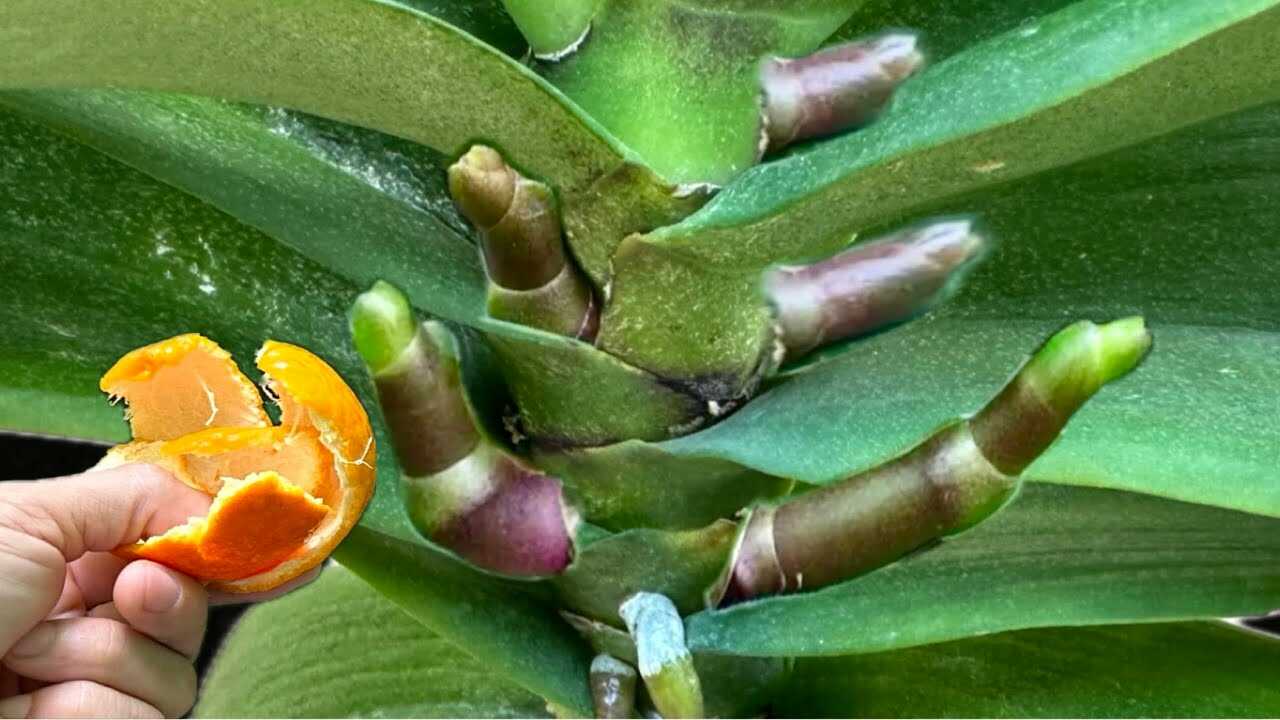
In the photo you can clearly see a hand holding an **orange peel** next to an orchid’s new growths. That bright, textured peel is the ingredient this article focuses on. Used correctly, **citrus peels** can be a safe, low-cost supplement to support orchid health by adding **potassium and trace minerals**, and by providing small amounts of antimicrobial compounds (like **limonene**) that can help reduce some surface microbes in the growing medium. This is a complement to proper light, watering, drainage and fertilization — not a miracle cure — and results develop over several weeks to months.
Why orange peels can help orchids (brief, factual)
Orange peels contain modest amounts of **potassium** and micronutrients that plants use for flower formation and general vigor. They also contain essential oils (notably **limonene**) with documented mild antimicrobial and insect-repellent activity. When broken down or brewed gently, peels can release nutrients slowly and contribute to a healthier root environment. However, citrus peels are acidic and degrade slowly if left whole, so preparation and dilution matter.
Step-by-step: make a safe citrus peel tea for orchids
- Materials: 1 medium orange peel (about 10–15 g), 1 L non-chlorinated water, a clean jar with lid, a strainer, measuring cup.
- Prep the peel: Remove the white pith only if it’s thick; small amounts are fine. Chop the peel into 1–2 cm pieces to speed infusion.
- Steep: Place chopped peels in the jar and cover with 1 L water. Leave the jar loosely covered in a shaded spot at room temperature for 2–3 weeks. Stir every 3–4 days. (This is a gentle cold infusion/ferment — do not heat or boil.)
- Strain and check: After 2–3 weeks strain the liquid. It should smell citrusy or mildly sour; if it smells putrid or shows heavy mold, discard and start over.
- Measure pH (recommended): Test the strained liquid — typical values can be slightly acidic. Aim to dilute until pH is close to 6.0–6.5 for Phalaenopsis orchids. If you don’t have a tester, rely on the dilution guideline below.
- Dilute precisely: Mix 1 part citrus peel tea with 10 parts water (1:10) before using. This gives a mild nutrient boost while minimizing acidity and essential oil concentration.
- Apply: In the growing season (spring–summer) water with 50–100 ml of diluted tea per average Phalaenopsis pot every 2 weeks. In cooler months reduce to once every 4 weeks. Pour to moisten the potting mix — avoid pooling liquid in the crown or on leaves.
Alternative: composted or dried peel amendment
If you prefer a solid amendment, chop peels and compost them for at least 6–12 weeks, then incorporate compost at no more than 10% by volume into orchid bark mixes. This provides slow-release potassium and organic matter without the immediate acidity and pest risk of raw peels.
Practical tips from experience
- Keep peels out of the crown: Never place raw peels on or under the orchid crown (center of the plant). Direct contact can cause rot and crown disease.
- Use diluted tea only: Undiluted citrus infusion can damage roots and upset potting medium pH; follow the 1:10 dilution.
- Watch pests, not promises: Citrus aroma may deter some pests but won’t replace integrated pest management. Check regularly for scale, mealybugs, fungus and treat appropriately.
- Clean containers: Use a clean jar to avoid introducing harmful microbes during the 2–3 week steeping period.
- Combine with balanced fertilizer: Use the citrus tea as a supplement to a balanced orchid fertilizer schedule, not as the sole source of nutrients.
Realistic timeline and expectations
Do not expect “immediate” rooting or sudden year-round blooms from a single treatment. When used consistently as described, you may notice improved root vigor and occasional stronger spikes over several weeks to a few months. For best results, apply diluted citrus tea every 2 weeks during active growth and combine with good light, proper watering, and regular orchid fertilizer. Results accumulate over time — patience matters.
Common mistakes to avoid (botanically important)
- Leaving whole raw peels in the potting mix — attracts pests and promotes anaerobic rot.
- Pouring undiluted infusion over the crown or leaves — risk of tissue damage from essential oils.
- Over-applying — excessive organic acid or salt build-up can harm sensitive orchid roots; stick to the specified frequency.
- Skipping composting for solid amendments — un-composted citrus breaks down slowly and unevenly.
- Assuming citrus tea replaces fertilizer — it supplies modest potassium/traces; use a complete fertilizer for balanced growth and flowering.
Conclusion — try it thoughtfully
The orange peel in the image is a practical, low-cost supplement when prepared and used carefully. Make a small batch of **citrus peel tea** (1 peel : 1 L, steep 2–3 weeks), dilute 1:10, and apply 50–100 ml per pot every 2 weeks in the growing season. Expect gradual improvement over several weeks to months and always pair this tip with proper **light, watering, drainage, and balanced fertilization**. Ready to give it a try? Start with one orchid pot and observe changes over the next 6–12 weeks — then scale up if you see steady improvements.
Call to action: Try the 2–3 week citrus peel infusion on one orchid this month and take notes — the small experiment will tell you how your plants respond before you treat your whole collection.