
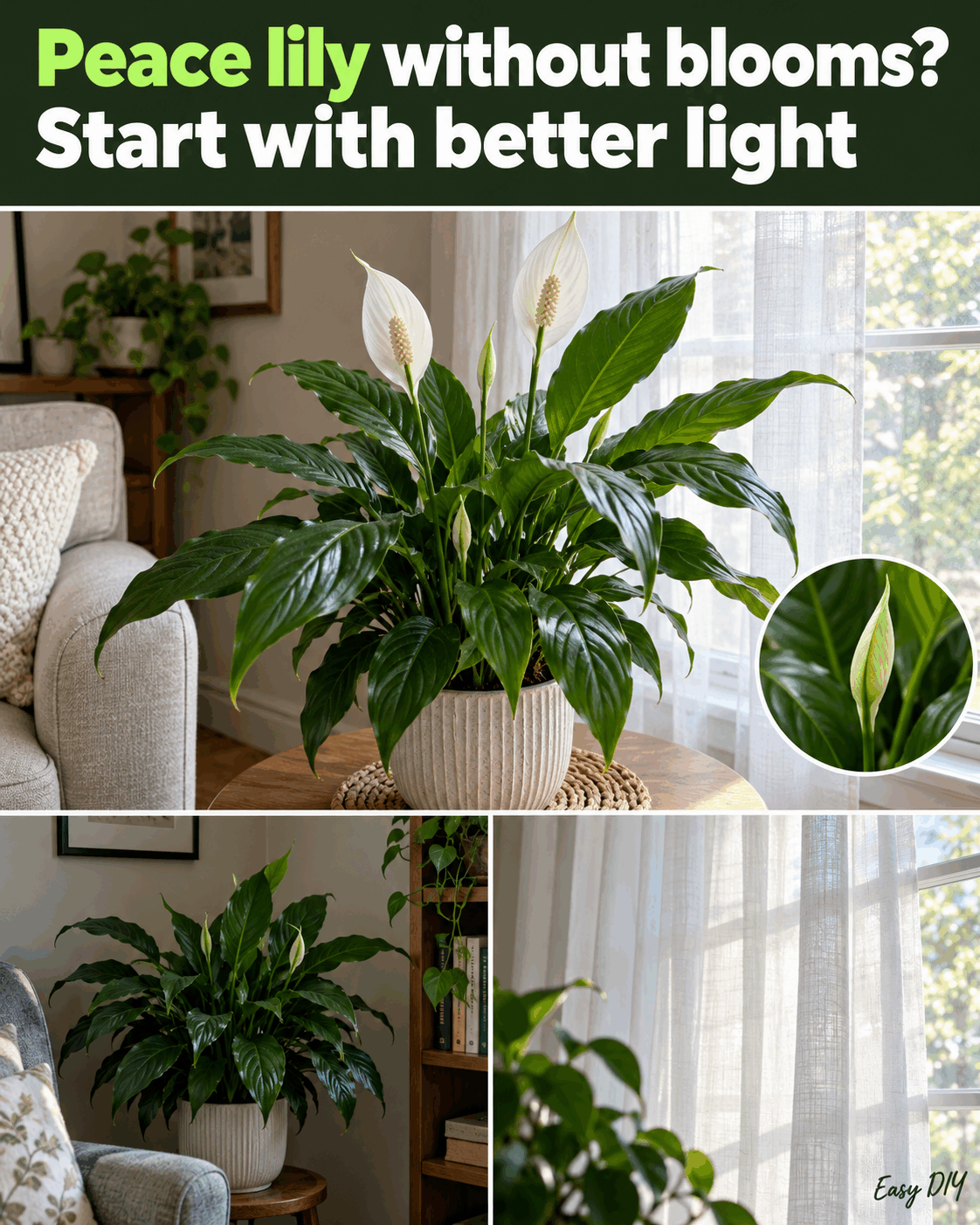
Peace lily not blooming? Give it a better place to grow
A peace lily can have a full pot of glossy leaves and still leave you waiting for its next white bloom. When the plant otherwise looks comfortable, the most useful first check is often its position. A spot that keeps leaves alive may provide less light than the plant needs to flower well.
This guide focuses on choosing and checking that spot, rather than adding another homemade mixture to the soil. You will compare the light the plant actually receives, make a measured change, and watch its response. Flowering also depends on maturity and growing conditions, so a new location cannot promise blooms on a timetable.
What you need for a useful light check
You do not need to buy a new pot or a special feeding product to begin. Make room to observe the plant where it already lives, then look for another suitable position nearby. Working with the same plant and container makes it easier to judge whether a change in light has helped.
- A healthy peace lily with access to its care label.
- A bright window with a curtain or another way to soften strong sun.
- A stable table or plant stand.
- A phone camera and a short note about the current location.
- A saucer or outer pot that can be checked after watering.
Choose a place where you can reach the plant without moving furniture every time it needs attention. A beautiful shelf is not helpful if the pot becomes difficult to inspect. Keep the plant out of reach of children and pets that might chew it, and use gloves if handling the plant irritates your skin.
How to improve the position step by step
-
Start by separating a flowering question from a general health problem. Look at the leaves, stems, and soil before moving anything. A plant with persistent collapse, damaged roots, or spreading discoloration needs that issue checked first. For a leafy, reasonably healthy peace lily, take a photograph and record how long it has occupied its current spot.
-
Observe the room at different times rather than judging it only when the lights are on. Notice whether furniture, a deep window recess, or another plant blocks daylight. A bright room can still contain a surprisingly dim corner. Write down what changes between morning and afternoon so your next choice is based on the plant’s location.
-
Find a position with brighter, indirect light, protecting the leaves from strong direct sun. A sheer curtain can soften an exposed window, while a nearby stand may provide room beyond the sill. Check that the pot is stable and that leaves will not press against hot glass, a radiator, or a cold draft.
-
Move the plant thoughtfully rather than switching it between several windows in a few days. If the new position is much brighter, make the transition gradually and watch the leaves. Keep track of the change with another photograph taken from the same angle. This creates a useful comparison without relying on your memory of the plant.
-
Maintain its normal, appropriate care while you assess the position. Check the potting mix before watering and let excess water drain away. Do not add extra fertilizer simply because you are waiting for flowers. Changing the light, pot, feeding routine, and watering method together makes it difficult to understand what the plant actually needed.
-
Watch for steady new leaves and, in time, emerging flower stalks. Review your notes over a longer period rather than checking for a result the following morning. If the plant is settling well, leave it room to grow. If leaves show stress in the new spot, reassess the exposure before making another small adjustment.

Why the location matters to flowering
Peace lilies tolerate lower light better than many flowering houseplants, which can make a dark corner seem like a perfect permanent home. Tolerance and strong flowering are different goals. The plant may keep its foliage while producing fewer blooms. Brighter indirect light is therefore a practical first adjustment when the leaves look healthy.
The familiar white structure is a spathe surrounding a central flower spike. Its appearance changes as it ages, and an old spathe is not a reliable measure of today’s conditions. Instead of counting every fading white or green structure, look for genuinely new growth and compare the plant’s overall condition with your earlier photograph.
Time also matters. A recently purchased plant may have arrived in bloom after growing under commercial conditions, while a young plant may need to mature. Neither situation is improved by repeatedly adding kitchen ingredients. A stable position and careful observations give you a more useful basis for deciding whether the everyday care needs adjustment.
Mistakes that can make the wait more frustrating
- Putting the plant in harsh direct sun to force a faster result.
- Judging daylight while the room’s electric lights are on.
- Moving the pot repeatedly without noting what changed.
- Adding tea, rice, or other food scraps as a substitute for suitable care.
- Assuming every green leaf means that flowering conditions are already ideal.
A second common mistake is placing the plant directly over a heater because that spot happens to be near the window. Light is only part of a comfortable location. Check the surroundings at the times when the heating or air conditioning runs, and choose somewhere that lets the plant receive light without constant temperature extremes.
Avoid turning a single brown tip into proof that the entire move has failed. Leaves record earlier conditions as well as current ones, so look at the pattern and the newest growth. If damage continues or the plant declines, review its care more broadly instead of treating every mark as a reason for another immediate move.
Small habits that make comparisons easier
Take photographs in similar daylight and keep the pot at a consistent angle when comparing them. A plant can appear darker, fuller, or more yellow simply because the picture was taken at night. A quick note with the date and the location is enough; you do not need to turn the room into an experiment.
Leave a little space around the foliage so you can see new leaves and reach the saucer. If the plant leans toward the light, a gentle, regular quarter turn during normal care can help keep its shape balanced. Do not use rotation as a substitute for finding a suitably bright position in the first place.
Frequently asked questions
Can a peace lily bloom in a room with low light?
It may, but a plant that tolerates a dim location is not necessarily receiving the best light for regular flowering. If yours has healthy foliage but few blooms, compare its position with a brighter place that avoids harsh direct sun. Make one thoughtful change and watch its response over time.
Should I put it right on a sunny windowsill?
Not automatically. Strong direct sun can damage the leaves, and a windowsill can also expose the plant to temperature changes. Look for bright, filtered light and space for the foliage. A nearby stand or a sheer curtain may work better than pressing the plant against the window glass.
Will extra plant food make flowers appear faster?
More fertilizer is not a shortcut around unsuitable conditions. Feed only when appropriate for the plant’s growth and according to the product’s instructions. If the peace lily is comfortable but not flowering, assess the light and its maturity before changing the feeding routine or adding another product to the pot.
What if the old white blooms turn green?
The spathes change as they age, so their color alone does not tell you whether a recent care adjustment is working. Look for new growth rather than expecting an old spathe to stay white indefinitely. If the rest of the plant looks healthy, continue observing it without adding unnecessary treatments.
How long should I wait before moving it again?
There is no single flowering deadline for every plant and home. Allow time to observe new growth while checking for signs of stress. If conditions remain comfortable, avoid frequent moves simply because a bloom has not appeared. Review the notes and the season before deciding whether another adjustment is justified.
A brighter, more suitable position gives your peace lily a better setting for future growth and flowers. Start with that clear, practical change and let the plant’s response guide what you do next.