
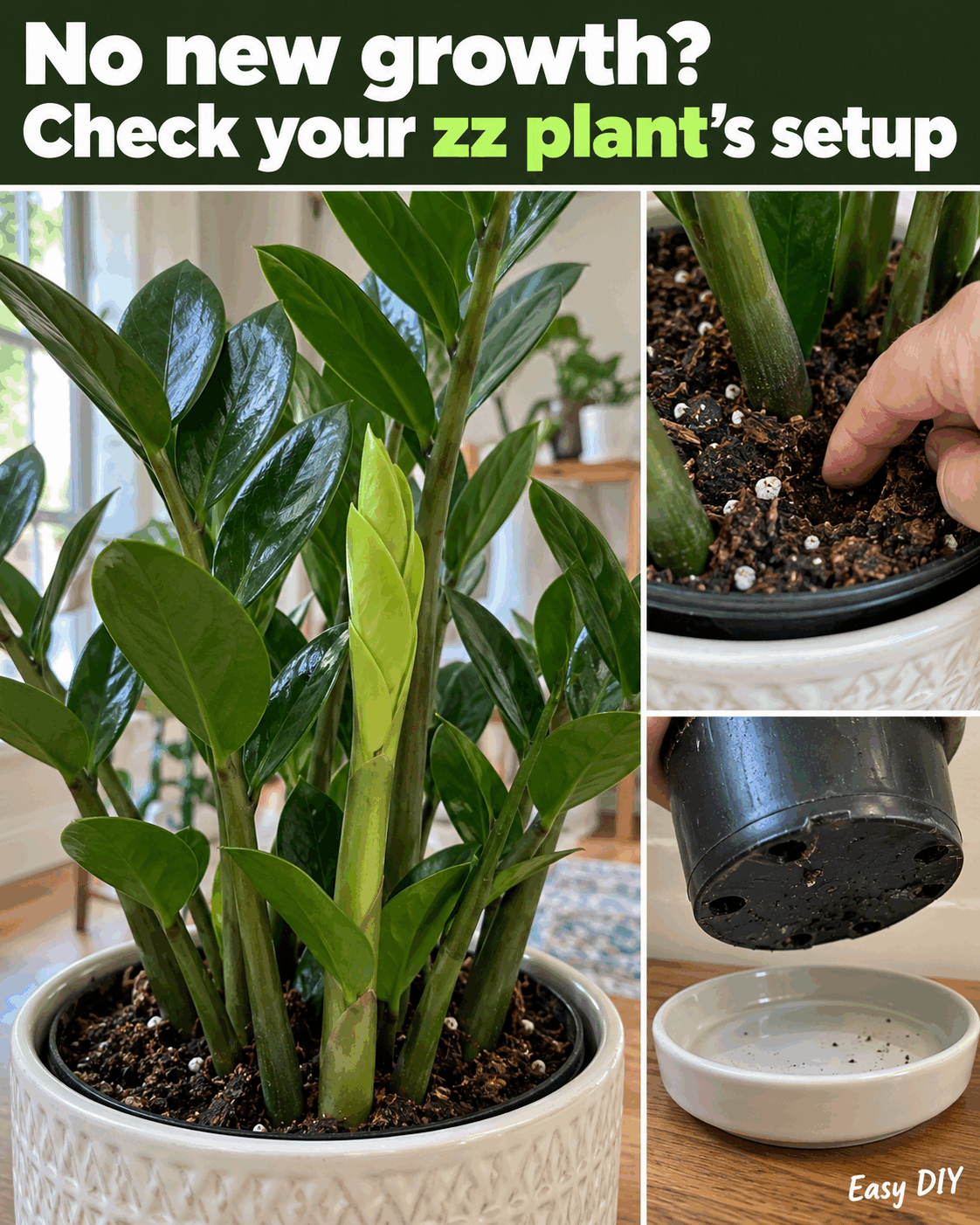
ZZ plant not growing? Check its setup before adding more water
A ZZ plant can sit in the same corner for months looking almost unchanged. Its leaves stay glossy, yet there is no obvious new shoot to celebrate. That slow pace can tempt you to add more water or plant food, even when the plant has not given you a clear reason to do either.
Before changing the routine, check whether the plant is simply growing slowly or dealing with an avoidable problem. This guide looks at its light, the moisture inside the pot, and the path excess water takes. The aim is to support healthy growth, not to promise a sudden burst of new stems from a spoonful of anything.
What to prepare before checking the plant
Choose a time when you can examine the pot in good light without rushing to water it. Set down a tray or towel and clear a stable surface nearby. You will get better information by looking at the whole setup than by pulling a single leaf or repeatedly disturbing the plant’s roots.
- Your ZZ plant in its current container.
- A tray to catch any stray soil or water.
- A flashlight for checking the inner pot and saucer.
- A phone camera and a note of the last watering.
- Gloves if you handle the plant or potting mix.
ZZ plants are not edible and should be placed where children and pets will not chew them. Handle the plant carefully, wash your hands after working with it, and keep potting tools separate from kitchen utensils. These simple habits let you inspect it comfortably without turning a routine check into an unnecessary mess.
Three checks for a ZZ plant that is not growing
-
Look for a pattern rather than a single quiet week. Note when the last new shoot appeared and whether the existing stems remain firm and upright. A naturally slow plant can pause between growth spurts. Photograph the base so you can recognize a small emerging shoot instead of relying on the height of older stems.
-
Check the plant’s actual light level. Low-light tolerance does not mean a deep, dark corner produces the same growth as a brighter position. Consider a spot with bright, indirect light, protected from intense direct sun. Make a gradual adjustment if necessary, while avoiding a location that exposes the leaves to a heater or cold draft.
-
Assess moisture below the visible surface. Lift the nursery pot out of its cover pot if you can do so safely, and compare its weight with how it feels when dry. Check the potting mix rather than watering on a fixed weekly date. A dry-looking top can hide moisture farther down in a heavy container.
-
Follow the route of excess water. Confirm that the inner pot has drainage holes and that they are not sitting in pooled water inside the cover pot. Empty the saucer when needed. A decorative container should not prevent you from seeing what happens after watering or leave the base continually submerged.
-
Review the pot without repotting automatically. A large container can hold more damp mix than a small root system uses, while an overcrowded or damaged setup may need attention. If you suspect a root problem, inspect carefully and consult a reliable care guide. Do not pull the plant out repeatedly just to check for progress.
-
Choose the smallest useful correction and record it. You might improve the light, stop leaving water in the outer pot, or wait until the mix dries before watering again. Avoid changing the pot, soil, water, and feeding routine on the same afternoon. Keep observing the firm stems and any genuinely new growth.
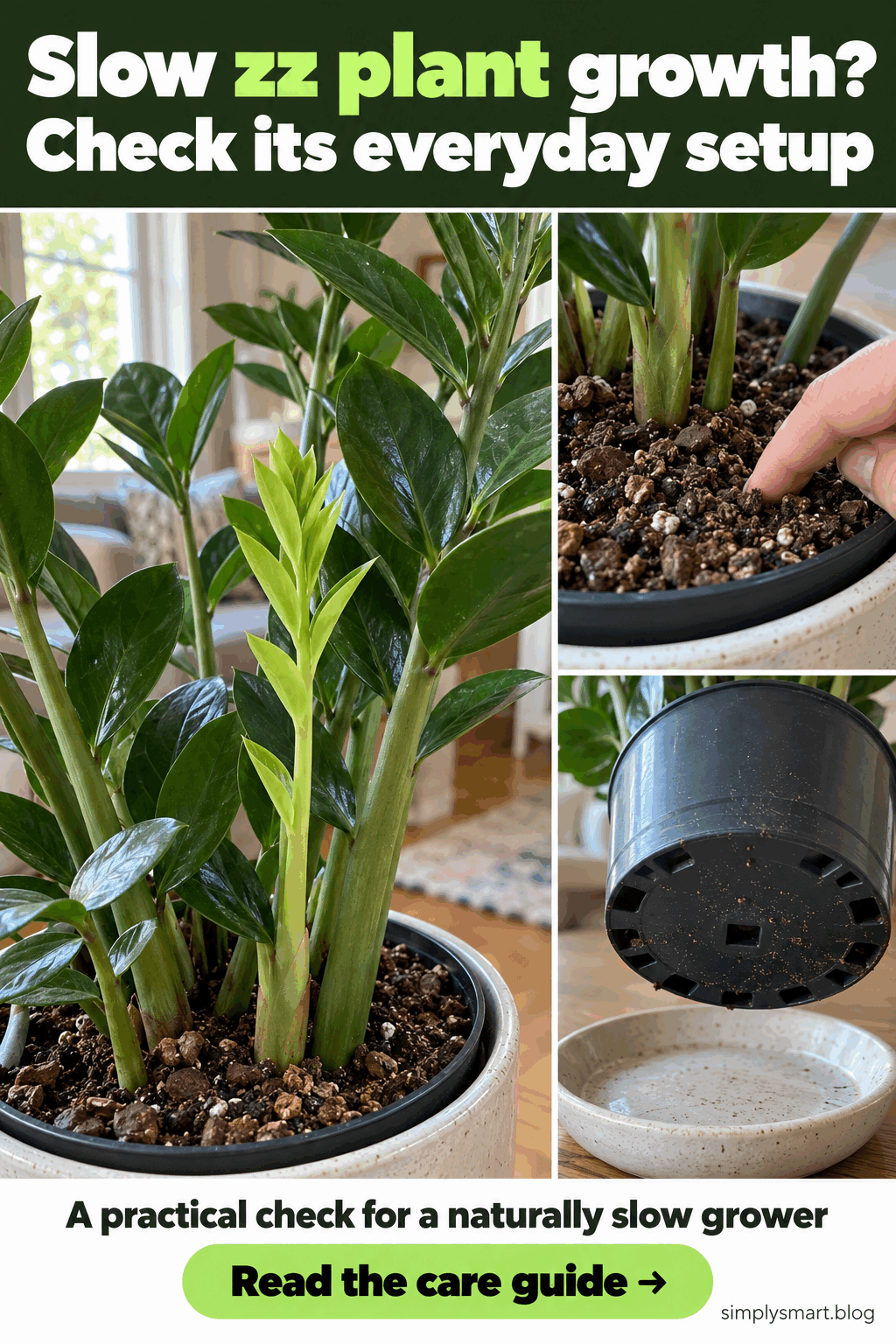
Why a quiet ZZ plant may still be doing well
ZZ plants store water in thick underground rhizomes and in their fleshy growth. That helps explain their tolerance of irregular watering and their relatively unhurried pace. A lack of fresh leaves does not automatically mean the pot needs more moisture. The condition of the plant and its growing environment matter more than a calendar reminder.
Existing stems do not simply stretch forever into taller versions of themselves. New growth emerges from the plant’s base, so comparing only the height of an older stem can be misleading. Look closely at the soil line during normal care, without digging around the rhizomes, and use your photograph to spot gradual changes.
Seasonal changes inside a home can also affect growth. Shorter days, different window light, and changes in heating may alter how quickly the pot dries. A routine that seemed suitable in summer may need reassessment later in the year. That is a reason to check the plant, not a reason to impose a new fixed schedule.
Mistakes that can turn slow growth into a problem
- Adding water every time the plant looks unchanged.
- Leaving the nursery pot in standing water inside a cover pot.
- Moving it straight from a dim corner into harsh sun.
- Repotting into a much larger container without a clear need.
- Using food scraps or concentrated fertilizer to force new stems.
Do not assume yellowing leaves prove that the plant is hungry. Several care problems can affect leaf color, and an old leaf can decline as part of normal aging. Look at the wider pattern, the stem firmness, and the moisture in the pot. If decline continues, seek a diagnosis before adding another treatment.
Avoid judging the plant immediately after a store purchase or a move. It may need time to settle into a different environment, and older leaves will not tell the whole story. Keep the basic setup comfortable, watch for ongoing damage, and allow useful observations to accumulate before deciding that the plant must be rescued.
A simple way to keep track of progress
Use one short note for each watering: date, whether the mix had dried, and whether any water remained in the outer pot. This is enough to reveal repeated mistakes such as watering while the pot is still heavy. You do not need to measure every leaf or buy equipment to learn from the pattern.
Take a picture from the same side every few weeks during ordinary care. Include the base and the top of the plant so new shoots are visible. Similar lighting makes comparisons more useful. When you notice a change, record it without immediately changing the routine again simply because something has finally started to happen.
Frequently asked questions
Does a ZZ plant need to grow new stems every month?
No. ZZ plants are naturally slow growers, and their pace depends on conditions and the time of year. Firm stems and reasonably healthy foliage can be more useful signs than a monthly growth target. Check the setup if growth seems stalled, but avoid treating a quiet period as an automatic need for extra water.
Should I water it a little every week?
A fixed weekly amount may not suit your plant or container. Check the potting mix and let it dry appropriately between waterings. When watering is needed, follow suitable care guidance and let excess drain away. Repeated small additions can make it harder to know how much moisture remains deeper in the pot.
Can it stay in a decorative pot without a hole?
A decorative outer pot can be used around a draining nursery pot if you can remove and inspect the inner container. Do not allow water to collect unnoticed underneath it. A plant growing directly in a container without drainage is harder to manage, so review the setup rather than guessing at smaller water doses.
Will fertilizer solve a lack of new growth?
Only if feeding is appropriate within an otherwise suitable routine. It cannot compensate for persistent wet roots or an unsuitable location. Assess light, moisture, and drainage first. If the plant is actively growing and a suitable product is needed, follow its instructions carefully instead of increasing the dose because progress feels slow.
When should I ask for help with a declining plant?
Seek reliable advice if stems become soft, several leaves deteriorate, or you notice a persistent problem you cannot identify. Photograph the plant and describe the watering, light, and container arrangement. Those details are more useful for diagnosis than the fact that you have already tried several different household mixtures.
A slow ZZ plant needs a clear check of its conditions before it needs another intervention. Improve what the inspection actually reveals, then give healthy growth time to show itself.