
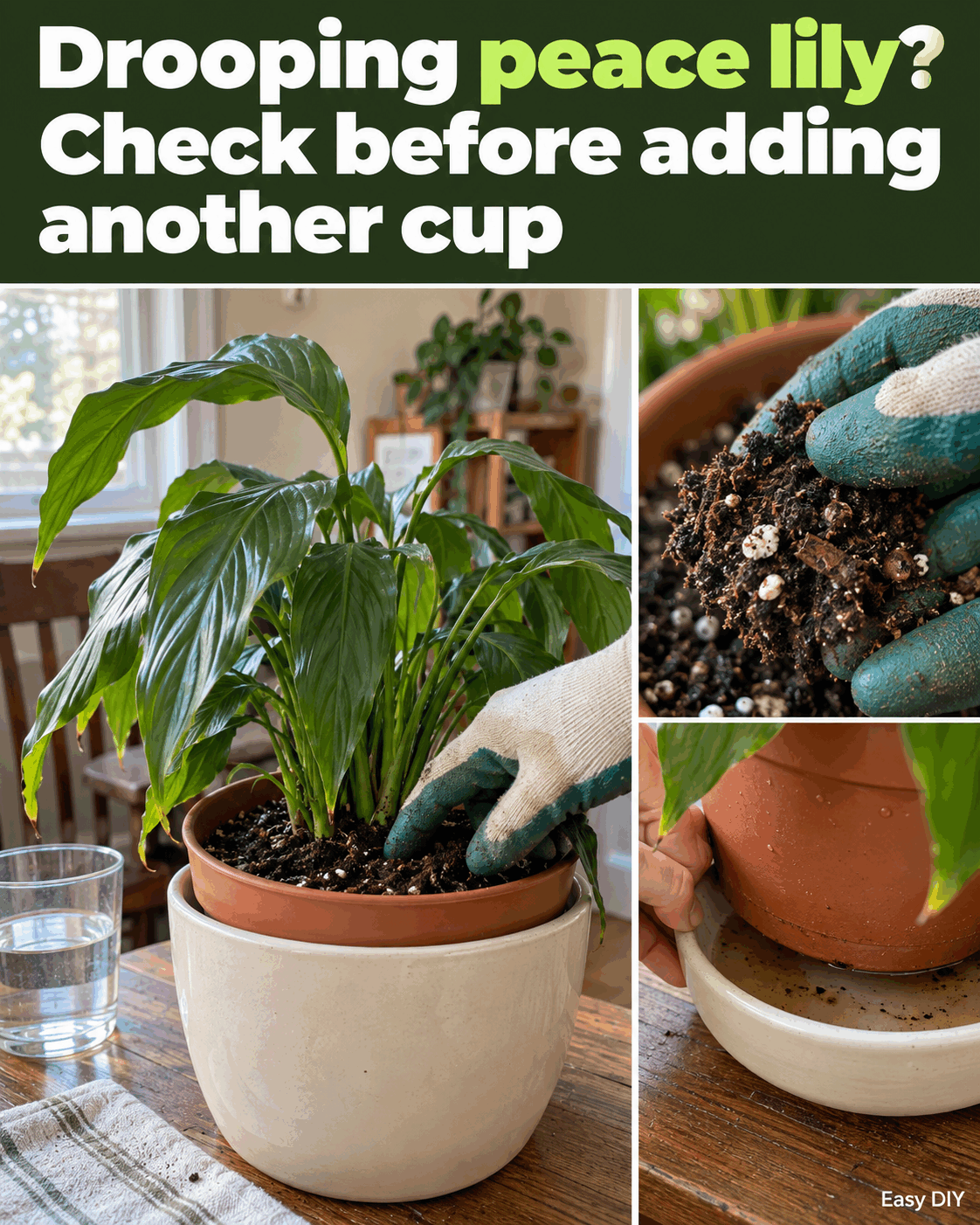
Drooping peace lily? Check the soil before adding another cup
A peace lily with drooping leaves can make you reach for a glass of water before you have looked at the pot. Sometimes a drink is needed, but a wilted appearance does not explain the cause by itself. The useful first step is to find out whether the potting mix is dry, wet, or somewhere between.
This guide helps you make that distinction before adding another cup. You will check the root zone, the outer container, and the plant’s immediate surroundings, then choose an appropriate next step. A plant with damaged roots or an unidentified ongoing problem may need further advice rather than another change to its watering routine.
What to have ready
Bring the plant to a place where you can inspect it without spilling water over furniture. You do not need to remove all the soil or buy a collection of rescue products. A straightforward check is easier to interpret when you keep the original setup intact until you have a reason to change it.
- A tray or a sink with a safe working surface.
- A flashlight for looking inside the cover pot.
- A note of the last watering and any recent move.
- Room-temperature water, kept aside until the check is complete.
- Gloves if you handle the plant or potting mix.
Peace lilies are not edible, so keep them away from pets and children that might chew the leaves. Handle the foliage and potting mix carefully, then wash your hands. If the plant is large or the container is heavy, ask for help instead of lifting it by the leaves or flower stalks.
Check the wilt before deciding to water
-
Look at the whole plant and note how the drooping began. Did it happen after a hot afternoon, a recent watering, or a move to a different room? Check whether the leaves are simply hanging lower or whether stems are soft and discoloration is spreading. Take a photograph before making changes so you can compare later.
-
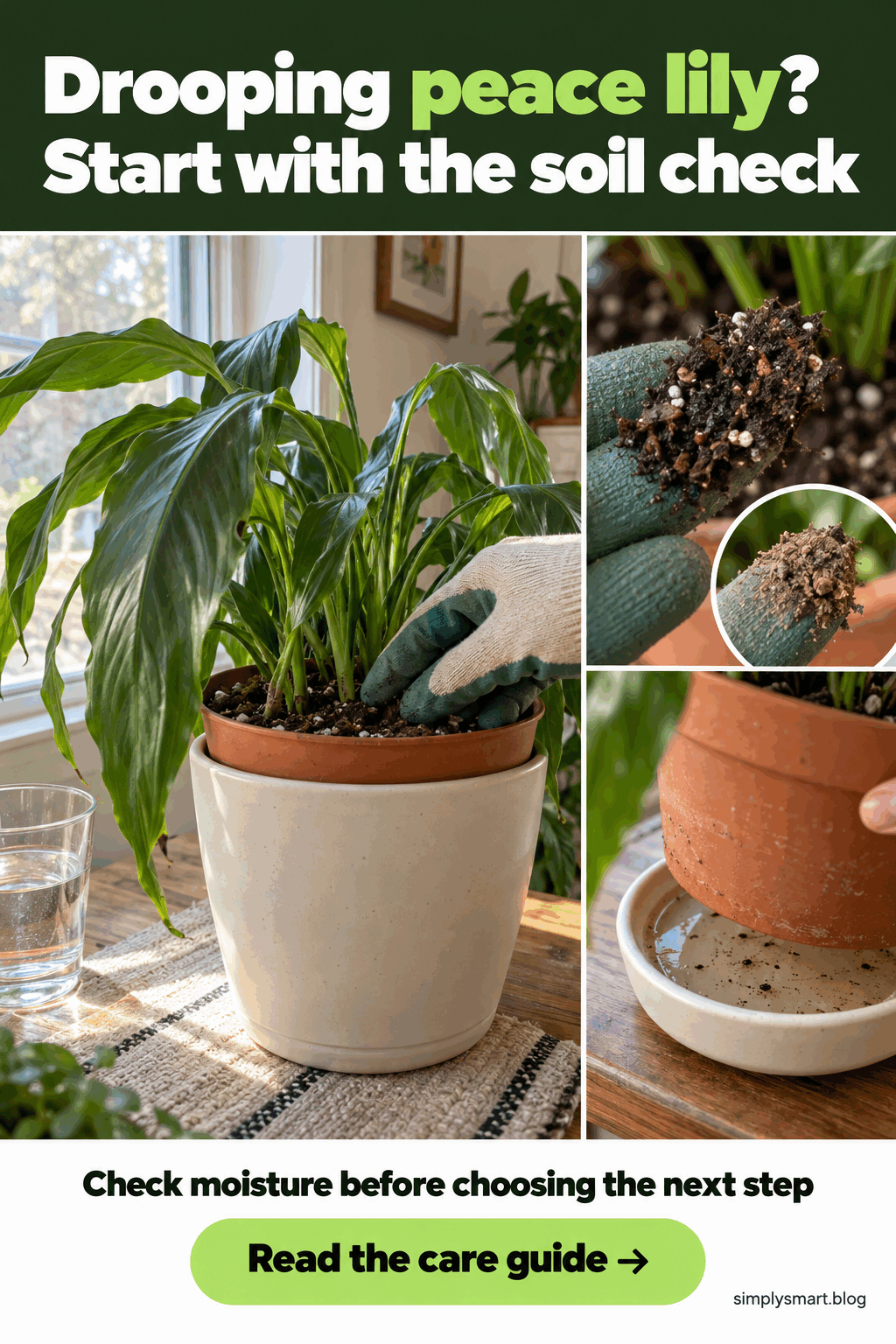
Feel the potting mix rather than judging only the surface color. Gently check an accessible area without digging through the root system. Notice whether the mix feels dry, slightly moist, or distinctly wet. If possible, compare the weight of the pot with how it feels after watering and after it has had time to dry.
-
Lift the draining inner pot out of its decorative container if this can be done safely. Look for water trapped underneath and empty it when necessary. Check that the drainage openings are not sitting below the waterline. A clean-looking cover pot can hide a reservoir that keeps the roots wetter than you intended.
-
If the mix is dry and the rest of the setup is suitable, water in a controlled way and allow the excess to drain. Keep the leaves and crown out of standing water. Do not treat one cup as a universal dose: container size, potting mix, and the plant’s condition influence how watering needs to be managed.
-
If the mix is already wet, do not add more water simply because the leaves still droop. Remove any pooled water and review the drainage and recent care. If the decline persists, the stems soften, or you suspect root damage, get reliable guidance before disturbing the roots or applying a product you have not identified.
-
Check the plant’s surroundings and give your chosen response time to show a result. Move it away from a hot blast, harsh direct sun, or an obvious draft if needed. Avoid alternating between soaking, repotting, and feeding during the same day. Keep a short record of what you found and what you actually changed.
Why wet and dry pots can need different responses
Leaves can lose their upright appearance when the plant cannot maintain its normal water balance. Dry potting mix is one possible reason, but a persistently wet root zone creates a different concern. The visible symptom alone is not enough to choose a treatment. Checking the pot first prevents you from responding to every wilt in the same way.
The cover pot is especially easy to overlook. Water may drain out of the nursery container and remain hidden below it, while the upper mix gradually looks less wet. If you only inspect the top, you may add more before noticing the pool. Separating the two containers briefly makes that part of the situation visible.
Room conditions can change quickly even when the watering routine stays the same. Stronger light, a warm room, or a new position near a heater can change the plant’s immediate environment. A recent move is therefore useful information. It does not prove a particular cause, but it helps you ask better questions about what changed.
Rescue habits that can make the problem harder to read
- Adding another glass every time the leaves stay low.
- Leaving the pot in a full saucer after watering.
- Feeding a stressed plant before identifying the problem.
- Moving between several very different locations in one day.
- Applying tea, rice water, or other household mixtures without a sound reason.
Do not force the plant’s recovery by tying up the leaves or cutting off every drooping stem. Those actions can hide the symptom without explaining it. Remove material only when appropriate, using suitable care guidance. The immediate goal is to understand the moisture and growing conditions, not to arrange the plant so it looks upright for a photograph.
Avoid assuming that one successful watering proves the same response will work next time. A dry plant may perk up after a drink, but a later episode could occur under different conditions. Make the check part of your routine. That small habit is more useful than treating a previous result as a permanent recipe.
How to make the next watering decision easier
Keep the inner pot accessible and leave enough room to check the saucer. If decorative stones or a tightly fitted container hide everything, simplify the arrangement where practical. You should be able to see whether water has drained and remove the excess without carrying an unstable pot through several rooms.
Write down a few observations instead of assigning a rigid watering day. Note whether the mix was dry or moist, whether water remained underneath, and whether the room had recently become warmer. Over time, these details can show how your particular peace lily behaves in its container and in your home.
Once the plant is comfortable again, return to ordinary care rather than continuing a rescue treatment indefinitely. Check the mix, provide suitable indirect light, and monitor new growth. If drooping returns repeatedly despite a reasonable setup, seek help with the underlying cause and share your photographs and notes rather than simply increasing the water.
Frequently asked questions
Should I wait until the plant droops before watering?
It is better to check the potting mix during normal care than to use dramatic wilting as your only reminder. Peace lilies prefer a suitable moisture balance, not repeated extremes. Learn how the pot feels as it dries and water according to its condition, while always allowing excess water to drain away.
Can a peace lily droop even when its soil is wet?
Yes, a wilted appearance can occur in more than one situation. If the pot is already wet, adding more is not a useful automatic response. Check for trapped water, review recent care, and watch the wider pattern. Persistent decline or soft, deteriorating tissue deserves a closer diagnosis from a reliable source.
How much water is in a rescue cup?
No fixed cupful suits every pot and plant. This guide uses the idea of another cup as a reminder to check first, not as a recipe. The correct approach depends on the container and the condition of the mix. Follow suitable watering guidance and let excess drain rather than repeatedly adding guessed amounts.
Should I repot a drooping plant immediately?
Not simply because the leaves hang down. Repotting is another intervention, and it should address a genuine need rather than replace the initial moisture check. If you suspect root damage or a serious problem with the potting mix, consult reliable guidance and handle the roots carefully instead of repeatedly removing the plant.
When is it time to ask an expert?
Ask for help when decline continues, several leaves deteriorate, stems become soft, or you cannot identify what is happening. Include photographs and describe the container, light, watering, and recent changes. Clear observations make advice more useful and help avoid a sequence of treatments aimed at different imagined causes.
Before adding another cup, take a moment to discover what is happening inside the pot. That pause can turn a panicked watering decision into a more useful response for your peace lily.