
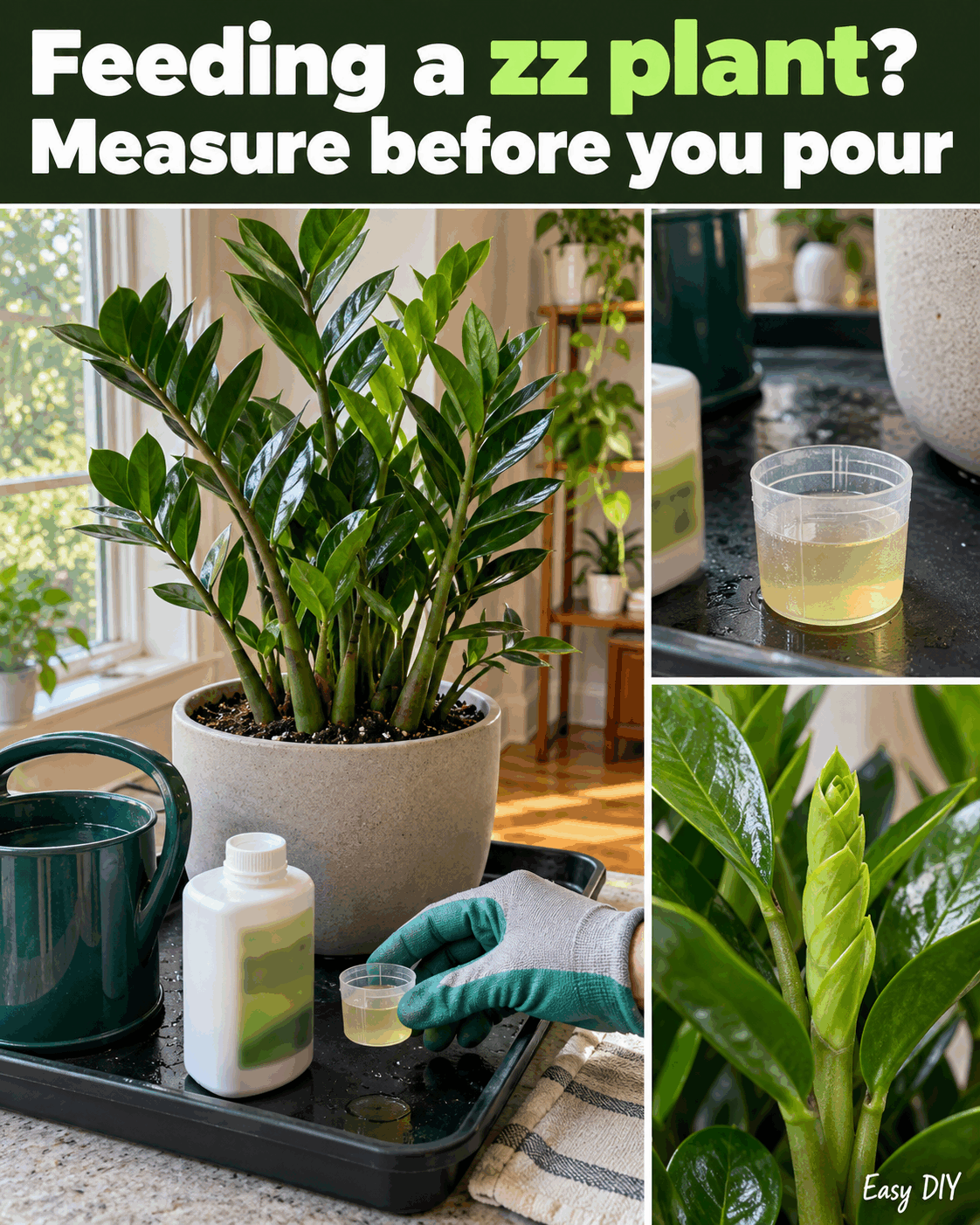
Feeding a ZZ plant: measure the dose and choose the right moment
A small measuring cap can be more useful than a generous splash when it is time to feed a ZZ plant. This naturally slow-growing houseplant does not need constant encouragement from the fertilizer bottle. The important questions are whether feeding is appropriate now, which product you have, and how its directions translate into a careful application.
This guide is about measuring and timing plant food, rather than diagnosing every reason a ZZ plant might grow slowly. You will read the label, prepare only an appropriate amount, and keep a simple record. Fertilizer supports suitable growing conditions; it cannot guarantee a new shoot or correct a plant that is struggling for another reason.
What you need for a measured feeding routine
Bring together the plant food and the measuring device supplied with it before opening the container. Use a protected working surface away from food preparation. Keeping the product in its original bottle matters because its directions, concentration, and precautions are the information you need, even if another bottle nearby looks almost identical.
- A fertilizer labeled for suitable indoor houseplants.
- The original packaging with readable application directions.
- A dedicated measuring cap or tool with clear markings.
- A watering container with a known volume, if dilution is required.
- A tray, protective gloves when indicated, and a short care record.
Do not use a kitchen spoon that will go back into food preparation. A dedicated tool reduces confusion and makes repeated measurements easier to compare. Keep the bottle closed when not in use, and store plant food where children and pets cannot reach it. Follow any additional precautions printed on the packaging.
How to decide, measure, and apply
-
Check whether the ZZ plant is healthy and actively growing. Look for a developing shoot or other signs of normal growth, and consider the season and conditions in your home. Do not feed simply because a date has arrived. If the plant is declining, identify that problem before adding fertilizer as an attempted rescue.
-
Identify the type of product you actually have. A ready-to-use liquid, a concentrate, and a slow-release product are not interchangeable. Read the directions for that exact formulation rather than following a dose from a different bottle or an online recipe. Confirm that the product is suitable for the plant and the intended application.
-
Find the application rate, dilution instructions when relevant, and limits on frequency. Note whether the directions describe a volume of water, the size of the container, or another measure. If the label is damaged or unclear, obtain the manufacturer’s instructions before using the product. Guessing defeats the purpose of measuring carefully.
-
Choose a batch size you can measure accurately. If you prepare a smaller batch than the label describes, reduce the water and the product in the same proportion. Do not keep the original amount of concentrate while using less water. When the resulting measurement is too small for your tool, choose a more practical batch size.
-
Measure on a stable surface and mix only as directed. Keep the cap at eye level when reading its markings, avoid accidental extra pours, and close the bottle afterward. Do not add another fertilizer or a household ingredient to the same container. There is no need to make the mixture stronger because the plant has grown slowly.
-
Apply the product only under the conditions its instructions specify. For a diluted liquid, use the appropriate watering approach and let excess drain from a suitable container. Do not add a feeding mixture to an already wet pot merely to keep a schedule. Other formulations should follow their own placement and application directions.
-
Record the date, product, and amount used, then return to ordinary care. Follow the label for handling any remaining mixture and for cleaning the measuring equipment. Watch the plant over time without repeating an application because you cannot see a change the next day. A record prevents different household members from feeding the same pot twice.
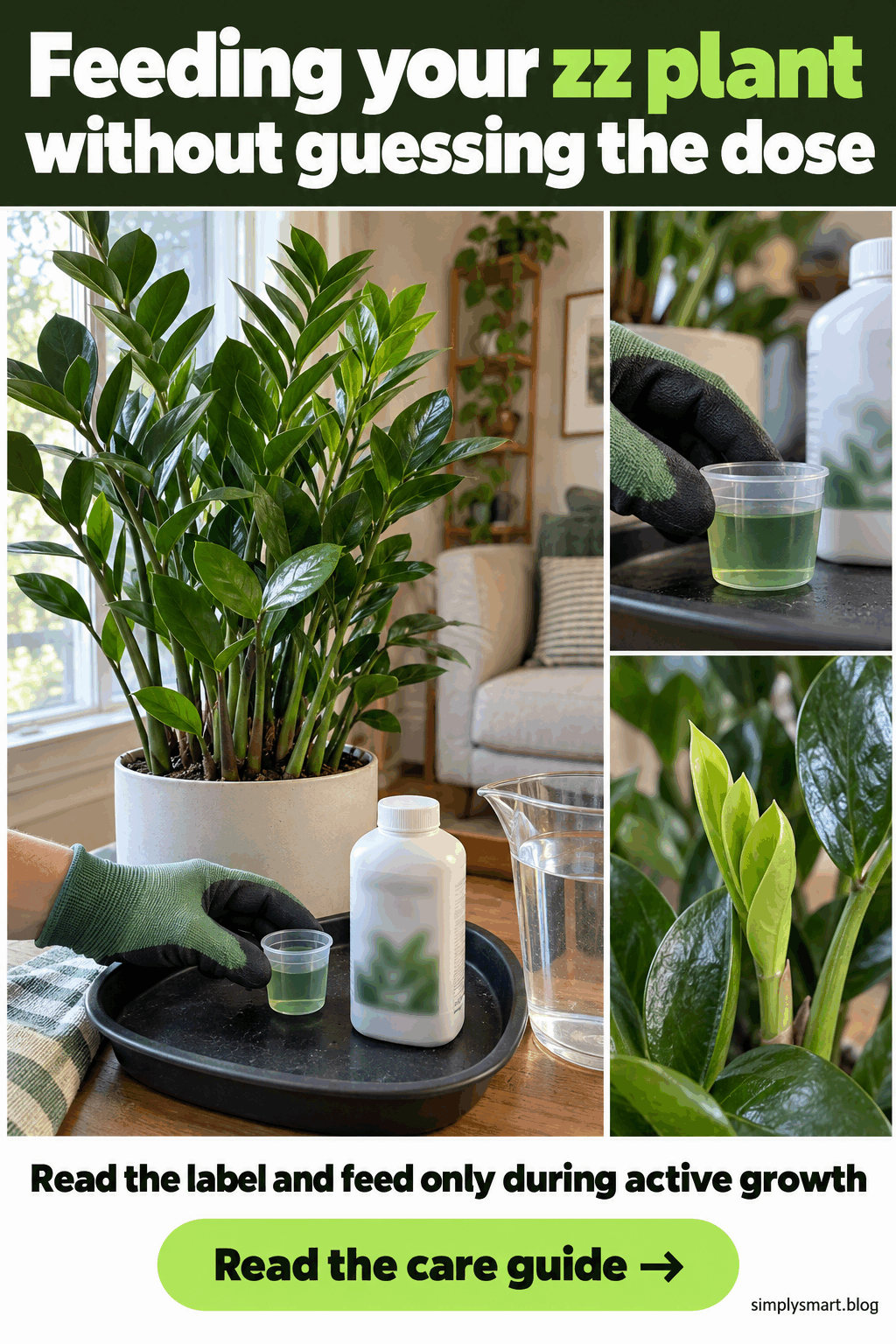
Why careful measurement matters for a ZZ plant
ZZ plants are relatively light feeders, and their naturally slow growth can make extra fertilizer seem more necessary than it is. A measured routine keeps the amount tied to an appropriate product and a genuine care decision. It also separates the useful idea of a small dose from the unsupported promise of a household spoonful that forces growth.
Concentration is easy to overlook when reducing a batch. Using half the labeled amount of water with the full amount of concentrate produces a stronger mixture, not simply a smaller one. Keeping both quantities in proportion is the essential calculation. The label remains the reference for the original rate and the way the product should be used.
A feeding record is particularly helpful when several plants share a shelf. Their needs and previous applications may differ, even if they were bought together. Write down the plant’s name beside the date rather than assuming you will remember which pot received what. That small step can prevent an accidental repeat more effectively than a complicated schedule.
Feeding mistakes worth avoiding
- Pouring concentrate directly into the pot when dilution is required.
- Using a dose intended for another product or formulation.
- Adding more because the plant has not produced a new stem quickly.
- Mixing several fertilizers or adding kitchen scraps.
- Feeding repeatedly during a period when the plant is not actively growing.
Do not treat a white crust on the pot or soil as an instruction to fertilize. Mineral residues can have different sources, and another application may not address the situation. Review the water, the product history, and the pot’s condition. If you suspect an ongoing problem, seek suitable care guidance before adding more material.
Do not feed a newly repotted plant automatically either. Some fresh potting mixes already contain fertilizer, and the product information can tell you how that affects later feeding. Check what was used before adding another source. The goal is a coherent routine, not several separate products each applied as though the others were absent.
Ways to keep the process simple
Keep one clearly labeled measuring tool with the product so it is not confused with a kitchen utensil or another bottle’s cap. Check that its markings remain readable. A consistent tool and a known watering-container volume make the next application easier to prepare without inventing a new method each time.
Make the decision to feed during an ordinary plant check, not while rushing to finish several chores. Read the directions again when you replace the bottle, since a new formulation may have different instructions. The familiar brand name or the color of the container is not enough to confirm that the old dose still applies.
Frequently asked questions
Does every ZZ plant need fertilizer every month?
No fixed monthly schedule suits every plant, product, and home. ZZ plants are light feeders, and guidance varies with formulation and growing conditions. Consider whether the plant is actively growing and follow appropriate product directions. Do not turn a general feeding suggestion into a reason to apply plant food throughout every season.
Can I use an ordinary teaspoon to measure?
Use the dedicated measuring device appropriate for the product, with readable markings and enough accuracy for the quantity involved. Keep it separate from food utensils. A household spoonful is not a universal fertilizer dose, because concentrations differ and the same spoon can produce different amounts depending on how it is filled.
What if I only need a small watering container?
Follow the labeled dilution while reducing the water and the product proportionally. If the small amount of concentrate cannot be measured accurately with your device, prepare a more practical volume or ask the manufacturer for guidance. Do not keep the original concentrate quantity and simply pour it into less water.
Should I feed a plant with yellow or soft stems?
Those signs need their cause investigated before fertilizer becomes the next step. Feeding does not correct every care problem and is not an automatic rescue treatment. Check reliable guidance or seek advice with photographs and a description of the plant’s conditions. Keep track of products already used so the history is clear.
Can I combine plant food with a homemade mixture?
Do not add kitchen ingredients or another fertilizer to create a stronger version of the product. Use it as directed and keep the routine easy to understand. If you want to change products, review the timing and the instructions first rather than layering several treatments into the same pot without a clear plan.
For a ZZ plant, a small dose is useful only when the product, timing, and measurement are appropriate. Read the label, keep the preparation consistent, and let ordinary healthy growth guide the next decision.