Place Under Orchid! Roots Will Grow 200% And Bloom
Place Under Orchid! Roots Will Grow 200% And Bloom
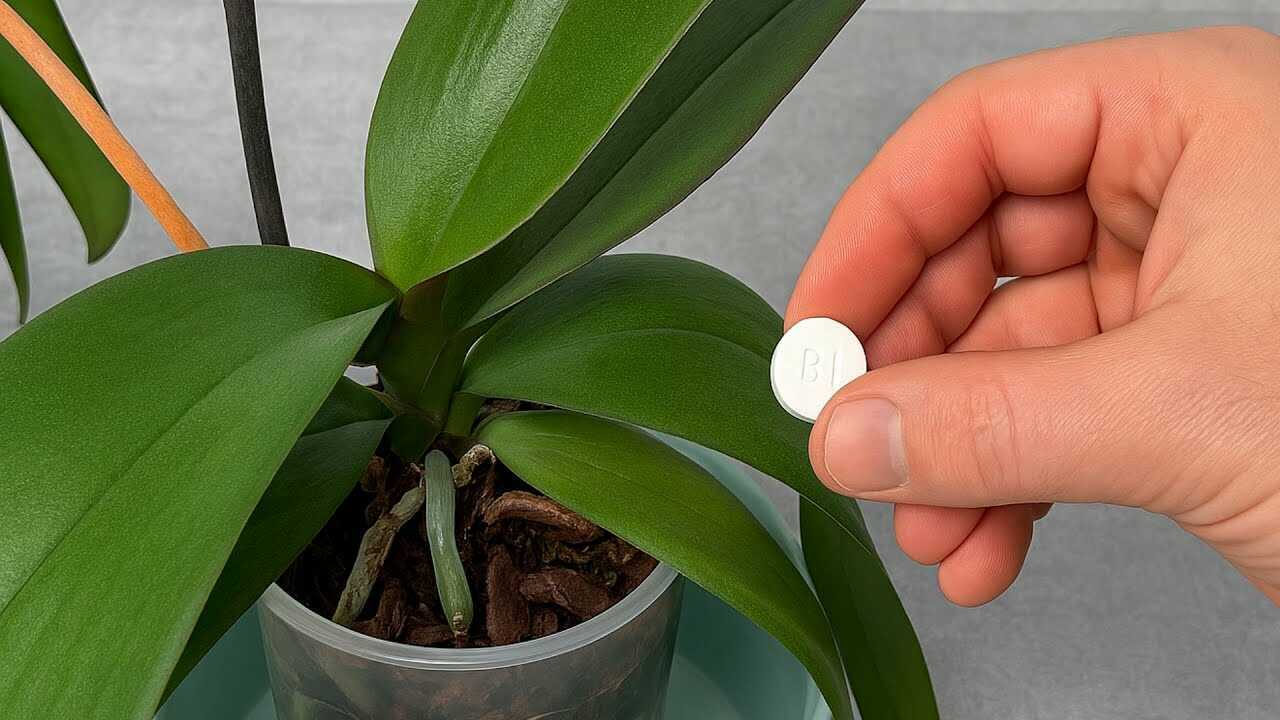
In the photo you can see a small white round tablet stamped B1 being held next to a Phalaenopsis orchid. That tablet is **vitamin B1 (thiamine)** — a water‑soluble vitamin often used by growers as a mild rooting and stress‑support supplement. This article explains a safe, evidence‑based way to use a B1 tablet for orchids, with exact doses, preparation, seasonality and realistic timelines.
Why vitamin B1 can help orchids
Thiamine (vitamin B1) is a real biochemical cofactor in plant metabolism (carbohydrate processing and energy pathways). External applications at low concentrations have been shown to support **root initiation, wound healing and stress tolerance** in various plants. In orchids this can translate to steadier root regrowth after repotting or root damage and slightly improved vigor during active growth. This is a supplement — not a replacement for proper light, water, drainage and balanced fertilization.
Materials and preparation (precise)
- One plain **B1 tablet** (commonly 100 mg). Avoid multi‑vitamin tablets that contain other actives or sugars.
- Clean container and a small spoon to crush the tablet.
- Distilled or low‑mineral water (tap water with high salts can concentrate salts around roots).
- Optional: spray bottle for foliar application.
Step‑by‑step: how to use the B1 tablet with your orchid
- Make a stock solution: Crush one 100 mg B1 tablet and dissolve it in 1 liter of warm distilled water. This gives a stock of 100 mg/L (0.1 g/L).
- Root drench for established orchids: Use 50–100 mL of the stock solution per small Phalaenopsis (6–12 cm pot). Apply as a single drench so it percolates through the bark, once every 3–4 weeks during the active growth season (spring–summer).
- Soak before repotting or after root damage: For a short soak, dilute stock 1:4 (final ~20 mg/L). Soak bare roots for 5–10 minutes, then repot into fresh bark. Do not leave roots submerged for more than 10 minutes to avoid oxygen deprivation.
- Foliar mist (optional): For extra stress support, use a very dilute spray of 50 mg/L (mix half stock with an equal amount of water) and mist leaves once monthly during active growth — spray until just damp, not dripping.
Frequency and season guidance
Be consistent: during **active growth (spring–summer)** use the root drench every **3–4 weeks**. During **rest (autumn–winter)** reduce frequency to **every 6–8 weeks** or pause entirely. Expect to observe measurable improvement in root vigor and new root tips over a period of **6–12 weeks**; do not expect results in days.
Practical tips from experience
- Test one plant first: Try this on a single orchid to see its response before treating your whole collection.
- Use low‑salt water: Distilled or rainwater prevents salt build‑up around roots when using repeated drenches.
- Fresh bark and good drainage amplify results: B1 helps most when the plant already has breathable medium and good air to roots.
- Label your treatments: Keep a simple log (date, dose) so you can correlate changes over the following weeks.
Common mistakes to avoid
- Do not place an intact tablet pressed against the crown or base of the plant — concentrated local leaching can cause soft spots and rot.
- Avoid over‑dosing: higher concentrations do not speed results and can cause root stress. Stick to the stated dilutions.
- Do not substitute aspirin or other pills for B1 — they act differently and have different recommended doses and risks.
- Do not rely on B1 as a fertilizer. It is a supplement for stress and rooting support, not a source of N‑P‑K or micronutrients.
How to measure success
Look for **new white or green root tips**, firmer root texture and steadier leaf turgor over 6–12 weeks. Improved flowering is possible the following spike cycle if root health and overall care are optimized, but B1 alone will not force blooms.
Conclusion — try it thoughtfully
Placing a **B1 tablet** into a prepared solution and using it as a careful root drench or short soak can be a simple, low‑risk way to support orchid root recovery and steady growth over several weeks. Follow the exact doses and frequency above, keep up core orchid care (light, watering routine, fresh bark and appropriate fertilizer), and monitor results. Try this method on one plant first, note changes over 6–12 weeks, and share your results so other growers can learn what worked in your conditions.