
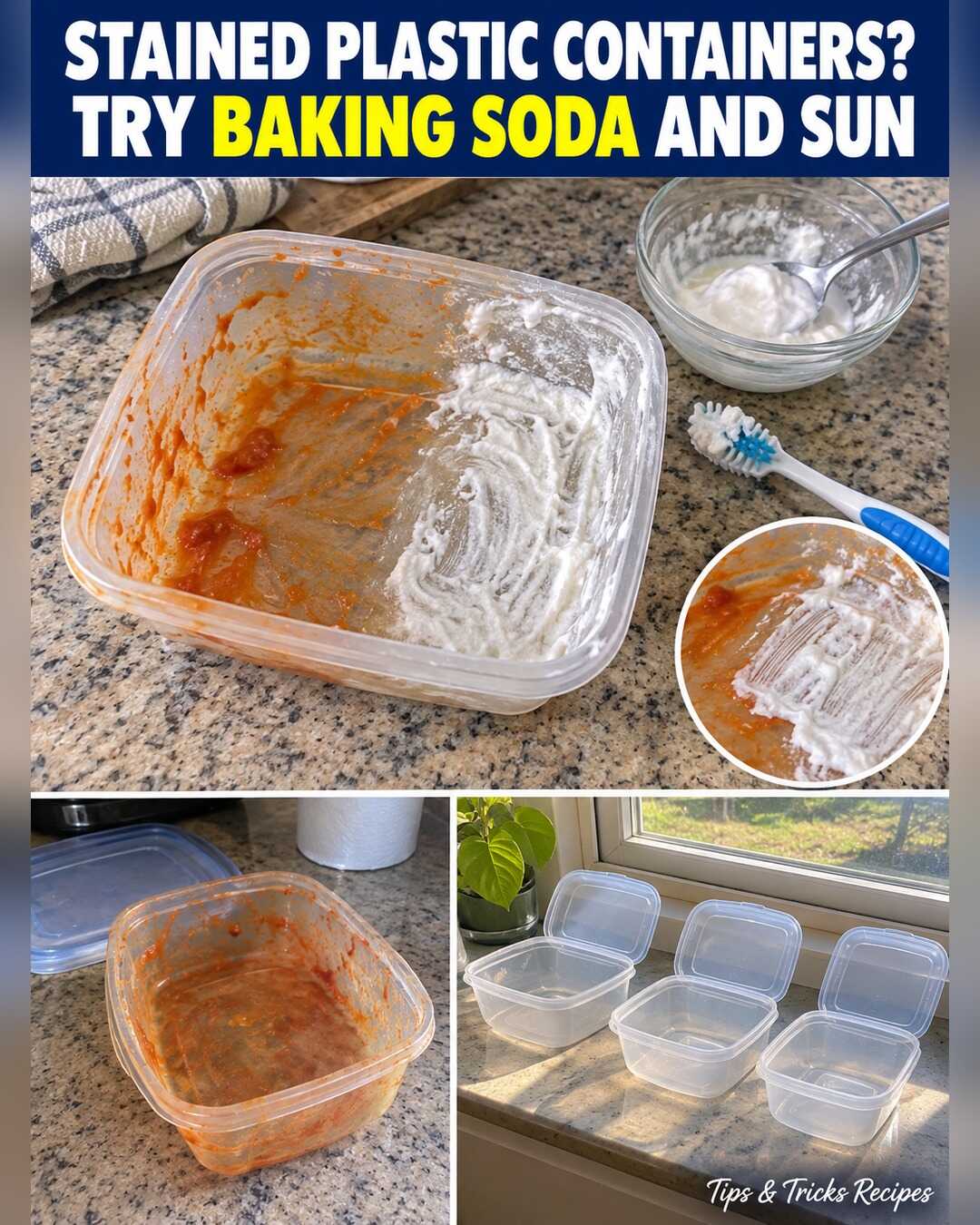
Stained Plastic Containers? A Baking Soda Paste and a Sunny Windowsill Fade the Marks
You open the cabinet and find the same sad containers: the plastic that was white is now orange from tomato sauce, and the lid still smells like last week’s curry. Washing them again and again does not help. Many people end up throwing them out and buying new ones.
Before you do that, try a baking soda paste and a little sunshine. Both are cheap and gentle. With a few minutes of effort and a few hours by a bright window, the stains fade and the smell gets much lighter. Here is the full method.
What You’ll Need
- Baking soda, about 3 tablespoons per container
- Warm water
- A little dish soap
- A soft sponge or an old toothbrush
- A clean towel
- A sunny windowsill, balcony, or backyard spot
The Method, Step by Step
-
Wash the containers first. Use warm water and dish soap to remove grease and leftover food. Rinse well. A clean surface lets the baking soda work directly on the stain instead of fighting through oil.
-
Make the paste. In a small bowl, mix 3 tablespoons of baking soda with about 1 tablespoon of warm water. Stir until you have a thick, spreadable paste, a bit like toothpaste. If it runs, add more baking soda.
-
Spread it over the stains. Use a spoon or your fingers to coat every stained area inside the container and the lid. Be generous on dark spots and corners, where sauce tends to hide.
-
Let it sit. Leave the paste on for at least 30 minutes. For deep orange stains, leave it for a few hours or overnight. The longer it sits, the more it can loosen.
-
Scrub gently. Use a soft sponge or old toothbrush in small circles. Baking soda is a mild abrasive, so you do not need to press hard. Hard scrubbing can scratch the plastic and trap more stains later.
-
Rinse well. Wash away the paste with warm water. Check the container in good light. If a faint tint remains, repeat the paste for another round.
-
Dry in the sun. Set the containers open, with the stained side facing the light, on a sunny windowsill or outside for two to four hours. Put the lids in the sun too. Bring them in once they are completely dry.
-
Check and store. Smell and look at the container. Most lingering odor and light stains will be reduced. Let everything cool and dry fully before you close the lids.
Why It Works
Baking soda is a gentle abrasive and a natural deodorizer. It lifts the colored film from tomato, turmeric, and curry stains without the harsh smell of a strong cleaner. It also helps neutralize odors trapped in the plastic.
Sunlight finishes the job. Light helps fade color pigments, which is why a stained container left in a bright window often looks lighter after a few hours. Fresh air also carries off smells that stay inside closed plastic.
Together, the paste and the sun work on stains from two sides: one loosens the color, the other fades what is left. Results vary with the type of plastic and how old the stain is.
Mistakes to Avoid
- Leaving containers in the sun for a whole day. Strong heat can warp or cloud some plastics. A few hours is enough.
- Using steel wool. It scratches the surface, and scratches hold stains and smells.
- Mixing cleaners. Never combine baking soda paste with bleach or other cleaning products. Use one product at a time and rinse in between.
- Putting hot food in the container. Hot, oily sauces stain faster. Let food cool a bit first.
- Closing the lid while still damp. Trapped moisture brings the smell back.
Bonus Tips and Variations
To prevent new stains, wipe the inside of the container with a thin film of cooking oil before you pour in tomato sauce. It makes a small barrier that keeps color from soaking in. Wash it off normally afterward.
For smells that will not leave, fill the container with warm water and a tablespoon of baking soda and let it sit overnight. In the morning, rinse and dry in the sun. You can also tuck a crumpled paper towel inside the closed container to absorb odors during storage.
Check the bottom of each container for the recycling mark and any heat warnings. Containers marked as heat safe can take a hot wash, while thin, cheap plastic should only get gentle care.
Another helpful habit is to rinse containers soon after you finish eating. Tomato and turmeric stains set the longer food sits in the plastic, so even a quick cold rinse the same evening makes the next deep clean much easier. Use cold water first for oily or colorful foods, because hot water can push color into the plastic.
If you store lots of leftovers, keep a few glass containers for the messiest foods, such as red sauces, chili, and curries, and use plastic for dry foods like rice, pasta, and sandwiches. This small change cuts stains dramatically and means your plastic ones stay clear for much longer.
You can also give the whole set a monthly refresh. Line up every container and lid on the counter, coat the worst spots with paste, and leave them for an hour while you do something else. Then scrub, rinse, and put them all in the sun together. It turns a boring chore into one easy afternoon routine.
Frequently Asked Questions
Will baking soda remove every stain?
Not always. Light and medium stains usually fade a lot, but very old orange tints from tomato sauce can stay faintly visible. A second round of paste and sun often helps. Results depend on the plastic.
Is it safe to leave plastic containers in the sun?
A few hours by a window or outside in mild weather is usually fine. Avoid direct hot sun for long stretches, and never leave thin plastic on a hot car dashboard or near a heater, because it may warp.
Does this work on glass containers too?
Yes, baking soda paste is safe on glass, and glass rarely holds odors the way plastic does. You can skip the sun step for glass, since stains there are usually easier to rinse away.
How do I get the smell out of the lid?
Coat the lid, including the rubber seal if it comes off, with the paste. Let it sit, rinse, then dry in the sun. Letting the lid air out open for a day also helps.
Can I put the paste on a container with a crack?
Cracked or deeply scratched plastic keeps stains and bacteria in the gaps, so it is better to replace it. Baking soda will help the look, but it cannot repair damaged plastic.
How often should I do this?
Only when containers look stained or smell. For regular use, a deep clean once a month is plenty, and washing promptly after each use keeps stains from setting in.
Final Thoughts
Stained plastic containers are not a lost cause. A thick paste of baking soda and a few hours of sunlight can bring back much of their clean look.
Try it on your worst container tonight and let the sun do the rest tomorrow.