
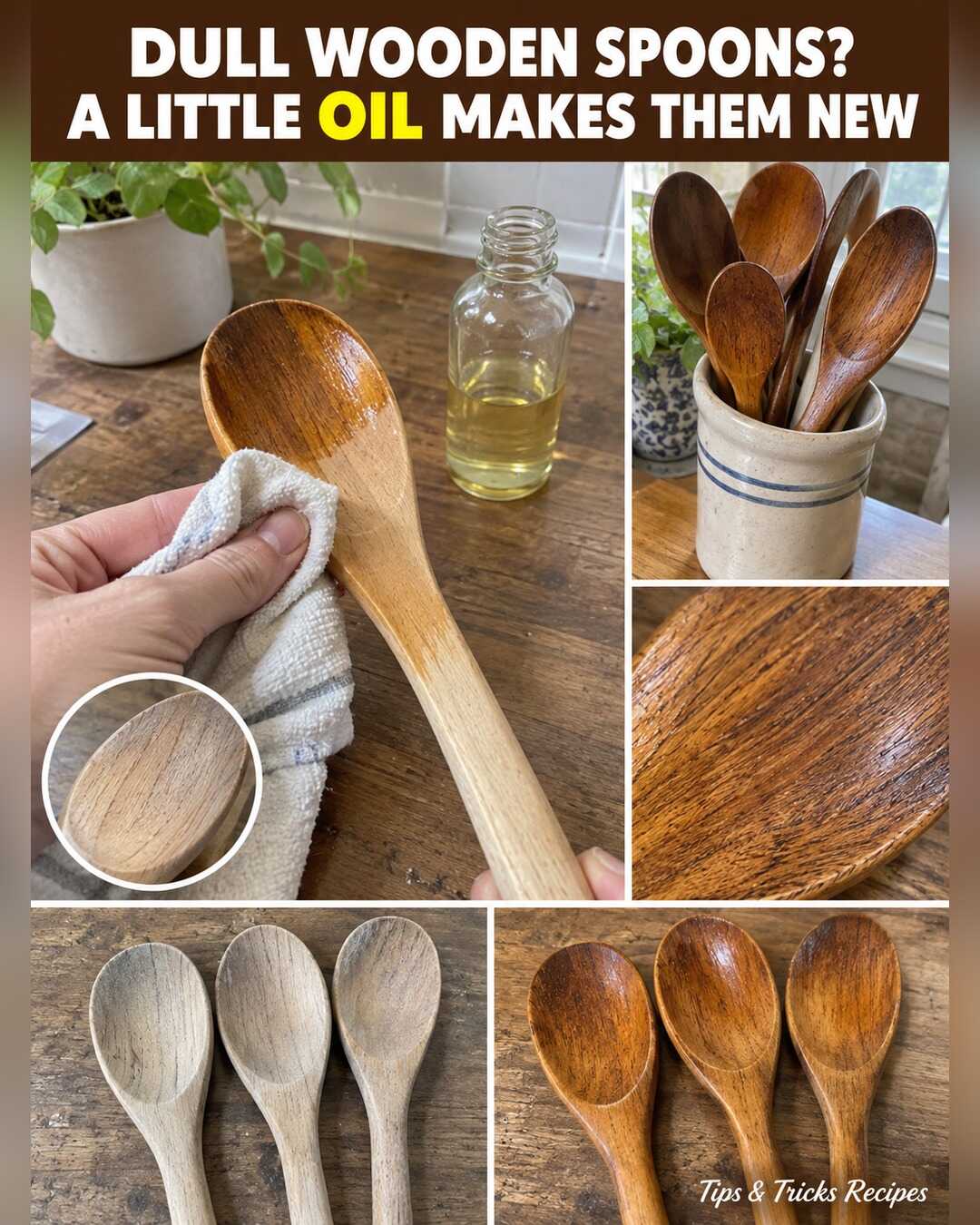
Dull Wooden Spoons? A Little Food-Grade Mineral Oil on a Cloth Makes Them Look New Again
Wooden spoons are the workhorses of the kitchen, and after a few months they start to show it. The wood turns pale and rough, it looks dry and a little gray, and it can even feel fuzzy under your thumb. Most people just keep using them, or toss them and buy new ones.
There is an easier way. A little food-grade mineral oil rubbed on with a soft cloth brings back the color and smooths the surface. It takes about ten minutes of work plus overnight rest, and your spoons will look fresh again. Here is exactly how to do it.
What You’ll Need
- Food-grade mineral oil (sold as butcher block or cutting board oil)
- A soft, lint-free cloth, such as an old cotton T-shirt
- Warm water and mild dish soap
- Fine sandpaper, 220 grit (optional, for fuzzy spoons)
- A clean towel
- A rack or a spot where the spoons can stand and dry
The Method, Step by Step
-
Wash the spoons by hand. Use warm water and a little mild dish soap. Scrub gently with a sponge, paying attention to the bowl of the spoon where food collects. Do not leave the spoons soaking in the sink, since long soaking can crack the wood.
-
Dry them completely. Wipe the spoons with a clean towel, then stand them upright in a jar or on a rack for several hours. Wood that is still damp inside will not take oil well. Give them a full day if the weather is humid.
-
Smooth rough spots if needed. If the surface feels fuzzy, rub lightly with 220 grit sandpaper, following the direction of the grain. Wipe off the dust with a barely damp cloth, and let the wood dry again for a few minutes.
-
Put a little oil on the cloth. Pour about a teaspoon of mineral oil onto your soft cloth, not directly onto the spoon. This keeps the amount under control and spreads the oil evenly. You can always add more.
-
Rub the oil in. Work along the grain from the handle to the tip, then turn the spoon and do the other side. Cover the bowl, the edges, and the end of the handle. You should see the color deepen right away.
-
Let it soak in. Stand the spoons upright and leave them for at least four hours, or overnight. Dry wood drinks the oil slowly, and the longer it rests, the better the finish.
-
Add a second coat for very dry spoons. If any spot still looks pale or thirsty, repeat the oil step. Very old spoons may take two or three light coats over a couple of days.
-
Buff off the extra. Wipe each spoon with a clean, dry part of the cloth. The wood should feel smooth and soft, not greasy. Your spoons are ready to use.
Why It Works
Wood is full of tiny pores. Every wash pulls oils out of those pores, and heat from cooking dries them even more. The surface gets pale, rough, and thirsty, which is why old spoons look so tired.
Mineral oil soaks into the pores and fills the gaps. It darkens the grain, so the natural color of the wood shows again, and it makes the surface smoother. It does not go rancid, which is why it is the usual choice for cutting boards and wooden utensils.
A well-oiled spoon also holds up better. It takes in less water during washing, so it is less likely to crack, warp, or soak up strong smells and stains from sauces.
Mistakes to Avoid
- Using the wrong oil. Cooking oils like olive or vegetable oil can turn sticky and develop an odor over time. Choose food-grade mineral oil.
- Putting spoons in the dishwasher. The heat and long wet cycle dry out the wood and cause cracks.
- Oiling damp wood. Water trapped under the oil can lead to a dull finish. Dry first.
- Using too much oil. A thick coat stays tacky. Use a little and buff off the rest.
- Ignoring deep cracks. If a spoon has split, food can get stuck inside. Replace it.
Bonus Tips and Variations
Want a longer lasting finish? After oiling, you can rub in a little food-safe board wax, a mix of mineral oil and beeswax sold in most stores. It adds a light protective layer that helps repel water.
Do the same for wooden cutting boards, rolling pins, and salad bowls. Oil them whenever they look pale, which is about once a month for tools you use daily. A good rule: if a drop of water soaks in right away, the wood needs oil.
Keep your spoons in a utensil crock where air can reach them, rather than lying in a drawer while damp. Good airflow after washing is half the battle.
If you like a deeper color, let the first coat of oil rest overnight and apply a second thin coat the next morning. Wood that was very dry can soak up more than you expect, and the second coat gives an even, rich tone from the handle to the tip.
It also helps to know when to say goodbye. A spoon with a burnt, charred edge or a spoon that smells strongly of old food even after washing is better retired. Use the spoons you oil for stirring soups, sauces, and batters, and keep one separate spoon for strong flavors like garlic and curry so the smell stays out of the rest.
Finally, remember that oiling is care, not a cure for rot. Healthy wood responds quickly, usually within minutes, and you can see the change as you rub. That quick result is a good sign that your spoons still have many years left.
Frequently Asked Questions
Is mineral oil safe on spoons I cook with?
Food-grade mineral oil is made for wooden kitchen tools and cutting boards, and it is widely used for that purpose. Check that the label says food grade, and let the oil soak in and buff off the excess before cooking.
How often should I oil my wooden spoons?
For spoons you use every day, once a month is a good rhythm. If you wash them often or the wood looks pale, oil them sooner. A simple test is to see whether a drop of water beads up or soaks in.
Can I use olive oil or coconut oil instead?
You can in a pinch, but many cooking oils slowly turn rancid and leave a sticky, smelly film. Mineral oil stays stable and does not go bad, so it is the safer pick for long-term care.
What if my wooden spoon is cracked?
Small surface lines can be sanded and oiled. A deep crack is a different story, because food and moisture collect inside. In that case it is better to retire the spoon and use it for crafts or as a plant marker.
Do I need to sand every spoon?
No. Sanding is only for spoons that feel fuzzy or rough. If the wood is smooth but pale, washing, drying, and oiling is enough. Always sand with the grain and use a fine paper.
Will oiling remove stains?
Oil will not lift deep stains, but it can make them look less obvious by evening out the color of the wood. For a stubborn mark, sand lightly first and then oil.
Final Thoughts
Dull wooden spoons do not need to be replaced. A cloth and a little mineral oil can make them look rich and new again in one evening.
Make it a monthly habit, and the tools you reach for every day will stay smooth and good looking for years.