
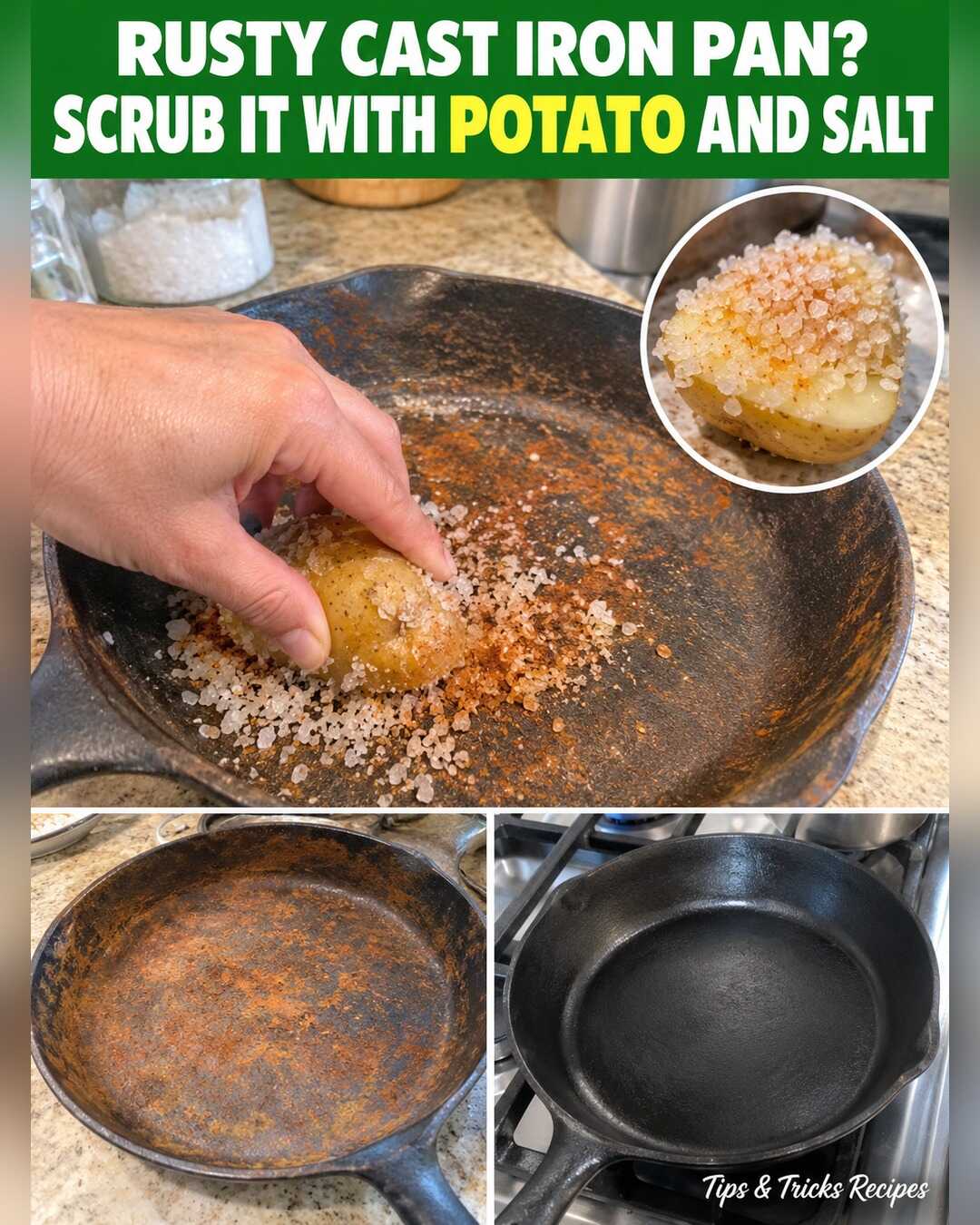
Rusty Cast Iron Pan? Scrub It With a Cut Potato and Coarse Salt Before You Toss It
You pull your old cast iron pan out of the cabinet and find orange spots across the surface. Maybe it sat in a damp kitchen, maybe it was left to air dry one night too many. It looks ruined, but rust on cast iron is almost always a surface problem, not the end of the pan.
Before you toss it or buy a harsh rust remover, try two things already in your kitchen: a potato and coarse salt. The salt scrubs, the cut potato helps loosen the rust, and a little oil afterward gets the pan ready to cook again. Here is how to do it step by step.
What You’ll Need
- 1 large potato, cut in half
- About 3 tablespoons of coarse salt (kosher or sea salt)
- Warm water and a little dish soap
- A clean, dry kitchen towel
- 1 to 2 teaspoons of cooking oil with a high smoke point, such as canola or vegetable oil
- Paper towels
- An oven or a stovetop burner
The Method, Step by Step
-
Rinse and dry the pan. Run warm water over the pan to wash off dust and loose flakes. Dry it right away with a towel. Starting dry matters, because the salt grips better on a dry surface and you can see exactly where the rust sits.
-
Cover the rusty area with coarse salt. Sprinkle about 3 tablespoons over the spots. Spread it with your fingers so it reaches the edges and the sides if they are rusty too. Coarse salt works best because the grains stay rough while you scrub.
-
Cut the potato and press the flat side into the salt. Hold a potato half with the cut side down. Press it firmly into the salt and the rust. The cut face releases a little juice, and it holds the salt in place as you work.
-
Scrub in small circles. Rub with steady pressure, moving in circles. You will see the salt turn brown or orange as it picks up rust. When the potato face gets slimy or gray, slice off a thin layer to reveal a fresh surface and keep going.
-
Add more salt where needed. Stubborn spots may need a second pass. Add another pinch of salt, use the second potato half if you need it, and scrub again. Give heavier rust a few extra minutes rather than pressing harder.
-
Wash the pan. Rinse off the salt and rusty paste with warm water. A drop of dish soap is fine here, since you are about to season the pan again. Use a soft brush or sponge, not steel wool, unless the rust is very thick.
-
Dry it completely. Wipe with a towel, then set the pan on a burner over low heat for a minute or two until every drop of water is gone. A pan that still feels damp will rust again fast.
-
Re-season with oil. While the pan is still warm, rub in about a teaspoon of oil with a paper towel, inside and out. Then wipe off as much as you can. The pan should look dull, not shiny and wet. A thin layer is the secret.
-
Bake it to set the seasoning. Place the pan upside down in a 450°F oven for one hour, with a sheet of foil on the rack below to catch drips. Let it cool in the oven. Your pan is ready to cook again.
Why It Works
Coarse salt is a gentle abrasive. Its sharp little grains break up the loose rust without digging deep into the iron the way a metal scouring pad can. That is why the pan keeps its smooth feel after cleaning.
The potato does two jobs. Its cut surface holds the salt against the pan, and its juice is slightly acidic and contains oxalic acid, which many people use to help loosen rust. It is a mild, old kitchen trick, and the real work still comes from patient scrubbing.
The oil and heat at the end matter just as much. Seasoning builds a thin protective coating on the iron. Without it, bare metal meets moisture in the air and rust returns within days.
Mistakes to Avoid
- Leaving the potato on the pan. Do not let potato sit on the iron for hours. Scrub, rinse, and dry the same day.
- Skipping the drying step. Even a small wet spot can bring rust back overnight.
- Using too much oil when seasoning. A thick coat turns sticky and blotchy. Wipe the pan until it looks almost dry.
- Soaking the pan in the sink. Standing water is the main cause of rust. Wash and dry right after you cook.
- Using the dishwasher. It strips seasoning and leaves the iron wet for a long time.
Bonus Tips and Variations
If the rust is heavy, repeat the potato and salt scrub twice before you switch to a fine steel wool pad. Work gently and always re-season afterward, because steel wool removes seasoning along with the rust.
No potato in the house? A half lemon or a plain scrubber with the same coarse salt also works, though the potato is gentlest on the pan. For a pan you use every day, wipe it with a thin film of oil after each wash, and the rust will rarely come back.
Store the pan in a dry cabinet with a paper towel folded inside. The paper soaks up stray moisture and protects the surface, especially in humid kitchens or in summer.
Frequently Asked Questions
Is a rusty cast iron pan safe to use?
Light surface rust is not a reason to throw the pan away. Once you remove the rust, wash the pan, dry it well, and re-season it, it is ready to cook on again. If the iron is deeply pitted or cracked, consider replacing it.
How long does the potato and salt scrub take?
For light rust, about five to ten minutes of scrubbing is usually enough. Heavier rust may need two rounds. The seasoning step adds about an hour in the oven, but most of that time you are not doing anything.
Can I use baking soda instead of salt?
Baking soda is gentler and may work on very light spots, but it is a softer scrub. Coarse salt gives more grip on rust. If you only have baking soda, use a thick paste and scrub a little longer.
Do I have to re-season the pan after cleaning?
Yes. Scrubbing removes some of the seasoning along with the rust, and bare iron rusts quickly. A thin coat of oil baked on gives the surface its protective layer back and keeps food from sticking.
What oil is best for seasoning cast iron?
Choose a neutral oil with a high smoke point, such as canola, vegetable, or grapeseed oil. Whatever you pick, use a very thin layer and wipe off the extra before baking, or the finish can turn sticky.
How do I keep rust from coming back?
Dry the pan right after washing, heat it for a minute on the stove, and rub in a few drops of oil. Store it in a dry spot. Those three habits prevent most rust problems in everyday kitchens.
Final Thoughts
A rusty cast iron pan is rarely a lost cause. With a cut potato, coarse salt, and a little patience, you can bring it back to life in an afternoon.
Keep it dry, keep it lightly oiled, and it will serve your family for many more years of cooking.