Pour one cup! The orchid instantly fills with roots and abundant blooms
Pour one cup! The orchid instantly fills with roots and abundant blooms
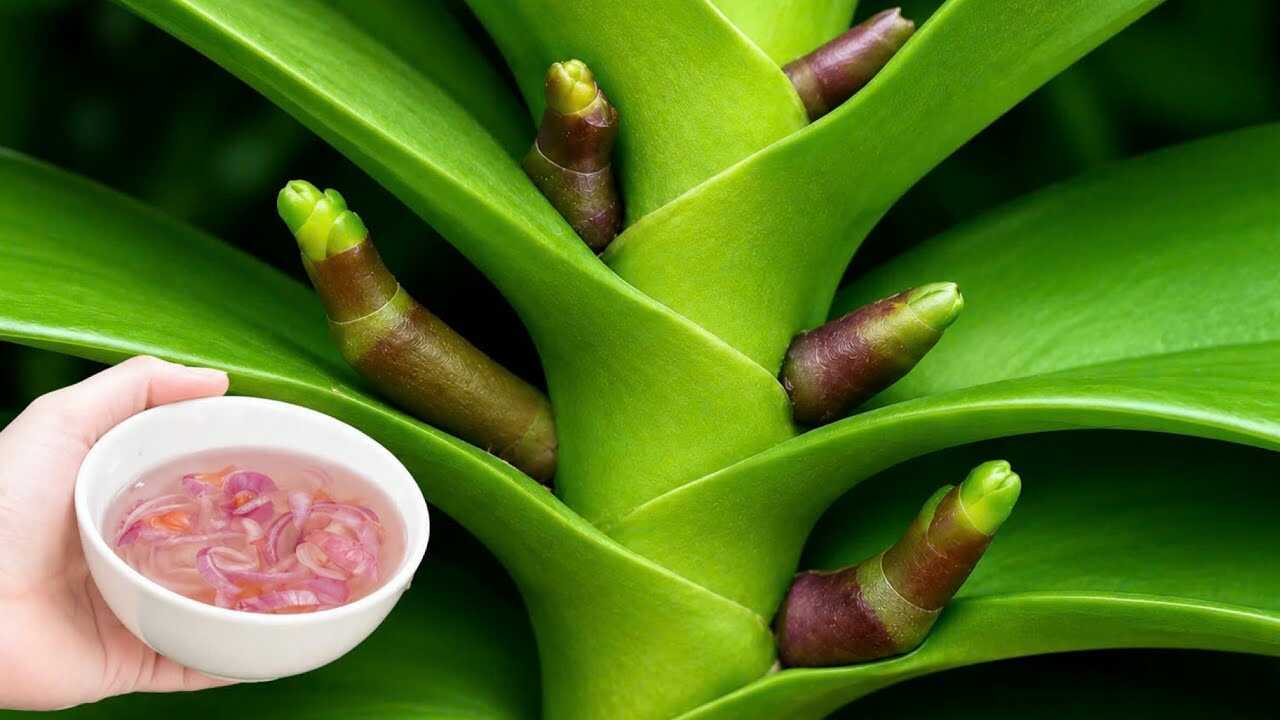
In the photo you can clearly see a small white bowl holding a pale pink liquid with thin, translucent purple curls — this is an infusion made from red onion skins (Allium cepa). Use this simple kitchen brew as a targeted supplement for orchids: its natural organosulfur compounds and flavonoids offer mild antifungal and antioxidant activity and can supply trace nutrients that support healthier root tips and bud development when used correctly.
Why red onion skin infusion helps orchids (real, verifiable reasons)
Red onion skins are rich in flavonoids like quercetin and contain organosulfur compounds. Laboratory and agricultural studies show Allium extracts can reduce growth of some fungal and bacterial plant pathogens and act as antioxidants. In orchids, this translates to a supplemental protective effect for roots and new growth — not a cure-all. Always pair this treatment with proper light, watering, drainage and orchid fertilizer.
Step-by-step: make and use the onion skin infusion
- Prepare the concentrate: Place 1 cup (about 80–100 g) of chopped red onion skins or thin red onion slices into a small pot with 2 cups (500 ml) of boiling water. Simmer gently for 10 minutes, then remove from heat and steep for 1 hour.
- Strain and cool: Strain through a fine sieve or cheesecloth. You now have about 1 cup of concentrated infusion. Do not use solid residue on orchid roots.
- Dilute for foliar spray: Mix the concentrate at a 1:10 ratio (1 part infusion to 10 parts water). For a household spray bottle, combine 30 ml infusion + 300 ml clean water. Use this as a foliar and crown spray (avoid open flowers) every 2 weeks during spring and summer.
- Dilute for root drench: Mix the concentrate at a 1:20 ratio (1 part infusion to 20 parts water). For one plant, pour 100–150 ml of the diluted solution through the potting bark so it drains freely — do this every 3–4 weeks in active growth (spring–summer).
- Storage and shelf life: Use fresh or refrigerate up to 48–72 hours. Discard if it ferments, smells strongly off, or shows cloudiness and film.
Practical seasonal schedule
Spring–Summer (active growth): Foliar spray every 2 weeks; root drench every 3–4 weeks. Autumn–Winter (slower growth): reduce to once monthly or pause entirely, because orchids need less stimulation and wetter conditions increase rot risk.
How to apply safely
- Test one plant first: apply to one orchid and observe for 2–3 weeks before treating your collection.
- Avoid nights: spray in the morning so leaves dry quickly and you reduce rot risk.
- Never pour undiluted infusion onto roots or crown — undiluted concentrates can irritate tissues.
- Only use on plants in well-draining media (bark, coco chips). Don’t drench moss-packed pots regularly because moisture retention raises rot risk.
Common mistakes to avoid
- Applying undiluted — can burn root tips and promote bacterial issues.
- Over-frequent use — excessive applications can cause salt or organic buildup and stress roots. Stick to the schedule.
- Using old or fermented infusion — can introduce unwanted microbes; always use fresh or refrigerated-for-48-hours only.
- Ignoring basic care — no topical or supplemental treatment replaces correct light, watering, drainage and fertilization.
What to expect and realistic timeline
Results are gradual. With consistent, correct use plus good cultural care you may notice healthier, firmer root tips and improved bud set within 4–12 weeks. Significant increases in bloom abundance are most likely the next flowering cycle, not instantly. Track progress and stop if you see discoloration or soft rot signs.
Extra tips from experience
- Combine this tea with regular orchid feeding: keep a balanced orchid fertilizer but avoid feeding the same day you drench with onion infusion.
- If scent is a concern, dilute slightly more for foliar use (1:12–1:15) — the activity remains mild but the odor lessens.
- Keep a simple log: date of application, dilution, and notes on root and bud condition to fine-tune frequency.
Ready to try? Make one cup of the red onion skin infusion, dilute as directed, and treat a single orchid as a trial. Observe for several weeks, keep up with light and watering, and share how your roots and blooms respond — small kitchen remedies can be useful complements when used carefully and consistently.