Rats and mice disappear instantly without expensive or harmful traps
Rats and mice disappear instantly without expensive or harmful traps
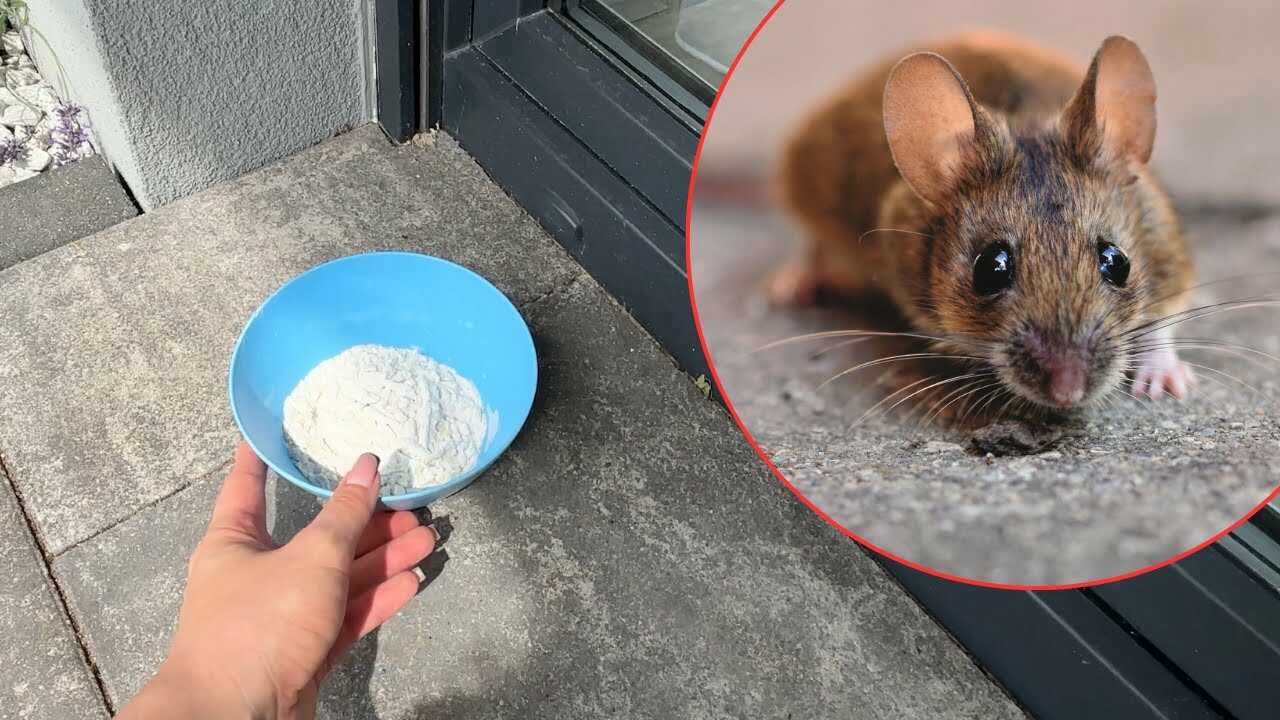
In the photo above you can see a blue bowl of **white powdery flour** — a simple, plant-derived material made from wheat starch. This article shows how that very **all-purpose flour** can become a powerful, non-toxic first step to make **rats and mice vanish from your garden and home** by revealing their routes so you can exclude them effectively. The trick itself is harmless; the real outcome comes from using the information flour gives you to fix the underlying problems.
Why plain flour works (and what it tells you)
Flour is a **plant-based starch** that holds crisp impressions because its fine, dry particles capture tiny footprints and tail marks. That makes it an ideal **tracking powder** to map rodent runways and entry points around foundations, sheds and greenhouse doors. This is not a poison or repellent — it is a diagnostic tool that helps you implement humane exclusion and sanitation.
What you will learn from tracking with flour
- Where rodents enter (gaps under doors, vents, cracks)
- When they are active (night-only or daytime)
- Which routes they prefer (along walls, under eaves, through compost)
Step-by-step: how to use flour to map rodent activity
Follow this precise routine. Use food-grade all-purpose flour, nothing mixed with sugar or attractants.
- Amount: put about 1–2 tablespoons of flour per test patch — enough to create a thin layer about 12–18 inches (30–45 cm) long and a few inches wide across a suspected runway or at the base of a gap.
- Placement: place patches at likely points — base of exterior doors, behind sheds, at garage thresholds, next to vents or holes in foundation. Keep patches within sight lines so you can monitor them easily.
- Timing: set patches in the **evening** so footprints are fresh overnight. Check them the next morning.
- Repeat: refresh or move patches every night for up to 7 consecutive nights to build a reliable map of activity. Record which patches show prints and the direction of travel.
- Clean-up: brush flour up and sweep away before it gets wet. Flour that becomes wet clumps and loses usefulness.
What to do after you map activity (the exclusion plan)
Flour only reveals the problem. To make rodents disappear you must act on what you found. Expect the full removal of visible activity to take 2–6 weeks after you complete the exclusion and sanitation steps below.
- Seal entry points: use steel wool, cement, hardware cloth or metal flashing to close holes bigger than 1/4 inch (6 mm). Rodents can squeeze through small gaps; focus on vents, utility penetrations and gaps under doors.
- Remove attractants: store birdseed, pet food and compost in sealed metal or heavy plastic bins. Keep fruit trees and vegetable gardens tidy; harvest fallen fruit promptly.
- Manage shelter: trim ground cover and stack firewood away from walls. Remove dense ivy or debris that creates runways next to your foundation.
- Use humane capture if necessary: for localized problems, live traps checked daily are an option; follow local guidance on relocation laws and animal welfare.
- Monitor with flour patches: after sealing and tidying, continue flour checks once weekly for 3–6 weeks to confirm activity stops.
Practical tips from experienced gardeners
- Use flour in dry weather only — moisture ruins the impressions.
- Set patches in low-traffic spots to avoid false human or pet prints. If you have pets, place flour where they can’t reach or cover the patch with a low tunnel that only a rodent will enter.
- Label each patch location in a notebook or photo log so you can compare marks over time and detect new entry points.
- Work seasonally: conduct tracking and sealing in autumn when rodents seek winter shelter, but maintain vigilance year-round.
- Combine with good garden care: healthy soil, tidy composting and sealed seed stores reduce attractants and support long-term control.
Common mistakes to avoid
- Leaving flour out permanently — it attracts pests if it becomes a food source. Use it only as a temporary diagnostic tool.
- Relying on flour alone — without sealing, sanitation and habitat modification you will only get temporary relief.
- Assuming prints mean the nest is inside — tracks show movement; nests may be in nearby vegetation or wall voids. Follow the runway to find likely shelter.
- Mixing flour with sweet bait — that invites more rodents and can worsen an infestation.
Safety and ethical notes
Flour is non-toxic and safe around people and most pets, but it should not be left where children or animals can eat large quantities. For heavy infestations, or if you suspect disease risk (e.g., droppings in living spaces), contact a licensed pest professional rather than attempting a do-it-yourself cure-all.
Conclusion — take action and check back
That simple bowl of **all-purpose flour** in the photo is a low-cost, non-harmful diagnostic tool that helps you find where rats and mice are moving so you can exclude them effectively. Use the flour mapping routine nightly for up to a week, then implement sealing, sanitation, and habitat changes. With consistent effort, visible activity typically stops within 2–6 weeks. Start tonight: lay a few flour patches at suspected entry points, make a short plan to seal and declutter, and watch your garden and home become rodent-free.