
Respond only with the translated title. For 1 Cup per week! Orchids create new roots and flowers immediately
For 1 Cup per Week! Orchids Create New Roots and Flowers Immediately
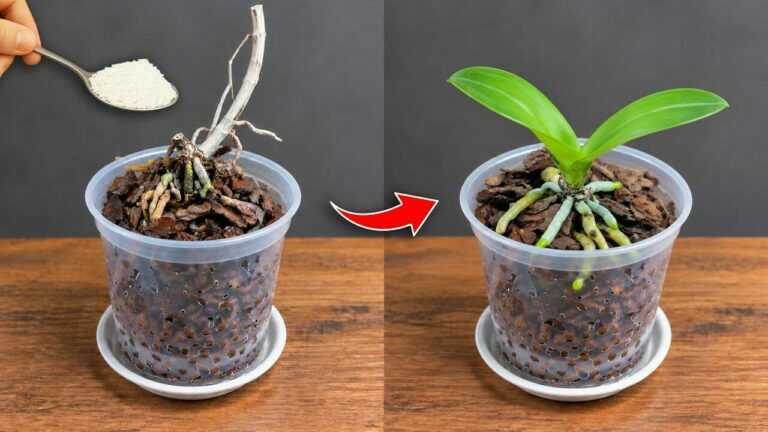
The photo shows a hand holding a glass of dark brown liquid — clearly a **cup of brewed coffee** — next to a potted Phalaenopsis orchid. This article explains a safe, evidence-based way to use **diluted brewed coffee** as a supplemental feed for orchids, why it can help root and flower development, and exactly how to prepare and apply it without harming your plant.
Why brewed coffee can help (real botanical reasons)
Brewed coffee contains small amounts of **soluble nitrogen**, potassium and organic compounds, and it can slightly **lower substrate pH**. Many orchids (including Phalaenopsis) prefer a slightly acidic medium (roughly pH 5.5–6.5). In very low concentrations, coffee can supply trace nutrients and create a micro-environment that may encourage root activity. Be careful: **caffeine and high concentrations** can be inhibitory to microbes and roots, so low dilution and limited frequency are essential.
What you will need
- Plain brewed black coffee (no sugar, milk, flavorings). Let it cool to room temperature.
- Clean water (tap water that has been left to sit or filtered water).
- Measuring cup and a clean container to mix the solution.
Exact recipe and dose (follow this precisely)
Preparation: Brew one standard cup of coffee (about 240 ml / 8 fl oz). Let it cool completely.
Dilution: Mix the cooled brewed coffee at a ratio of 1 part coffee to 10 parts water (for example 240 ml coffee + 2.4 L water). This yields a very weak solution.
Application dose & frequency: Give your orchid 1 cup (240 ml) of this diluted coffee solution once per week during the active growing season (spring through early fall). During dormancy or winter, reduce to one application every 3–4 weeks or stop entirely.
Step-by-step application
- Water routine: Water normally with plain water as your base routine. The coffee solution is a supplemental feed, not a replacement for regular watering.
- Apply the coffee solution: Place the orchid in a sink and pour the 240 ml of diluted coffee evenly over the substrate so it wets the root zone. Avoid letting the liquid sit in the crown or on leaves.
- Drain well: Allow all excess liquid to drain out of the pot; do not let the pot sit in standing liquid.
- Follow-up: Once per month flush the pot with plain water (double the pot volume) to prevent any salt or organic buildup.
How long until you see results?
This is a gradual supplement. Expect to see **improvements in root vigour and potential flowering over several weeks to a few months** if all other cultural needs are met (light, temperature, humidity, drainage and regular balanced fertilization). Do not expect instant blooming — consistent care over 6–12 weeks is the realistic timeframe for measurable root growth and bud set.
Practical tips from experience
- Always use **plain black brewed coffee** — flavored blends, sweeteners or dairy will introduce microbes and residues that can harm orchids.
- Test on one plant first. If leaves yellow or roots blacken, stop immediately and flush with plain water.
- Keep the substrate airy (bark mixes work best for Phalaenopsis). Coffee can encourage microbial activity; good drainage prevents rot.
- Combine this treatment with a proper orchid fertilizer schedule. The coffee is a mild supplement, not a full fertilizer.
- Measure pH occasionally. If the potting medium becomes too acidic (below pH ~5), pause coffee use and flush the medium.
Common mistakes to avoid
- Using undiluted coffee: This concentrates caffeine and acids and can damage roots and beneficial microbes.
- Pouring over the crown or leaves: Wet crowns promote crown rot; always pour at the substrate level.
- Applying during dormancy: Overfeeding in winter causes stress; reduce or stop treatments then.
- Assuming immediate flowering: Coffee is a supplement that supports root health and nutrient availability — it will not force instant blooms.
- Using coffee with sugar or milk: These add food for unwanted microbes and should never be used.
When to stop and troubleshoot
Stop the coffee supplement if you see persistent leaf yellowing, black or mushy roots, or increased fungal growth in the potting mix. Flush thoroughly with plain water, allow the potting medium to dry appropriately, then reassess. If fungal issues persist, replace the medium and inspect roots.
Final encouragement and call to action
If you enjoy experimenting safely with home remedies, try this weak coffee supplement for one orchid for 6–12 weeks while maintaining excellent basic care. Track changes in root length, firmness and bud development. With patience and correct technique, a small, controlled use of diluted brewed coffee can be a helpful supplement — but remember: it’s an aid, not a miracle. Try it, observe, and adjust based on your plant’s response.