
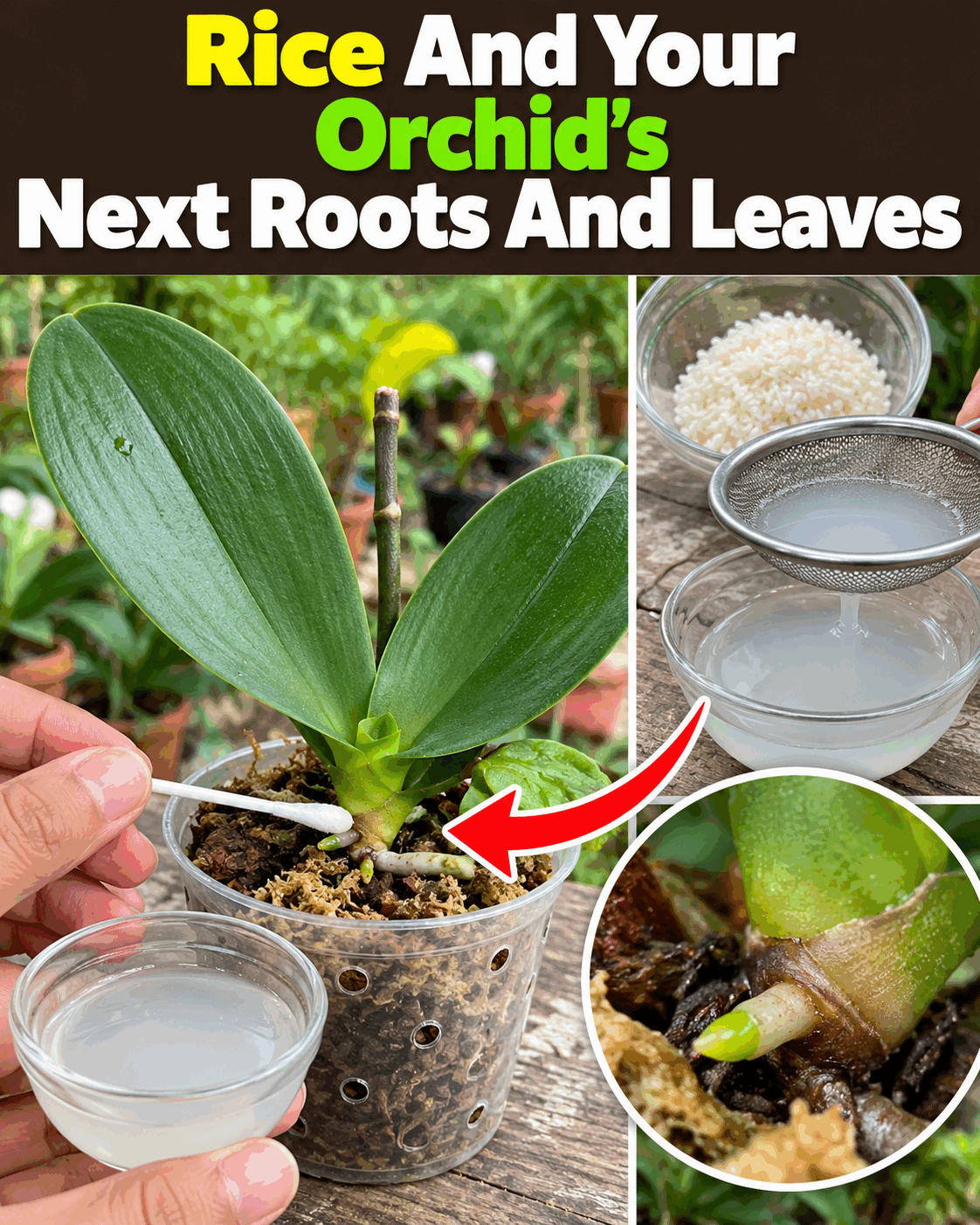
Try THIS for a rootless orchid: a careful routine for new roots and leaves
Plain rice is the everyday ingredient in this orchid idea, prepared as fresh, strained rinse water rather than grains pushed around the plant. The goal is to follow new roots and leaves on an orchid that still has living tissue. Begin with a careful inspection, because a rootless orchid needs a stable recovery environment.
A firm crown and some living stem tissue give you something to work with; a completely collapsed crown is a different situation. Look closely before preparing anything. The small rice-water observation below is optional and does not replace the basic conditions a Phalaenopsis needs while it gradually rebuilds its roots.
What you need
- One tablespoon of plain, uncooked rice, without seasoning.
- A clean bowl, one litre of room-temperature water and a fine filter.
- A small cup, a clean cotton swab and a teaspoon.
- A clear, draining recovery container suited to the remaining plant.
- Clean tools and a dated photograph of the orchid’s base.
Keep rice from a salted dish, sweet rice pudding or seasoned cooking liquid out of the routine. The ingredient should be plain and identifiable. Prepare everything on a clean surface, and do not use an old bottle of cloudy liquid that has been sitting warm for several days.
Inspect the orchid first
1. Separate living tissue from obvious decay
Gently remove loose old medium so that you can see the base without pulling at firm tissue. Empty, papery roots and soft, collapsing material are not the same as a firm root with a discoloured surface. If you are unsure what is alive, seek a knowledgeable assessment before cutting extensively.
2. Record the baseline
Photograph the base from two sides and note any firm root nub already present. Mark the newest leaf as well. This matters because a root that was already beginning to grow can become obvious after any change in care; it should not be described as a root created overnight by rice.
Prepare the rice-water observation
3. Rinse a small, fresh quantity
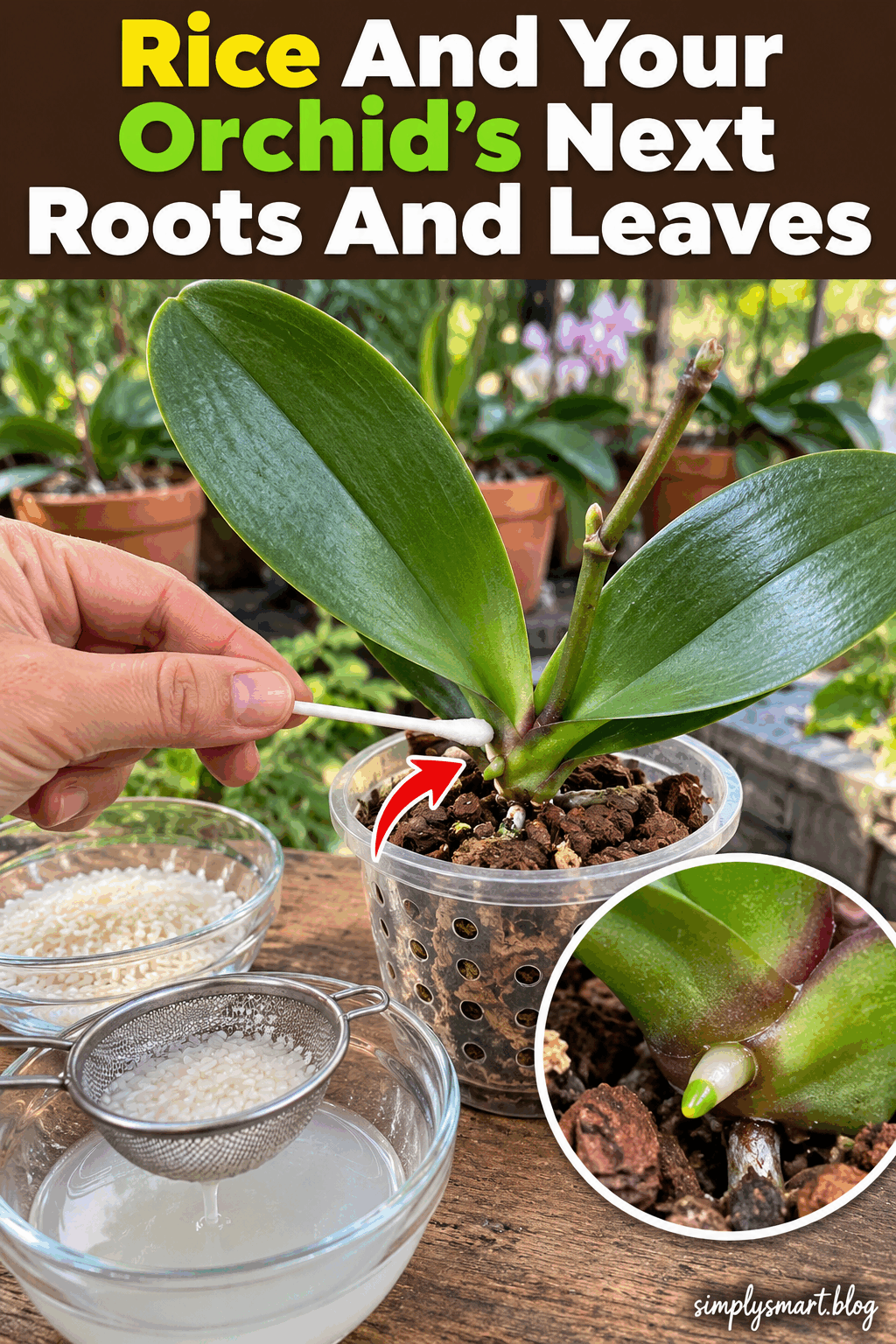
Put one tablespoon of plain rice in a clean bowl with one hundred millilitres of room-temperature water. Swirl briefly, then strain the liquid through a fine filter so that no grains or fragments remain. The rice stays outside the recovery container, where it cannot decay against the orchid’s base.
Mix one teaspoon of that fresh, strained rinse with ten teaspoons of water in a separate cup. This describes a deliberately limited experimental dilution, not an established horticultural dose for rootless orchids. Do not ferment it, heat it, add sugar or keep the remainder for another day.
4. Keep contact brief and local
If the base is firm and you choose to conduct the trial, lightly dampen a clean swab with the diluted liquid and touch one small area of exposed, intact basal tissue once. Do not soak the crown, pour liquid between the leaves or keep a rootless plant standing in the preparation.
Let that small area surface-dry in a warm, airy place before returning the orchid to its recovery container. This limited contact makes it easier to observe the area and stop if it becomes sticky or discoloured. It is not a daily wipe and not a substitute for treating active decay appropriately.
Set up the recovery environment
Support the orchid so that the base is stable and does not rock when you check it. Use a suitable airy recovery arrangement, keeping the crown above any damp material. Moisture around the plant must not become a stagnant pool against the base, especially when there are few roots to use it.
Keep the plant in bright, indirect light and comfortable room warmth, away from direct midday sun and cold glass. If you use a clear humidity enclosure, leave air exchange and check it regularly. Heavy condensation that keeps the crown wet is not the same as useful surrounding humidity.
Watch for roots and leaves without rushing
Inspect from the outside when possible instead of lifting the orchid every day. A new root tip is easy to damage while it is still small. Photograph the same side once a week and compare the shape and length. Firm new growth over several weeks is more informative than a daily change in appearance.
An older leaf may remain wrinkled while the plant recovers, so do not demand an immediate cosmetic transformation. Follow the newest growth and the condition of the base. A plant with very few roots can take considerable time to rebuild, and a ten-day deadline is not a reliable promise.
Where rice fits in the picture
Rice-rinse water contains variable material from the grain, but there is no validated household treatment here proving that it regenerates orchid roots. The small optional observation keeps that uncertainty explicit. Suitable moisture, oxygen, warmth and living tissue are still central to whether a rootless orchid can recover.
Do not add rice grains around the stem, leave starchy liquid in the container or combine it with coffee, yeast and lemon. Such changes make a delicate situation harder to read. If an unpleasant smell, film or soft area appears, stop the trial and reassess the recovery setup promptly.
Make the weekly check gentle
Keep a ruler beside the container rather than against a growing tip, and take each photograph from a similar angle. Open an enclosure only as needed for inspection and ventilation. A steady record lets you notice genuine extension without repeatedly handling a plant whose new roots are still very delicate.
An isolated leaf is not the same starting point as a whole orchid that has lost its roots. This routine requires living stem or crown tissue capable of continuing the plant’s growth. Do not interpret a picture of leaves in glasses as evidence that rice can create a complete Phalaenopsis from any detached leaf.
Questions people ask
Can I use rice cooking water instead?
This method is based on a small fresh rinse of plain uncooked rice. Cooking water can be much starchier and may contain salt or other ingredients. Do not substitute it by eye. Keep the preparation simple and identifiable, and discard any liquid whose contents or storage history are uncertain.
Should the orchid sit above or inside the liquid?
No standing rice-water bath is part of this routine. The contact described is one small, light swab on intact basal tissue, followed by drying. The plant then returns to an airy recovery arrangement that keeps its crown clear of stagnant moisture. Do not immerse the centre of the leaves.
Can I repeat the swab until roots appear?
Do not turn the one-off observation into a daily treatment. Repeated wetting can make it harder to keep the base clean and aerated. Record the date, watch the tissue and let the recovery conditions do their work. A quiet week is not a reason to strengthen the mixture.
How do I recognise a new orchid root?
A new root usually begins as a firm rounded point that extends gradually, often with a shiny growing tip. Its appearance varies with the plant and conditions. Compare photographs without touching the tip, and ask an experienced grower if you cannot distinguish a root from another emerging structure.
What if the crown or base is soft?
Put the rice-water trial aside and assess the decay first. Soft, collapsing tissue can continue to deteriorate under extra moisture, and a completely dead growing point may not recover. A careful inspection or advice from an orchid specialist is more useful than trying several kitchen ingredients in succession.
Keep the recovery steady
Prepare the rice carefully, keep any trial contact small and leave no grains against the plant. Follow real new roots and leaves over time, with a clean, airy setup and no fixed deadline.
Further reading: University of Maryland Extension on rice water, American Orchid Society on re-rooting orchids and University of Connecticut orchid care.