
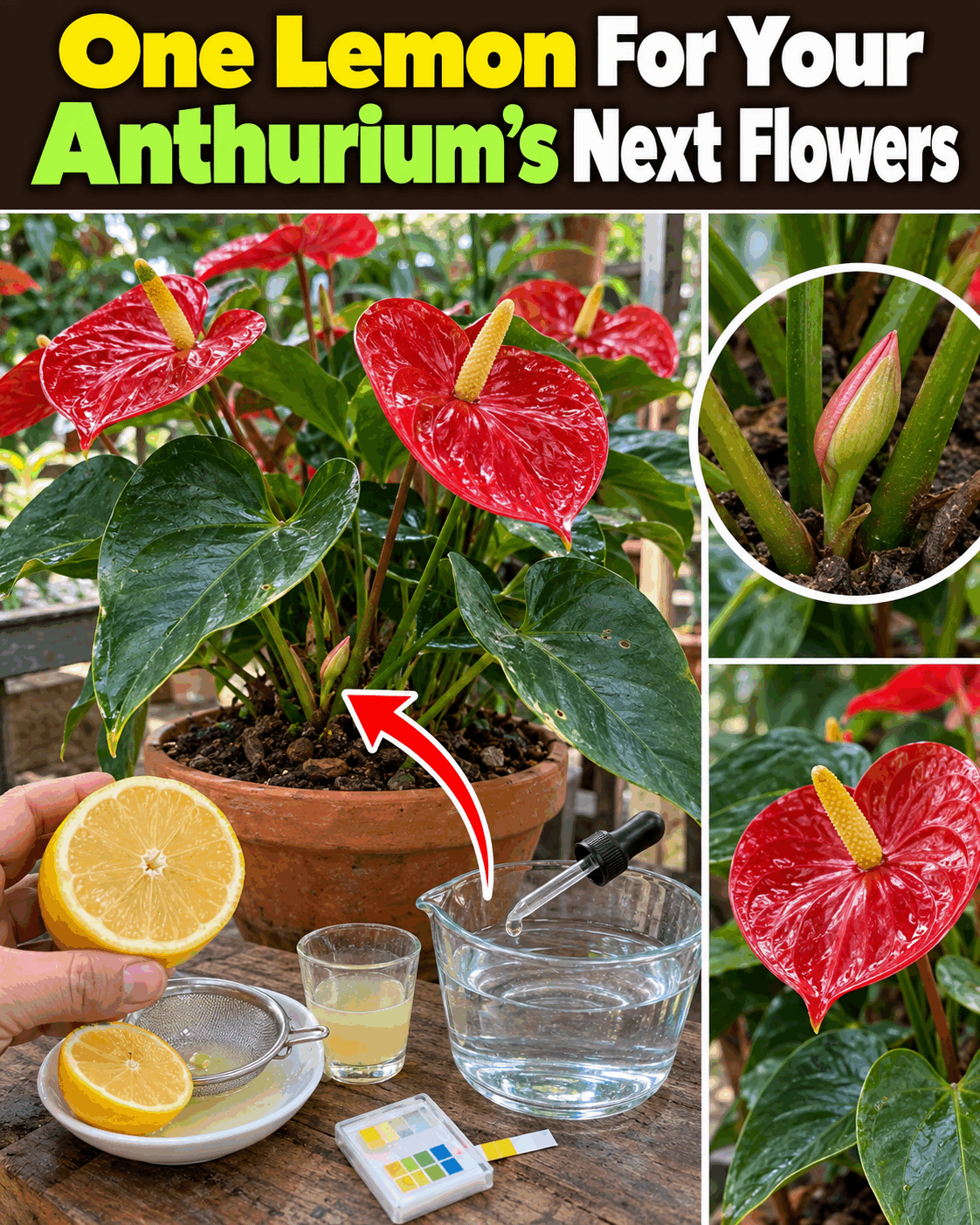
One lemon for your anthurium: a measured approach to the next flowers
A lemon is the everyday ingredient in this anthurium routine, used as a source of juice for a carefully measured water check. The goal is to support a plant preparing its next flowers without pouring a whole fruit into the pot. Start by checking the water and the plant, then decide whether any adjustment is needed.
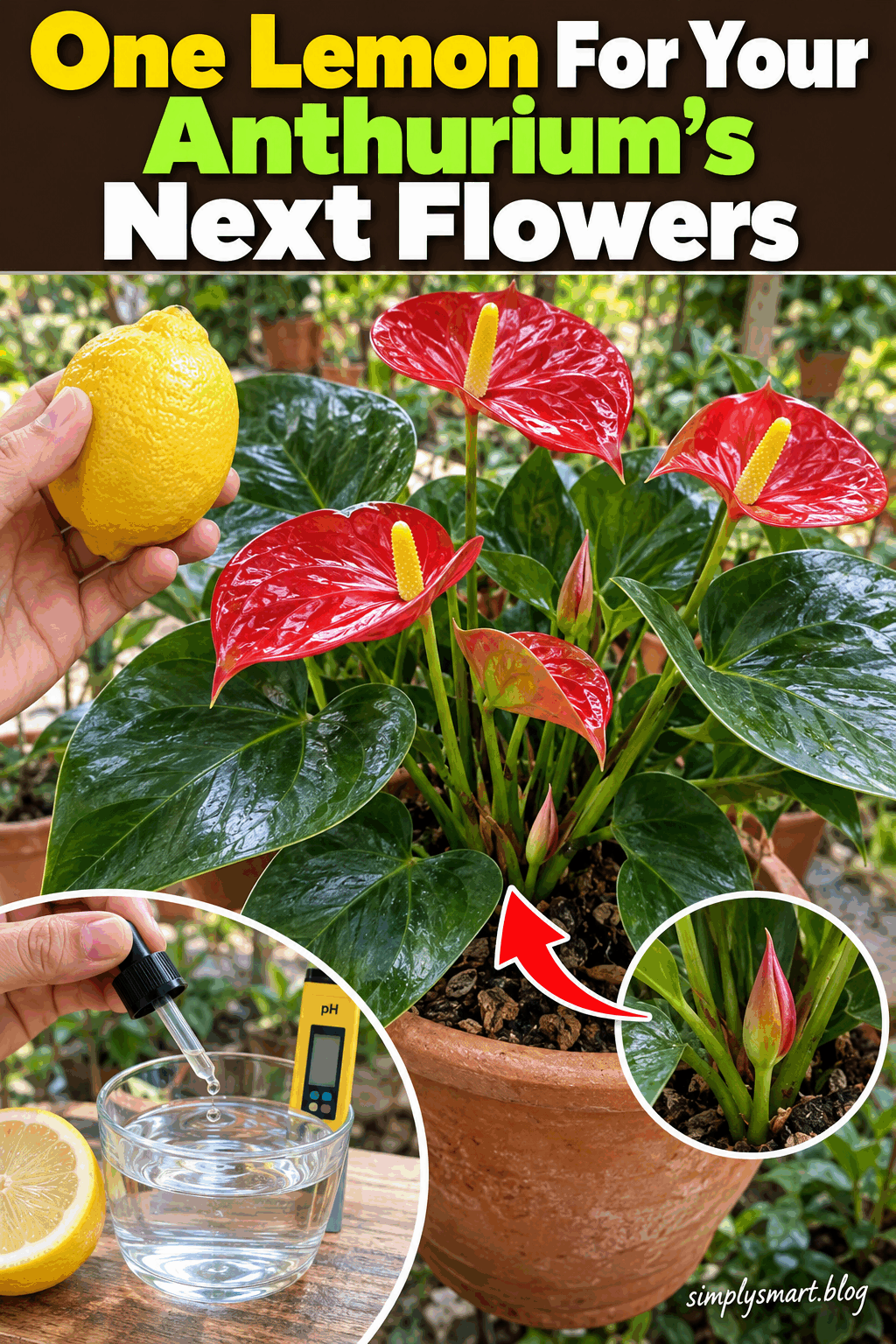
The colourful part of an anthurium is a modified leaf called a spathe, surrounding the upright flower spike. A plant can keep an existing spathe attractive for a long time while making no new one. Looking for a genuinely emerging flower stem gives you a clearer record than counting the old display again.
What you need
- One fresh lemon and a clean knife.
- A small strainer, a clean cup and a dropper.
- A one-litre jug of your usual watering water.
- A suitable calibrated pH meter, or a reliable test intended for water.
- A healthy anthurium in a draining pot.
- A notebook for the readings and a dated photograph.
This is a measured routine, not a fixed lemon recipe for every household. Water from different supplies behaves differently, and the acidity of lemons varies too. If you cannot test the water, do not guess how much juice the plant needs. Keep the lemon out of the pot until the conditions are understood.
Check the starting conditions
1. Inspect the plant and the container
Choose a plant with firm leaves and a root ball that drains normally. Persistent wetness, a sour smell or soft tissue needs attention before a kitchen trial. Check that the nursery pot is not sitting in water inside its cover, and leave any developing flower stem undisturbed during the inspection.
2. Test the water first
Let the water reach room temperature, stir it and take a reading following the test manufacturer’s instructions. Record the result before adding anything. A pH reading is not a complete measure of water quality or buffering, so a problem with salts or excessive hardness needs more than a squeeze of lemon.
3. Prepare only the juice you can control
Cut the lemon, squeeze a little juice into the clean cup and strain out pips and pulp. Do not add sugar, zest, oil or another household ingredient. Use a dropper rather than squeezing directly over the jug, where a sudden stream would be difficult to reverse or measure.
A careful, conditional adjustment
If testing and your plant-care assessment indicate that an adjustment is appropriate, work with a separate one-litre jug, adding one drop at a time and stirring thoroughly. Retest after each small addition. Never treat the whole lemon as a dose: its role is to supply a controllable ingredient.
Do not push already suitable or acidic water lower. A mildly acidic test range around pH six to six and a half can be a cautious observation target for the water, not a universal prescription for every root medium. Avoid an adjustment if readings are uncertain, unstable or outside your meter’s reliable range.
That range is an experimental water-management boundary in this routine, not evidence that lemon juice induces anthurium flowers. The plant’s root medium and water buffering also matter. Where those are unknown, seek a proper water or medium assessment rather than repeatedly trying to correct the situation with fruit juice.
4. Use it only at the normal watering point
If you proceed, use the checked water as part of one normal watering, not an extra drink between waterings. Pour onto the medium, away from the crown and leaves, and let the pot drain completely. Discard unused juice and mixture; do not store a sweet-smelling preparation for the following week.
5. Record the plant over time
Photograph the same side of the plant and mark any new leaf or flower stem already visible. Keep its position and other care steady for the following weeks. If leaf edges deteriorate or the plant begins to decline, stop the trial instead of repeating or strengthening the mixture.
Prepare the conditions for the next flowers
Anthuriums do best with suitable light, warmth and an airy root environment. Give the plant bright, indirect light and avoid cold draughts. Keep the foliage from pressing against a cold window. A kitchen ingredient cannot compensate for a plant kept so dark that it can only maintain its existing leaves.
Check the root ball before each watering instead of using a fixed weekly volume. A small plant in a warm, bright room can dry differently from a large one in a cool corner. Leave the crown at its established level and avoid packing the medium tightly during routine maintenance.
Why the small measurements matter
Lemon juice contains acid, so it can change the pH of water; it is not a balanced feed or a demonstrated flowering treatment for this plant. Testing is what separates a controlled adjustment from a guess. The relevant result is a healthy plant continuing to make leaves and flower stems under suitable conditions.
Do not combine lemon with vinegar, bicarbonate, coffee, yeast or a new nutrient product in the same jug. Mixing several household ingredients makes the result harder to predict and harder to interpret. A clean record of one limited change is more useful than an elaborate bottle with no measured composition.
Questions people ask
Can I bury a slice of lemon beside the roots?
No slice is used in this method. Fresh fruit in a small indoor pot can decay and makes it difficult to control what reaches the roots. The lemon stays on the work surface, supplying a little strained juice for a separately measured water check, not a piece buried in the medium.
Can I use bottled lemon juice?
This routine uses a fresh lemon whose contents you can identify. Bottled products may differ in concentration or contain additional ingredients. Even fresh juice is variable, which is why the process relies on repeated testing rather than a fixed spoonful. Do not assume that two products behave identically.
Should I do this every week?
There is no automatic weekly schedule. Test first, make only a justified limited adjustment and observe the plant. A water supply that does not need changing should not receive juice simply because the calendar says so. Repeated treatment without readings can move conditions in the wrong direction.
Does a new flower prove the lemon worked?
No. A flower may have been developing before the trial became visible, and light or seasonal growth can explain the timing. Record the result as part of the whole routine. A healthy new stem is welcome, but it is not evidence of a guaranteed response to one household ingredient.
What if I do not own a water test?
Do not estimate acidity by taste, colour or the number of drops somebody else used. Keep the preparation separate and focus on the plant’s existing conditions until you can assess the water properly. That avoids turning a small, measured idea into an uncontrolled treatment of the root ball.
Keep the goal visible
One lemon is enough to prepare a small measured check, not a reason to empty its juice into a pot. Follow the plant’s next leaves and flowers under stable conditions, and keep every adjustment proportionate.
Further reading: RHS anthurium growing guide and New York Botanical Garden anthurium care.