
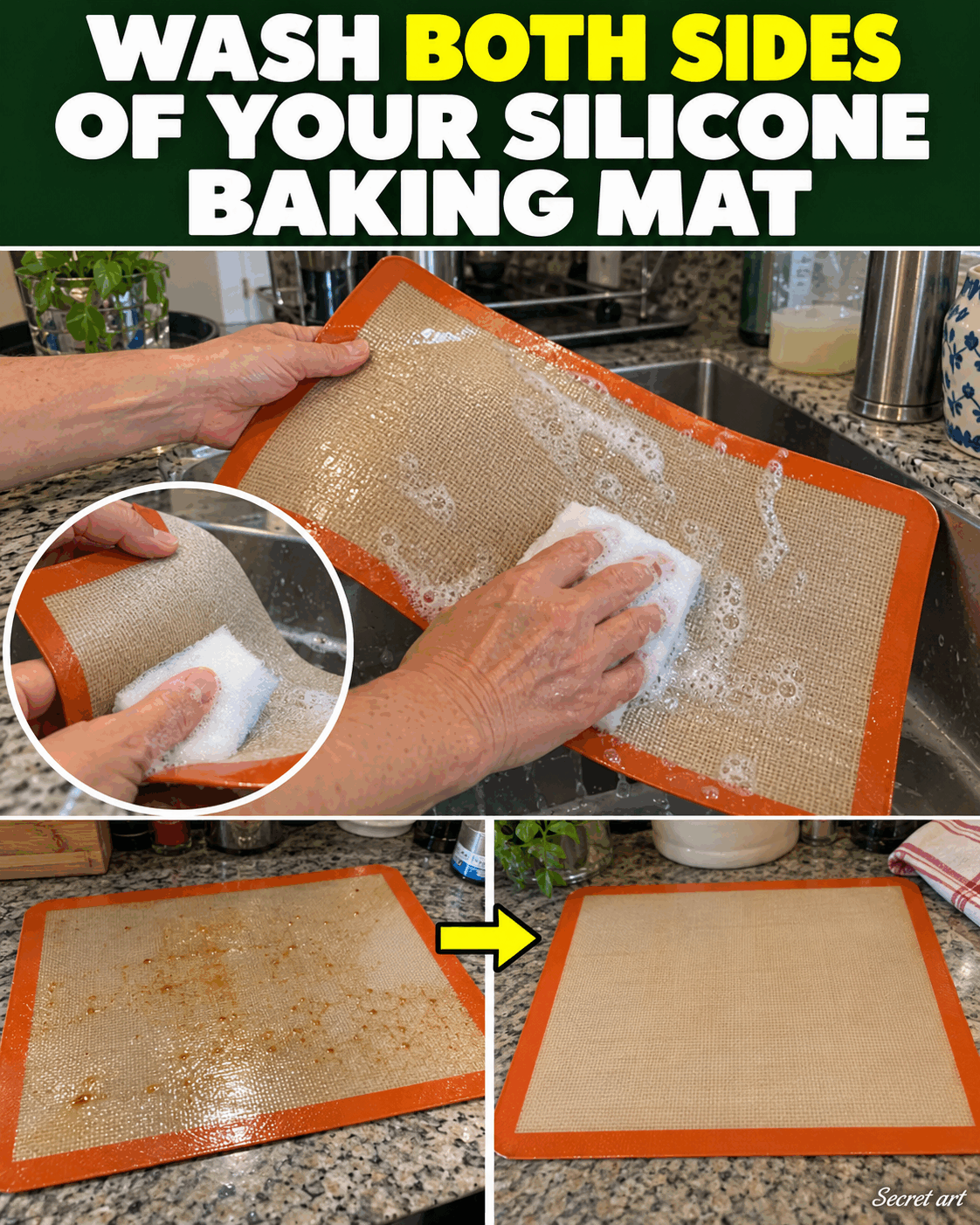
Your Reusable Silicone Baking Mat: Wash Both Sides and Dry Before Storing
Dish soap and a soft sponge are a straightforward starting point for washing a reusable silicone baking mat. Let the mat cool, remove loose food, wash both faces, rinse the edges, and dry it completely before storage. The underside deserves attention too, even when the food sat only on the upper surface. Follow the care instructions for the particular mat, including any reinforced or printed areas.
This routine is for an intact reusable baking mat intended for contact with food. It is not a method for a metal baking sheet, a grill liner, or a decorative silicone pad with unknown care limits. It does not promise to remove every permanent stain or restore a damaged surface. A gentle complete wash is the goal, rather than a stronger mixture or a dramatic before-and-after photograph.
Check the mat’s construction
Some baking mats are solid silicone, while others include a reinforcing mesh or additional surface features. Those differences matter when you choose how to wash and store the finished product. A general statement that silicone tolerates heat does not tell you whether a particular mat can be boiled, scrubbed with a stiff tool, or put through a dishwasher.
Read the care label or the maker’s instructions before choosing an extra treatment. Look over the mat in ordinary light. A cut, tear, or exposed reinforcement is different from a food stain. Do not trim an edge or scrape away a damaged patch to make the surface look neater. Follow the maker’s advice about replacement or continued use.
What to put beside the sink
- Mild dish soap suitable for washing kitchenware.
- Warm water within the mat maker’s instructions.
- A clean soft sponge or nonabrasive cloth.
- Clean water for the final rinse.
- A clean towel and an open drying space that supports the mat without a sharp fold.
Inspect the sponge for trapped hard crumbs before it touches the surface. Use its soft face only. A sponge that feels gentle can still carry particles from a dirty pan. A clean tool and light pressure are more useful here than vigorous rubbing with a rough pad. Keep knives, scrapers, and metal wool out of this washing routine.
Use the dish soap according to its label and the mat’s care guidance. This method does not add vinegar, bleach, powders, or another cleaner. A sink full of thick foam is not necessary to demonstrate a careful wash. You need enough permitted solution to wash the accessible surface and a clear rinse afterward, without leaving soap trapped along the edges.
Let the mat cool and remove loose food
Set the used mat in a safe place and wait until you can handle it comfortably. Do not rush a hot baking sheet into the washing area with bare hands just because the mat will eventually be washable. Once cool, lift away loose crumbs with a soft cloth or by gently tipping them into the appropriate waste container.
Keep the mat supported as you move it. It can bend naturally, but do not force a sharp crease to make it fit a small bowl. If the sink is too small to lay it out comfortably, wash it in supported sections on a clean suitable surface. The construction and storage directions remain those of the particular product.
Wash, turn, rinse, and dry
- Read the care instructions and inspect the surface. Confirm the mat is intended for baking and suitable for the proposed hand wash. Look for cuts or other damage. Keep any special restrictions in view instead of applying a method for a different brand or material.
- Remove loose crumbs from the cooled mat. Use a soft cloth and gentle movements. Do not cut, scrape, or aggressively rub off a stuck patch. Clear the washing area so that rough particles are not left underneath the mat.
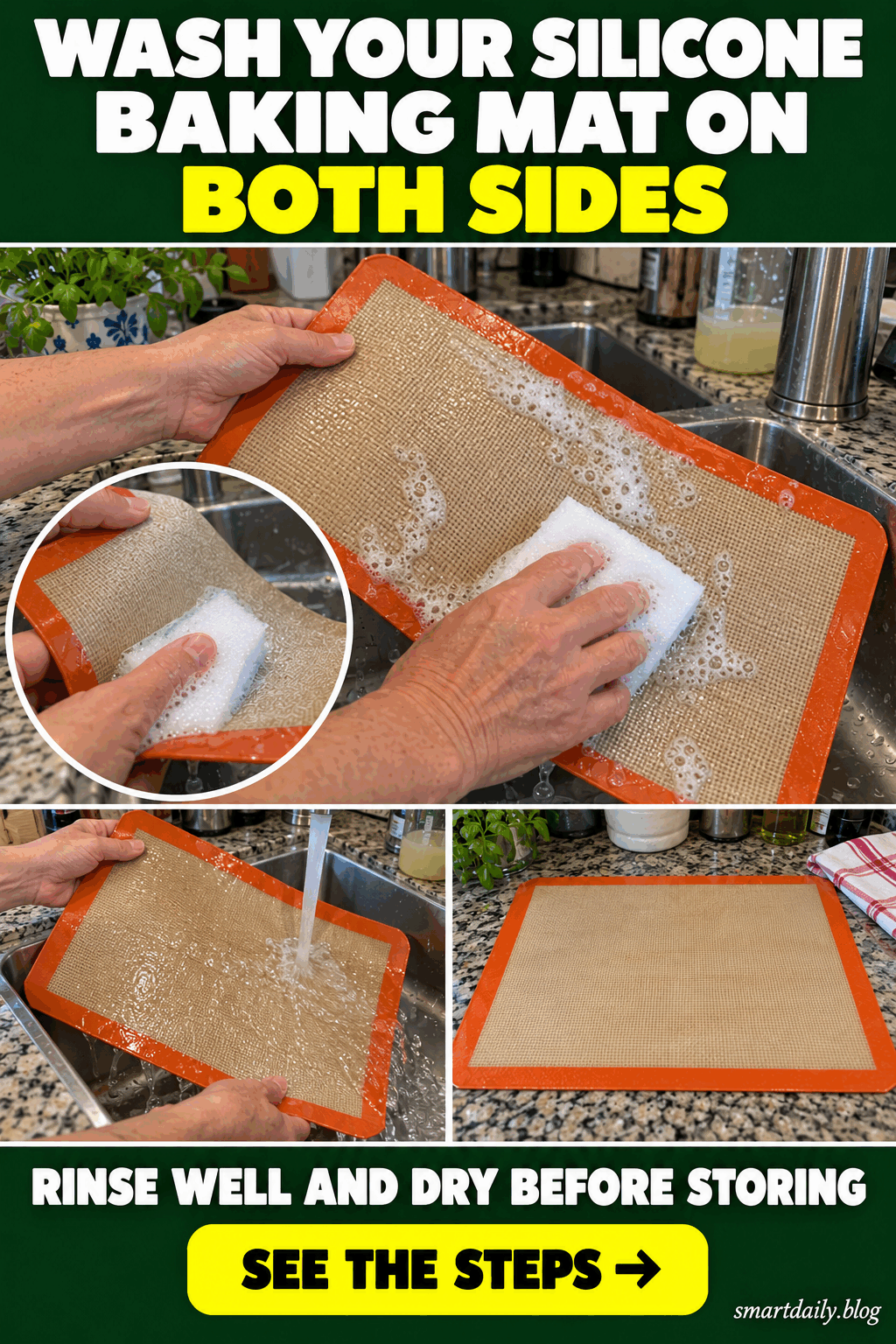
- Wash the first face. Use the soft sponge with the permitted warm soapy water. Work across the surface in small sections and around the edges with light pressure. Rinse the sponge when it collects food or grease rather than spreading the same residue across the whole mat.
- Turn it over and wash the second face. Support the mat and avoid a tight fold. Clean the underside and edges with the same gentle method. A clean-looking top does not tell you whether the back has picked up oil or food from its surroundings.
- Rinse both faces thoroughly. Turn the mat as needed so that the water carries away loosened residue and soap from each side. Inspect the edges and any accessible textured area. If a removable greasy film remains, repeat the gentle wash with fresh solution.
- Dry fully before storing. Remove visible water with a clean towel if the care instructions allow, then let both faces finish drying in an open supported position. Store the mat flat or in the manner its maker specifies. Do not pack it away while the underside is still wet.
Why both surfaces matter
The underside touches the baking sheet and the surrounding work area. It can pick up crumbs or a film even when no food was placed directly on that face. Turning the mat during washing makes that easy to check. It also gives you a chance to inspect the border, where water and soap can remain after a quick rinse.
Use a clean supporting surface when you turn it over. Placing a freshly washed face onto a greasy counter undoes part of the work. If you use a towel beneath it, make sure the towel is clean and replace it if it becomes soiled. The small change of support is often more useful than adding another cleaning product.
Grease, staining, and damage are different
A lingering color mark does not automatically mean there is still a removable layer of food. Some foods leave a stain that does not disappear in a basic wash. Judge the actual surface after rinsing and drying. This routine does not turn every used mat into a new one and does not make an unknown damaged area suitable for continued food contact.
If an oily film remains, first repeat the same permitted gentle wash with a clean sponge and fresh soap solution. Do not automatically switch to boiling, abrasive powders, or an oven treatment. Those are separate processes with their own product limits. A mat’s baking temperature rating is not permission for every possible cleaning technique.
Finish the drying step before storage
A flat mat can look dry on top while its underside remains damp against a towel. Turn it or move it to an appropriate open support so that both faces can dry. There is no universal drying time for every room and mat. Check the surface and edges rather than relying on a timer alone.
Once dry, store it according to its care instructions. Do not make a hard fold to fit it into a narrow drawer. Keep sharp utensils away from the stored surface, especially if the mat has internal reinforcement. Simple flat storage can work well when the product allows it and the space remains clean and dry.
Frequently asked questions
Can every silicone mat go in the dishwasher?
No general rule covers every finished product. Some makers allow it, while other mats have different care instructions. This article describes a gentle hand wash. Check the label for your particular mat before choosing a dishwasher, including any rack or placement requirements. Heat resistance during baking does not establish the cleaning limits of the whole construction.
Should I scrub a lasting stain until it disappears?
A color mark and a removable food film are different. Start by inspecting the rinsed, dried surface and repeat the permitted gentle wash if actual residue remains. Do not use increasing pressure to force every stain away. Cuts, worn areas, and exposed reinforcement need the maker’s guidance rather than an improvised attempt to polish the surface.
Why wash the underside if food only touched the top?
The underside rests on the baking sheet and can pick up residue from that surface or the work area. Turning the mat lets you inspect and wash it instead of assuming it is clean. Support the mat gently, use a clean surface, and rinse both faces and their edges before allowing the whole mat to dry.
How do I know it is ready to store?
Check both faces and the edges after visible water has been removed. Do not judge only the upper surface while the underside sits against a damp towel. Let air reach the mat in an appropriate supported position and store it only when fully dry. Use the flat or other storage method specified by its maker.
Product-care references
Fat Daddio’s describes regular warm soapy hand washing and drying before storage. RY Silicone discusses washing and rinsing both surfaces of suitable baking mats. Use the instructions for your own mat when they differ from a general routine.