Sprinkle 1 spoon! Suddenly the orchid miraculously revives and blooms
Sprinkle 1 spoon! Suddenly the orchid miraculously revives and blooms
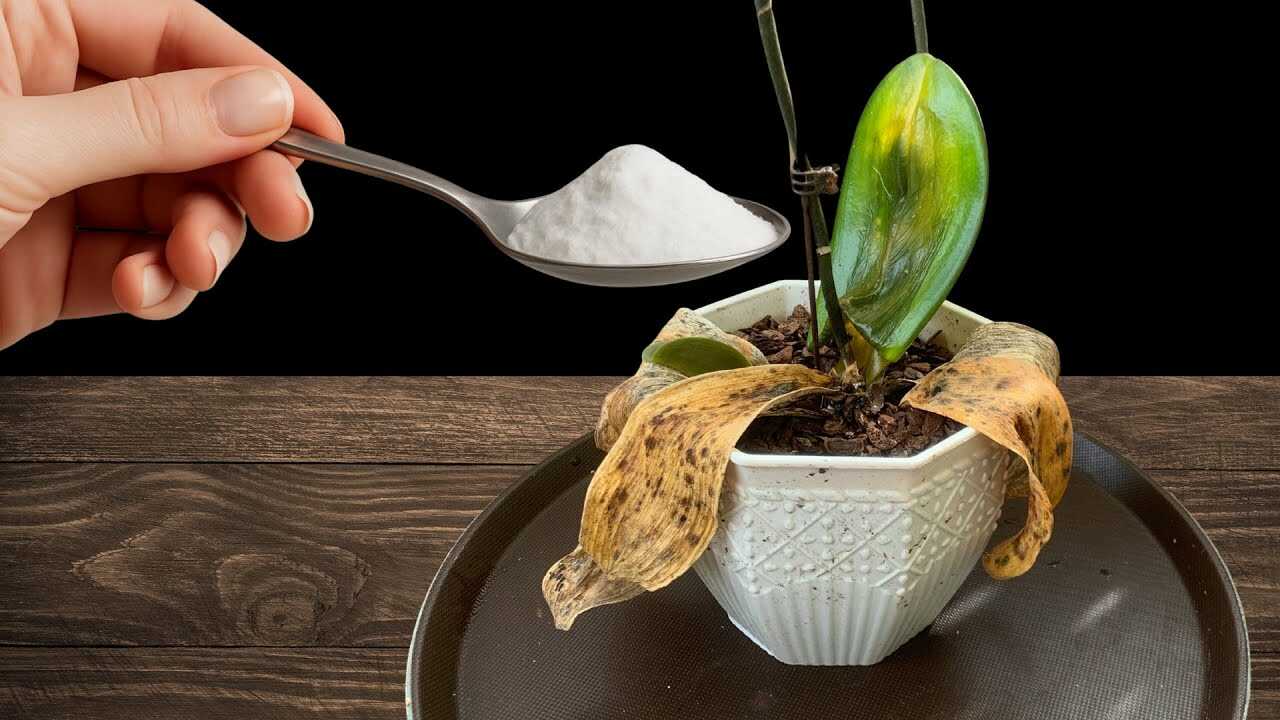
In the photo you can see a spoonful of fine white powder held over a potted orchid with yellowing, spotted leaves. That powder is **baking soda (sodium bicarbonate)** — a simple, inexpensive compound that can help control leaf-surface fungal problems on orchids when used correctly. This article explains exactly how to use it, why it works, and what to avoid so your orchid can recover and set healthy new growth over the coming weeks.
Why baking soda can help your sick orchid
Several horticultural reports and home-garden trials show that **sodium bicarbonate** can reduce fungal spore germination on leaf surfaces (commonly used against powdery mildew and some leaf spot fungi). It works by altering the surface environment (pH/ionic conditions) in a way that is unfriendly to many fungal spores. Important: this is a **supportive, topical treatment** — not a substitute for correct light, watering, drainage and fertilization.
Step-by-step: safe baking-soda spray for orchids
- Inspect and clean: Remove and discard fully dead, blackened or mushy leaves with sterile scissors. Isolate the plant if disease seems active.
- Prepare the solution (precise dose): Dissolve 1/2 teaspoon (≈2.5 g) of baking soda into 1 liter of lukewarm water. Add 2–3 drops of mild liquid dish soap (non-antibacterial, fragrance-free) as a sticker. Mix until dissolved.
- Spot test first: On a single lower leaf, spray a small area and wait 24–48 hours to check for sensitivity (discoloration or burn).
- Apply properly: Use a fine spray bottle and mist both upper and lower leaf surfaces until just damp — do not soak the potting medium or roots. Avoid spraying on open flowers. Best time: early morning or late afternoon, out of direct sun.
- Frequency & timing: During active growth (spring–summer) spray every 10 days. In cooler, slower growth (autumn–winter) reduce to once every 21–30 days. Continue for a treatment cycle of 4–8 weeks and then reassess.
- Follow-up: If leaves improve and new growth appears after several weeks, stop routine spraying and use only as needed. If no improvement after 8 weeks or if symptoms worsen, consult a targeted fungicide or a professional diagnosis.
Practical tips from experience
- Ventilation matters: Baking soda helps on leaf surfaces, but good air circulation and reduced humidity around the crown prevent re-infection.
- Watering technique: Water orchids at the base and allow media to dry slightly between waterings. Wet crowns + poor air = fungal problems.
- Light and temperature: Ensure bright, indirect light and stable temperatures; weakened plants recover poorly even with foliar treatments.
- Repot if needed: If the bark mix is breaking down or roots are rotten, repot into fresh orchid mix — topical sprays won’t fix root problems.
Common mistakes to avoid (real botanical errors)
- Using table salt or Epsom salts: Do not substitute sodium chloride (table salt) or magnesium sulfate for baking soda — those can damage roots and foliage.
- Too-strong solutions: Higher concentrations can burn delicate orchid leaves — stay with the precise dose given above.
- Spraying in full sun: Applying a solution in direct midday sun can cause leaf scorch.
- Relying on spray alone: Ignoring light, watering, drainage and fresh media will keep the plant sick even if fungal pressure is lowered.
- Frequent soil drenching: Do not routinely pour baking-soda water into the potting mix — soluble sodium can accumulate and harm roots. Use only as foliar spray and flush the medium with clean water if accidental drenching occurs.
What to expect and timeline
Do not expect instant recovery. With correct care plus the baking-soda spray, you may see reduced leaf-spot activity and healthier new shoots within 4–8 weeks. Full re-blooming can take longer depending on the orchid species and its energy reserves — often several months following improved cultural care.
Final encouragement and call to action
If your photo shows the same signs — yellowing leaves with black speckling — try the precise baking-soda spray method above as a cautious, documented aid against surface fungi. Combine it with improved light, careful watering and fresh media if needed. Try a spot test today, treat consistently for a few weeks, and share the results — small, steady steps often bring an orchid back from the brink and onto the path to blooming again.