Sprinkle 1 Teaspoon! Anthurium Grows Faster And Blooms More Than Ever!
Sprinkle 1 Teaspoon! Anthurium Grows Faster And Blooms More Than Ever!
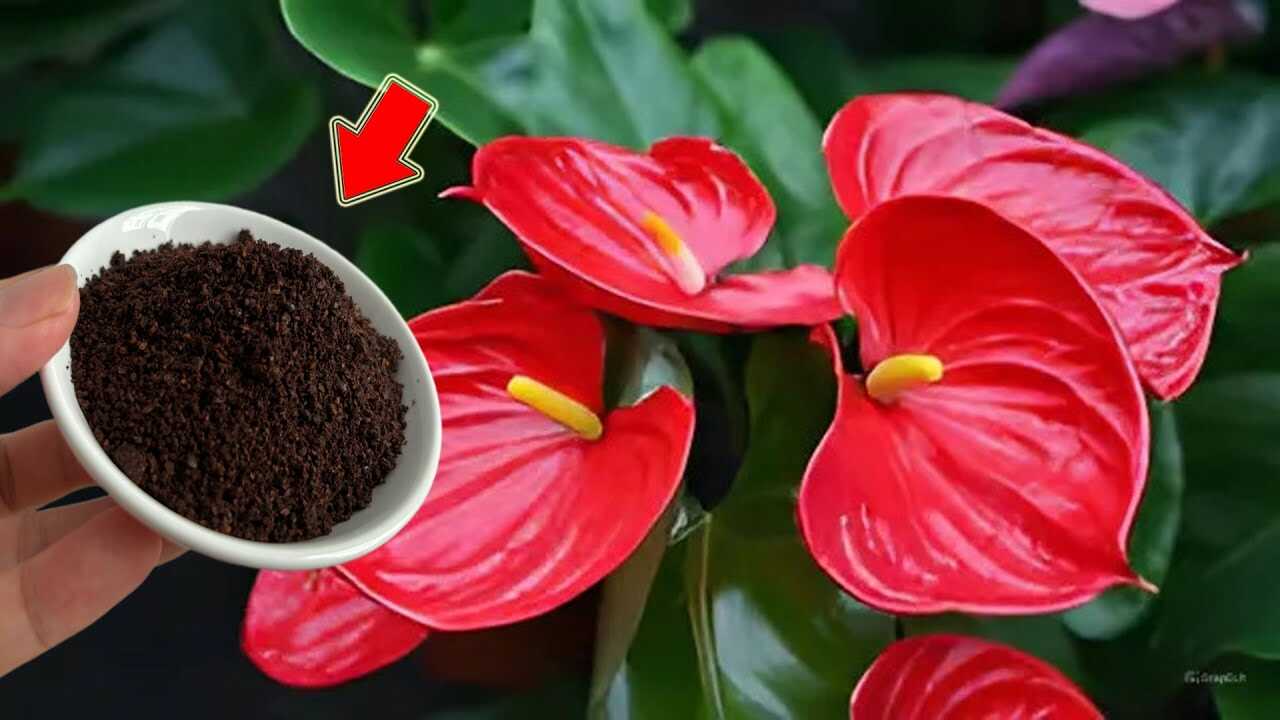
You can see a small bowl of **dark, used coffee grounds** in the photo — that finely textured, brown granular material is the trick in this post. When used correctly, **spent coffee grounds** supply a bit of slow-release **nitrogen**, trace nutrients and organic matter that can boost anthurium leaf growth and support bloom production as a supplement to regular care.
Why coffee grounds help anthuriums (the science)
Used coffee grounds contain roughly **~2% nitrogen by weight** along with small amounts of phosphorus and potassium. When grounds are **composted or incorporated in small amounts** they feed soil microbes that mineralize nutrients, making nitrogen and micronutrients available to roots. Anthuriums prefer slightly acidic to neutral potting mixes (pH ~5.5–6.5), and a light, regular application of coffee grounds can gently contribute to acidity and organic content without replacing fertilizers or basic cultural needs.
Step-by-step: exactly how to use 1 teaspoon of coffee grounds for anthurium
- Prepare the grounds: Use spent (used) coffee grounds. Spread them thinly on newspaper and air-dry for 24–48 hours to reduce moisture and lower the risk of mold.
- Pot size dosing: For a typical 12 cm (4–5″) pot use 1 teaspoon. For a 15–20 cm (6–8″) pot use 1 tablespoon. For larger containers (25 cm+), use up to 2 tablespoons per application.
- How to apply: Gently sprinkle the measured amount across the soil surface — do not mound it around the stem crown. Lightly work the grounds into the top 1–2 cm of potting mix with a finger or small tool, then water thoroughly to wash nutrients into the root zone.
- Frequency and season: During the active growth season (spring and summer) apply every 3 weeks. In autumn and winter reduce to every 6–8 weeks or pause altogether while growth slows.
- Expectations: With consistent use as above and proper light, humidity and watering, you may notice improved leaf vigor and more frequent flowering over 4–12 weeks. This is a supplement, not a miracle cure.
Practical tips from experience
- Mix, don’t smother: Coffee grounds compact easily. If you prefer a larger dose, mix grounds into compost first (no more than 10–20% by volume of the mix) rather than layering them thickly on top.
- Use composted grounds when possible: Grounds that have been composted for several weeks are gentler, feed beneficial microbes, and reduce the risk of surface mold.
- Monitor soil moisture: Because grounds can hold moisture, keep an eye on drainage — anthuriums need an airy, well-draining mix (bark + peat/perlite). Adjust watering if the soil stays wetter than usual.
- Combine with balanced feeding: For blooms, continue monthly balanced liquid fertilizer or slow-release fertilizer formulated for flowering houseplants; coffee grounds are only a modest nitrogen source.
- Keep humidity and light right: Coffee grounds won’t replace good light (bright, indirect) and humidity (60%+ preferred). Think of grounds as a small boost within a healthy routine.
Common mistakes to avoid (real botanical pitfalls)
- Over-applying grounds: Heavy layers (more than a thin sprinkle) cause compaction, poor aeration and can encourage anaerobic conditions or fungal growth around the crown.
- Using fresh wet grounds thickly: Directly mounding wet, fresh grounds can grow mold and temporarily immobilize nitrogen — always dry or compost first if you plan repeated use.
- Applying to seedlings or very small plants: Young roots are sensitive; avoid adding grounds to recently propagated plants until established.
- Neglecting base care: Don’t expect grounds to fix poor light, root-bound pots, or persistent overwatering — they supplement, not substitute.
Quick troubleshooting
- If you see surface mold: scrape it off, reduce application frequency, and allow the soil to dry slightly between waterings.
- If leaves yellow quickly after application: check drainage and avoid over-watering; heavy moisture plus organic matter can stress roots.
- If growth stalls: reassess light, pot size and fertilization — coffee grounds are a minor nutrient source and won’t replace balanced feeding.
Conclusion — try it with care
That little bowl of **spent coffee grounds** in the photo can be a useful, low-cost supplement for your anthurium when used correctly: dry or compost the grounds, sprinkle 1 teaspoon for small pots (scaled up for larger pots), and apply every 3 weeks in spring/summer and less often in cooler months. Expect visible benefits in **several weeks to a few months**, always alongside good light, proper watering, and a well-draining mix. Try this simple routine on one plant first, observe results, and then expand — and enjoy more vigorous leaves and potentially fuller blooms.