Sprinkle A Little On The Roots! Anthuriums Grow And Bloom Like Crazy
Sprinkle A Little On The Roots! Anthuriums Grow And Bloom Like Crazy
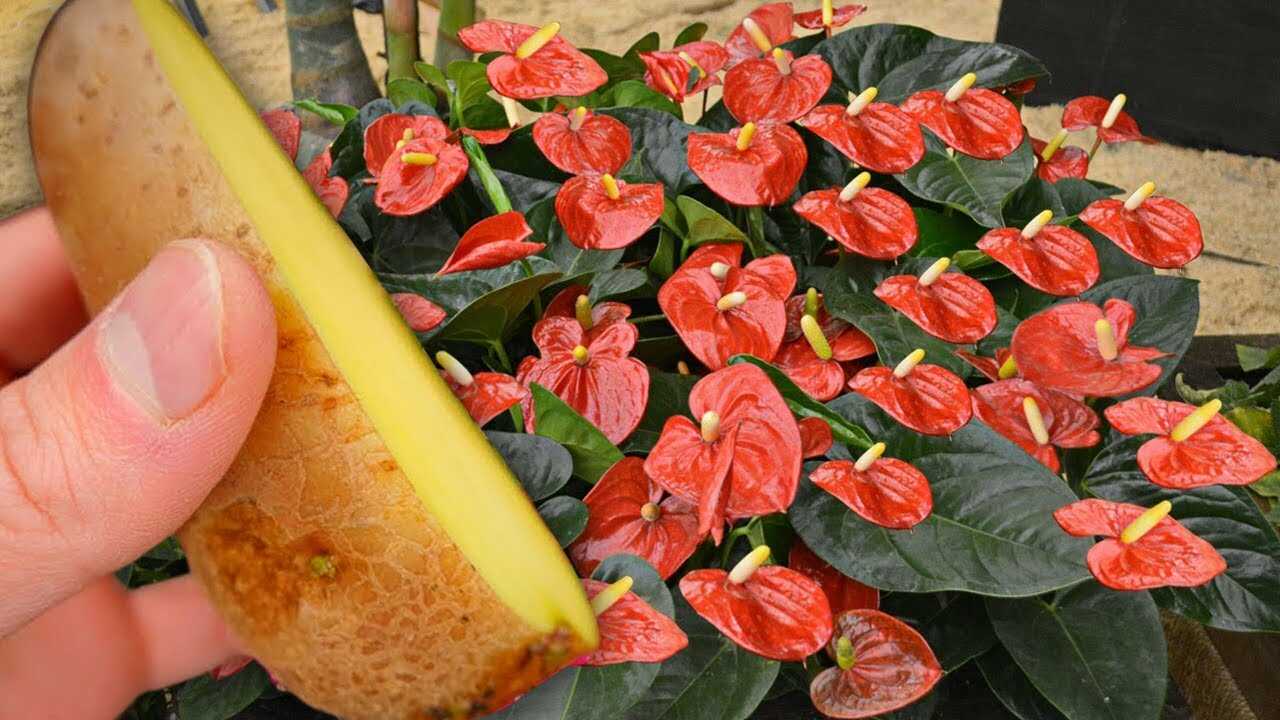
In the photo you can see a hand holding a slice of a raw brown-skinned potato (yellow flesh) beside a lush bed of red anthurium blooms. That simple potato slice is the exact ingredient this tip uses. When applied carefully, a small amount of raw potato can act as a short-term, natural supplement for potted anthuriums by providing moisture, a little potassium and easily available carbohydrates that feed beneficial soil microbes—factors that support root activity and flowering over several weeks.
Why a potato slice helps anthuriums (the real botany)
Potatoes are rich in starch and contain measurable amounts of potassium and trace nutrients. Potassium is a recognized macronutrient that helps with flowering, turgor and transport of sugars. The starches and sugars in a fresh potato also provide a short-term food source for soil microbes; active microbes speed up mineralization and can make nutrients more available to roots. These are real, verifiable mechanisms—so think of the potato as a micro-nutrient and microbial stimulant, not a substitute for a balanced fertilizer.
Step-by-step: How to use a potato slice safely with anthuriums
- Choose a firm, fresh potato: No bruises or mold. Wash the skin to remove soil and contaminants.
- Cut a thin slice: Aim for about 5 mm (1/5 inch) thick. A thin slice breaks down steadily without creating a soggy mass that attracts pests.
- Placement in the pot: For a standard 12–15 cm (5–6 in) pot, place ONE slice 1–2 cm deep into the potting mix, at the pot edge, at least 3–4 cm away from the crown/stem of the anthurium. For larger pots (20–25 cm), use TWO slices placed opposite each other.
- Timing and season: Apply only during the active growing season (spring and summer). Do not use in colder, low-growth months.
- Frequency: Replace the slice every 3–4 weeks. Expect to repeat the application for a total of 8–12 weeks (minimum several weeks) to observe improved vigor and potential flowering benefits.
- Monitor and remove: Check the pot weekly. If the potato softens into a foul-smelling rot, remove it immediately and refresh the top of the substrate. Dispose of rotten potato away from other plants to avoid pests.
Practical tips from experience
- Use clean tools: A clean knife reduces the risk of introducing pathogens when cutting the potato.
- Keep it off the crown: Never place potato directly against the crown or stem base—this is the fastest way to cause crown rot.
- Combine with good basics: Continue regular care: bright, indirect light, consistent humidity, airy potting mix with good drainage, and a balanced houseplant fertilizer every 4–6 weeks in season.
- Watch water carefully: Because potato adds moisture, reduce watering slightly in the first week after insertion to avoid waterlogging.
- Use sparingly: One thin slice per small pot is enough—more can attract pests and cause anaerobic conditions.
Common mistakes to avoid
- Placing potato against the crown: Causes crown rot and stem decay—don’t do it.
- Using thick chunks or mashed/cooked potato: These break down too quickly, create anaerobic pockets and attract flies or rodents.
- Thinking it replaces fertilizer: Potato is a short-term supplement. It does not supply complete N-P-K nutrition—continue using a proper fertilizer program.
- Applying in winter: Slow root activity in cool months means potato will rot before benefiting the plant.
When to expect results
Because this is a biological and slow-release approach, don’t expect overnight changes. Over the course of 4–12 weeks you may notice slightly improved leaf turgor, steadier growth and, when combined with proper light and feeding, better and more sustained blooming. If no improvement appears after two full cycles (8 weeks), stop using the potato and reassess watering, light and fertilizer.
Final encouragement
This is a hands-on, low-cost supplement that can boost your anthurium’s root environment when used carefully. Keep doses small, follow safe placement and seasons, and always pair this trick with solid basic care. Try one thin slice in a single pot this spring—observe, adjust, and you may well see healthier foliage and more consistent blooms over the coming weeks. Happy growing!